


doi: 10.1264/jsme2.me13049.
Epub 2013 Nov 19.
Impact of Azospirillum sp. B510 inoculation on rice-associated bacterial communities in a paddy field
Affiliations
- PMID: 24256970
- PMCID: PMC4070703
- DOI: 10.1264/jsme2.me13049
Item in Clipboard
Impact of Azospirillum sp. B510 inoculation on rice-associated bacterial communities in a paddy field
Microbes Environ.
2013.
Abstract
Rice seedlings were inoculated with Azospirillum sp. B510 and transplanted into a paddy field. Growth in terms of tiller numbers and shoot length was significantly increased by inoculation. Principal-coordinates analysis of rice bacterial communities using the 16S rRNA gene showed no overall change from B510 inoculation. However, the abundance of Veillonellaceae and Aurantimonas significantly increased in the base and shoots, respectively, of B510-inoculated plants. The abundance of Azospirillum did not differ between B510-inoculated and uninoculated plants (0.02-0.50%). These results indicate that the application of Azospirillum sp. B510 not only enhanced rice growth, but also affected minor rice-associated bacteria.
Figures
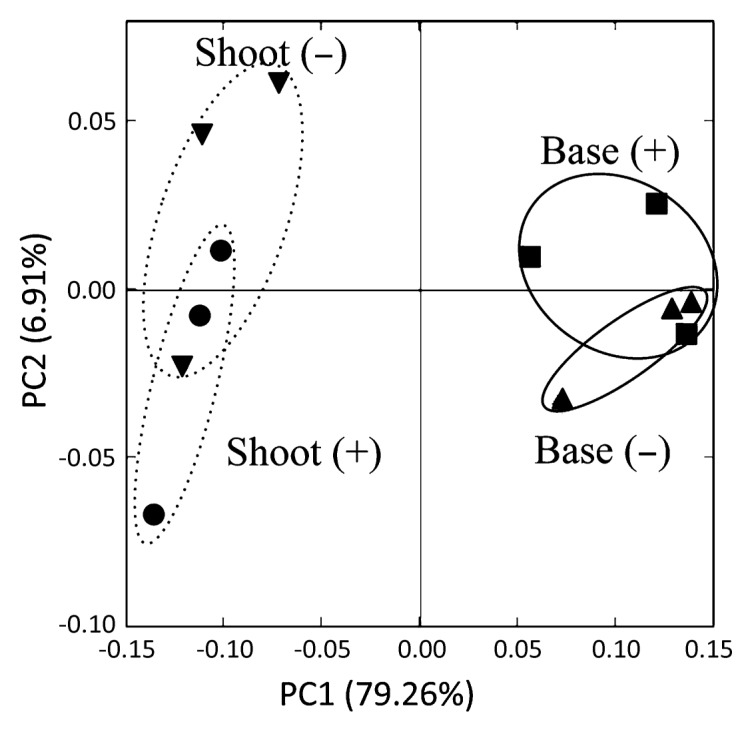
Principal-coordinates analysis (PCoA) of bacterial communities in the base and the shoot of rice plants with (+) and without (−) Azospirillum sp. B510 inoculation. ▼, Shoot without inoculation (control); ●, shoot with inoculation; ■, base with inoculation; ▲, base without inoculation (control). Broken line (---): microbial communities of shoot with and without Azospirillum sp. B510 inoculation; solid line (—): microbial communities of base with and without Azospirillum sp. B510 inoculation.
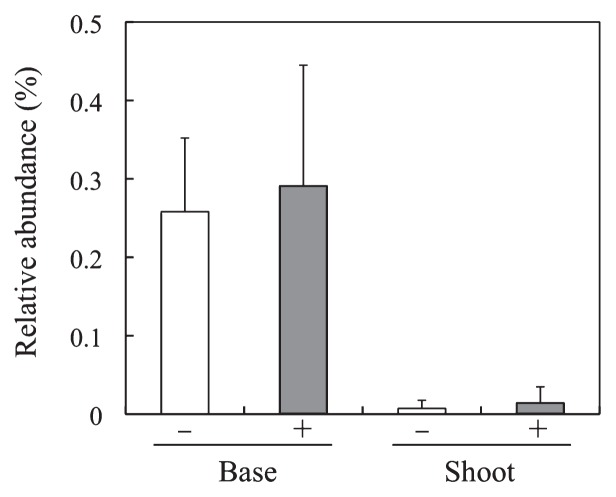
Relative abundance of Azospirillum spp. in the rice plant’s base and shoot with (+) and without (−) Azospirillum sp. B510 inoculation.
References
-
- Anda M, Ikeda S, Eda S, Okubo T, Sato S, Tabata S, Mitsui H, Minamisawa K. Isolation and genetic characterization of Aurantimonas and Methylobacterium strains from stems of hypernodulated soybeans. Microbes Environ. 2011;26:172–180. - PubMed
Publication types
MeSH terms
LinkOut - more resources
Full Text Sources
Other Literature Sources
