


Identifying high-risk areas of bacillary dysentery and associated meteorological factors in Wuhan, China
- PMID: 24257434
- PMCID: PMC3836034
- DOI: 10.1038/srep03239
Identifying high-risk areas of bacillary dysentery and associated meteorological factors in Wuhan, China
Abstract
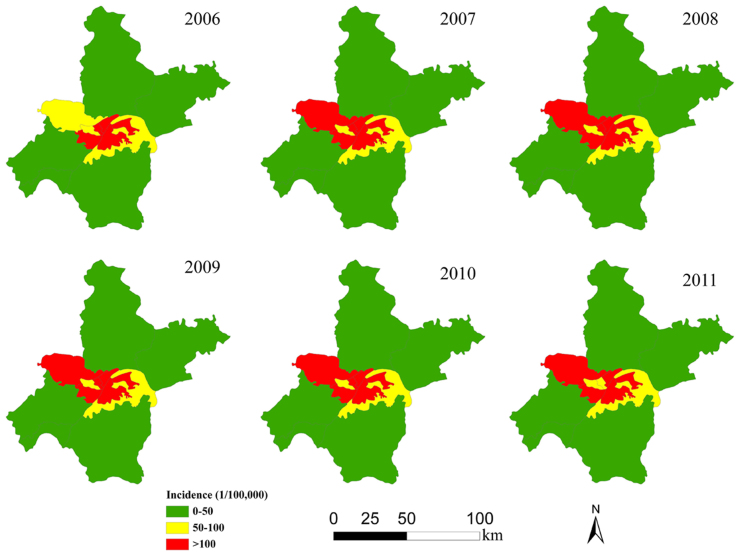
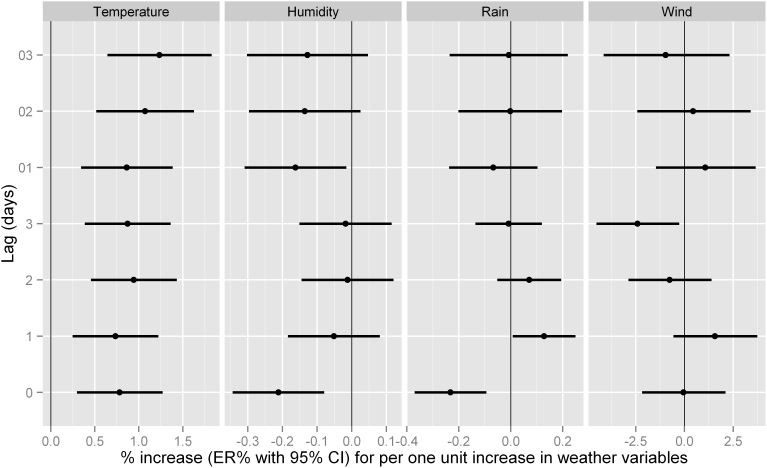
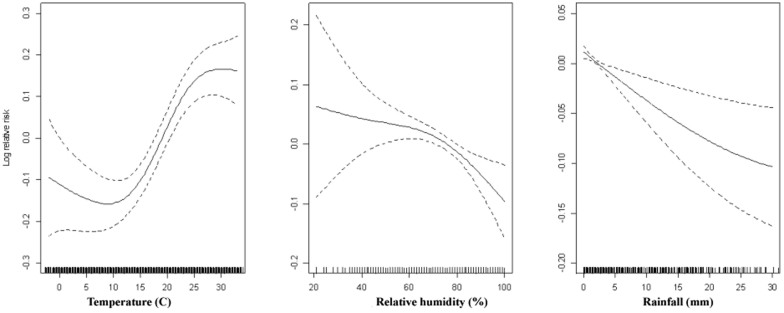
Spatial distribution of bacillary dysentery incidence was mapped at the district level in Wuhan, China. And a generalized additive time series model was used to examine the effect of daily weather factors on bacillary dysentery in the high-risk areas, after controlling for potential confounding factors. Central districts were found to be the high-risk areas. The time series analysis found an acute effect of meteorological factors on bacillary dysentery occurrence. A positive association was found for mean temperature (excess risk (ER) for 1°C increase being 0.94% (95% confidence interval (CI): 0.46% to 1.43% on the lag day 2), while a negative effect was observed for relative humidity and rainfall, the ER for 1% increase in relative humidity was -0.21% (95% CI: -0.34% to -0.08%), and the ER for 1 mm increase in rainfall was -0.23% (95% CI: -0.37% to -0.09%). This study suggests that bacillary dysentery prevention and control strategy should consider local weather variations.
Figures
References
-
- Niyogi S. K. Shigellosis. J Microbiol 43, 133 (2005). - PubMed
-
- Sui J. et al. Surveillance of bacillary dysentery in China, 2009. Disease Surveillance 25, 947–950 (2010).
Publication types
MeSH terms
LinkOut - more resources
Full Text Sources
Other Literature Sources
