


Individual and combined effects of DNA methylation and copy number alterations on miRNA expression in breast tumors
- PMID: 24257477
- PMCID: PMC4053776
- DOI: 10.1186/gb-2013-14-11-r126
Individual and combined effects of DNA methylation and copy number alterations on miRNA expression in breast tumors
Abstract
Background: The global effect of copy number and epigenetic alterations on miRNA expression in cancer is poorly understood. In the present study, we integrate genome-wide DNA methylation, copy number and miRNA expression and identify genetic mechanisms underlying miRNA dysregulation in breast cancer.
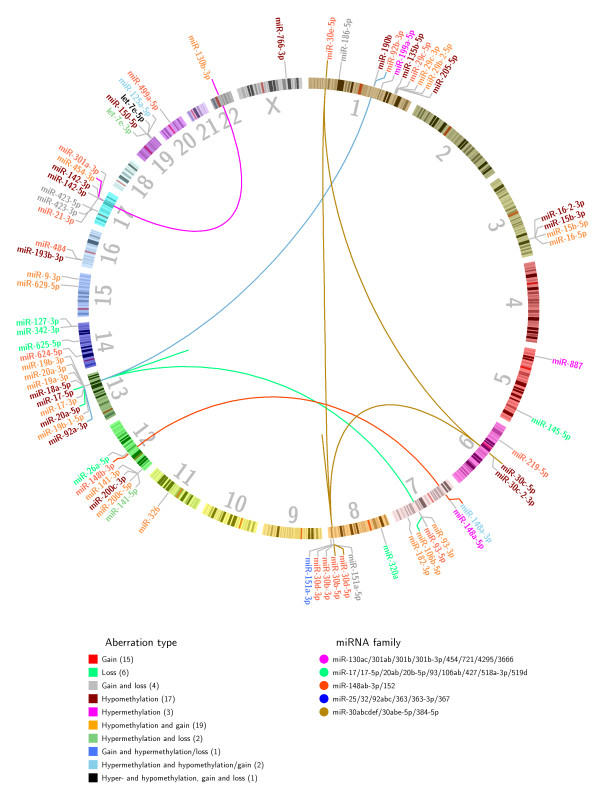
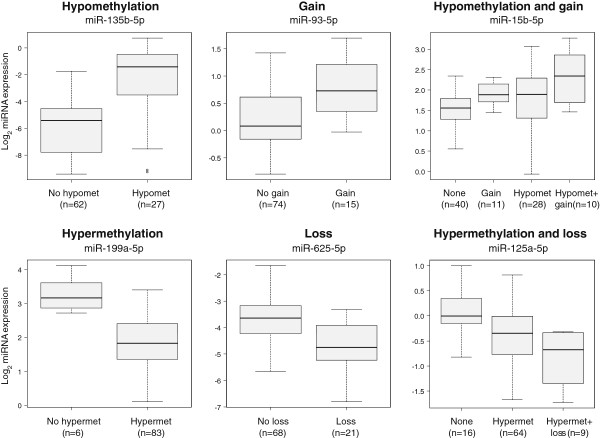
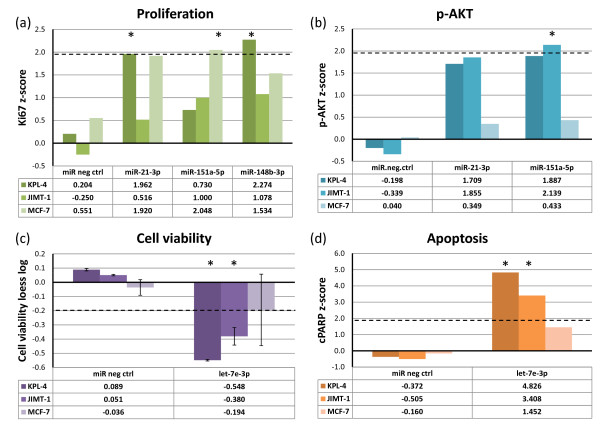
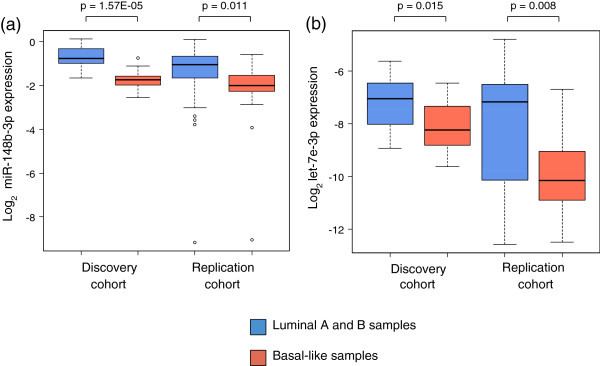
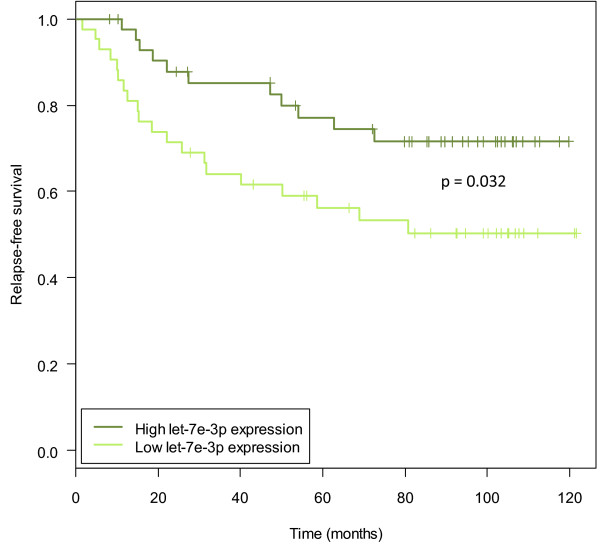
Results: We identify 70 miRNAs whose expression was associated with alterations in copy number or methylation, or both. Among these, five miRNA families are represented. Interestingly, the members of these families are encoded on different chromosomes and are complementarily altered by gain or hypomethylation across the patients. In an independent breast cancer cohort of 123 patients, 41 of the 70 miRNAs were confirmed with respect to aberration pattern and association to expression. In vitro functional experiments were performed in breast cancer cell lines with miRNA mimics to evaluate the phenotype of the replicated miRNAs. let-7e-3p, which in tumors is found associated with hypermethylation, is shown to induce apoptosis and reduce cell viability, and low let-7e-3p expression is associated with poorer prognosis. The overexpression of three other miRNAs associated with copy number gain, miR-21-3p, miR-148b-3p and miR-151a-5p, increases proliferation of breast cancer cell lines. In addition, miR-151a-5p enhances the levels of phosphorylated AKT protein.
Conclusions: Our data provide novel evidence of the mechanisms behind miRNA dysregulation in breast cancer. The study contributes to the understanding of how methylation and copy number alterations influence miRNA expression, emphasizing miRNA functionality through redundant encoding, and suggests novel miRNAs important in breast cancer.
Figures
References
-
- Enerly E, Steinfeld I, Kleivi K, Leivonen S-K, Aure MR, Russnes HG, Rønneberg JA, Johnsen H, Navon R, Rødland E, Mäkelä R, Naume B, Perälä M, Kallioniemi O, Kristensen VN, Yakhini Z, Børresen Dale AL. miRNA-mRNA Integrated Analysis Reveals Roles for miRNAs in Primary Breast Tumors. PLoS ONE. 2011;14:e16915. doi: 10.1371/journal.pone.0016915. - DOI - PMC - PubMed
-
- Iorio MV, Ferracin M, Liu C-G, Veronese A, Spizzo R, Sabbioni S, Magri E, Pedriali M, Fabbri M, Campiglio M, Ménard S, Palazzo JP, Rosenberg A, Musiani P, Volinia S, Nenci I, Calin GA, Querzoli P, Negrini M, Croce CM. MicroRNA gene expression deregulation in human breast cancer. Cancer Res. 2005;14:7065–7070. doi: 10.1158/0008-5472.CAN-05-1783. - DOI - PubMed
Publication types
MeSH terms
Substances
LinkOut - more resources
Full Text Sources
Other Literature Sources
Medical
Molecular Biology Databases
