


Anatomical and functional analysis of domestication effects on the olfactory system of the silkmoth Bombyx mori
- PMID: 24258720
- PMCID: PMC3843842
- DOI: 10.1098/rspb.2013.2582
Anatomical and functional analysis of domestication effects on the olfactory system of the silkmoth Bombyx mori
Abstract
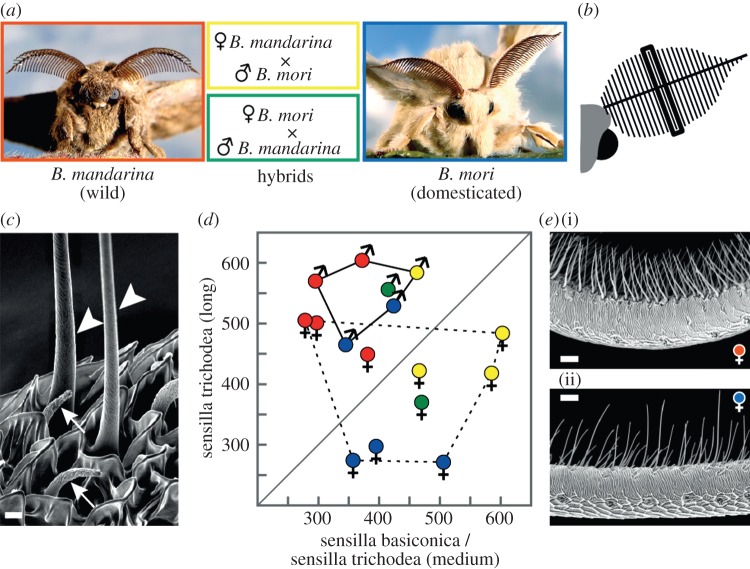
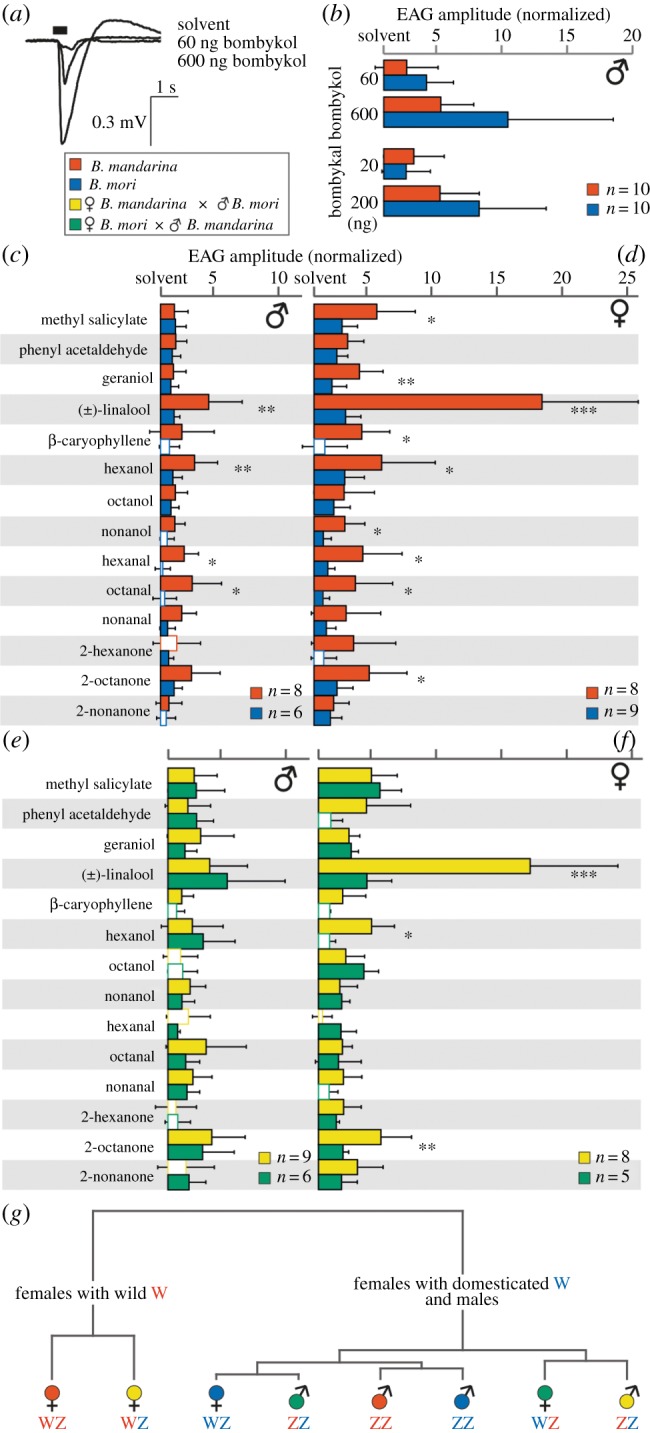
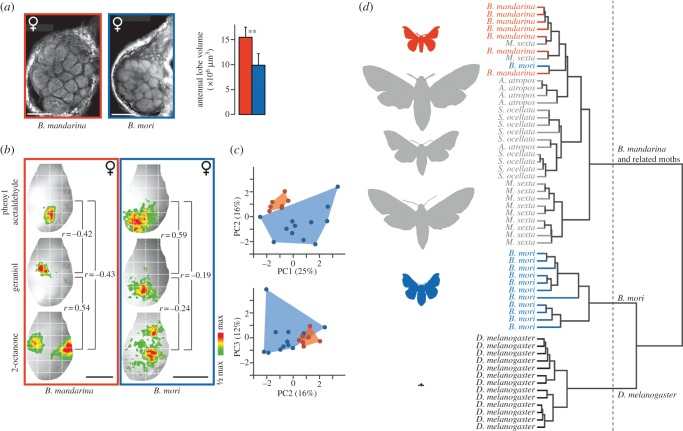
The silkmoth Bombyx mori is the main producer of silk worldwide and has furthermore become a model organism in biological research, especially concerning chemical communication. However, the impact domestication might have had on the silkmoth's olfactory sense has not yet been investigated. Here, we show that the pheromone detection system in B. mori males when compared with their wild ancestors Bombyx mandarina seems to have been preserved, while the perception of environmental odorants in both sexes of domesticated silkmoths has been degraded. In females, this physiological impairment was mirrored by a clear reduction in olfactory sensillum numbers. Neurophysiological experiments with hybrids between wild and domesticated silkmoths suggest that the female W sex chromosome, so far known to have the sole function of determining femaleness, might be involved in the detection of environmental odorants. Moreover, the coding of odorants in the brain, which is usually similar among closely related moths, differs strikingly between B. mori and B. mandarina females. These results indicate that domestication has had a strong impact on odour detection and processing in the olfactory model species B. mori.
Keywords: Bombyx mandarina; Bombyx mori; W chromosome; domestication; olfactory coding; olfactory sensilla.
Figures
References
-
- Sun W, Yu HS, Shen YH, Banno Y, Xiang ZH, Zhang Z. 2012. Phylogeny and evolutionary history of the silkworm. Sci. China Life Sci. 55, 483–496 (doi:10.1007/s11427-012-4334-7) - DOI - PubMed
-
- Steinbrecht RA. 1970. Morphometric studies on the antenna of the silk moth, Bombyx mori L.: number and distribution of the olfactory sensilla. Z. Morphol. Tiere 68, 93–126
-
- Daimon T, Fujii T, Yokoyama T, Katsuma S, Shinoda T, Shimada T, Ishikawa Y. 2012. Reinvestigation of the sex pheromone of the wild silkmoth Bombyx mandarina: the effects of bombykal and bombykyl acetate. J. Chem. Ecol. 38, 1031–1035 (doi:10.1007/s10886-012-0164-0) - DOI - PubMed
-
- Abe H, Mita K, Yasukochi Y, Oshiki T, Shimada T. 2005. Retrotransposable elements on the W chromosome of the silkworm, Bombyx mori. Cytogenet. Genome Res. 110, 144–151 (doi:10.1159/000084946) - DOI - PubMed
-
- Goldsmith MR, Shimada T, Abe H. 2005. The genetics and genomics of the silkworm, Bombyx mori. Annu. Rev. Entomol. 50, 71–100 (doi:10.1146/annurev.ento.50.071803.130456) - DOI - PubMed
Publication types
MeSH terms
Substances
LinkOut - more resources
Full Text Sources
Other Literature Sources
Research Materials
