


Exploratory studies of extended storage of apheresis platelets in a platelet additive solution (PAS)
- PMID: 24258816
- PMCID: PMC3888291
- DOI: 10.1182/blood-2013-05-501247
Exploratory studies of extended storage of apheresis platelets in a platelet additive solution (PAS)
Abstract
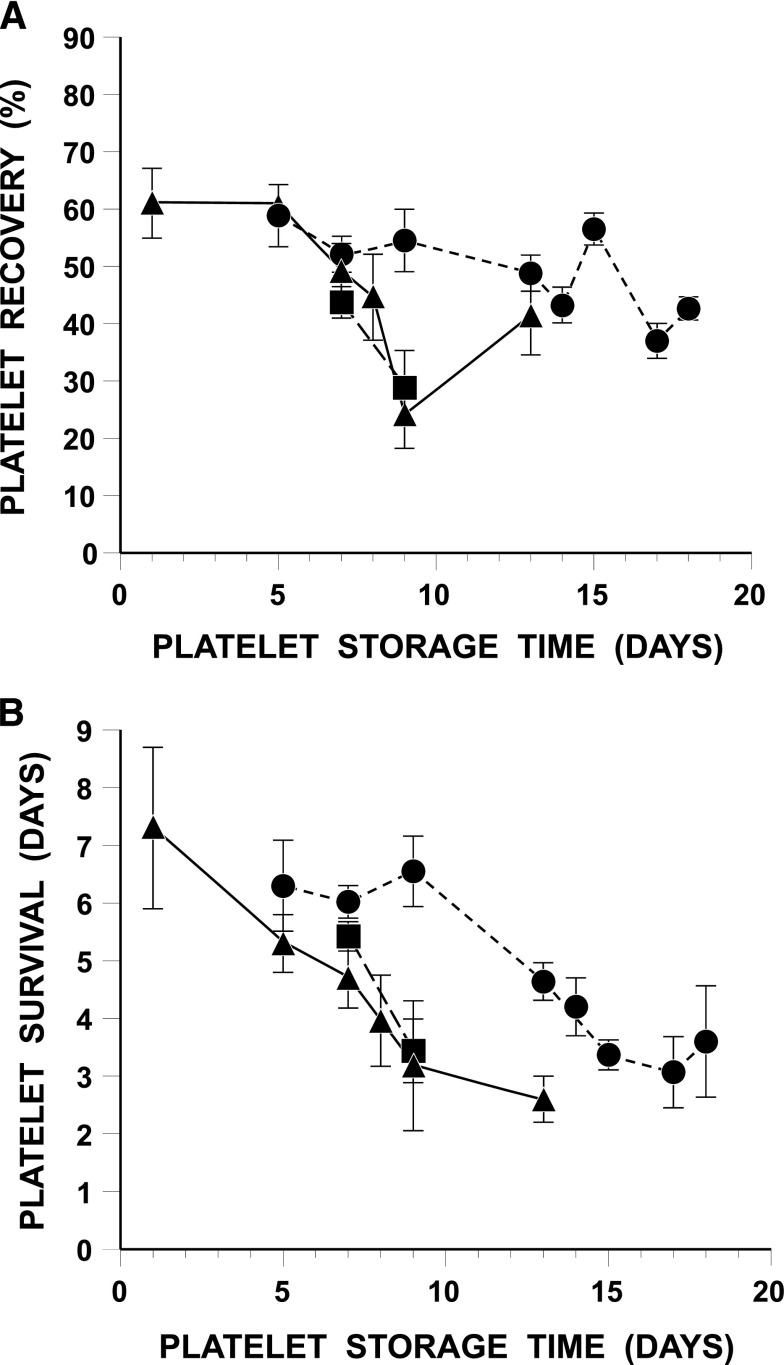
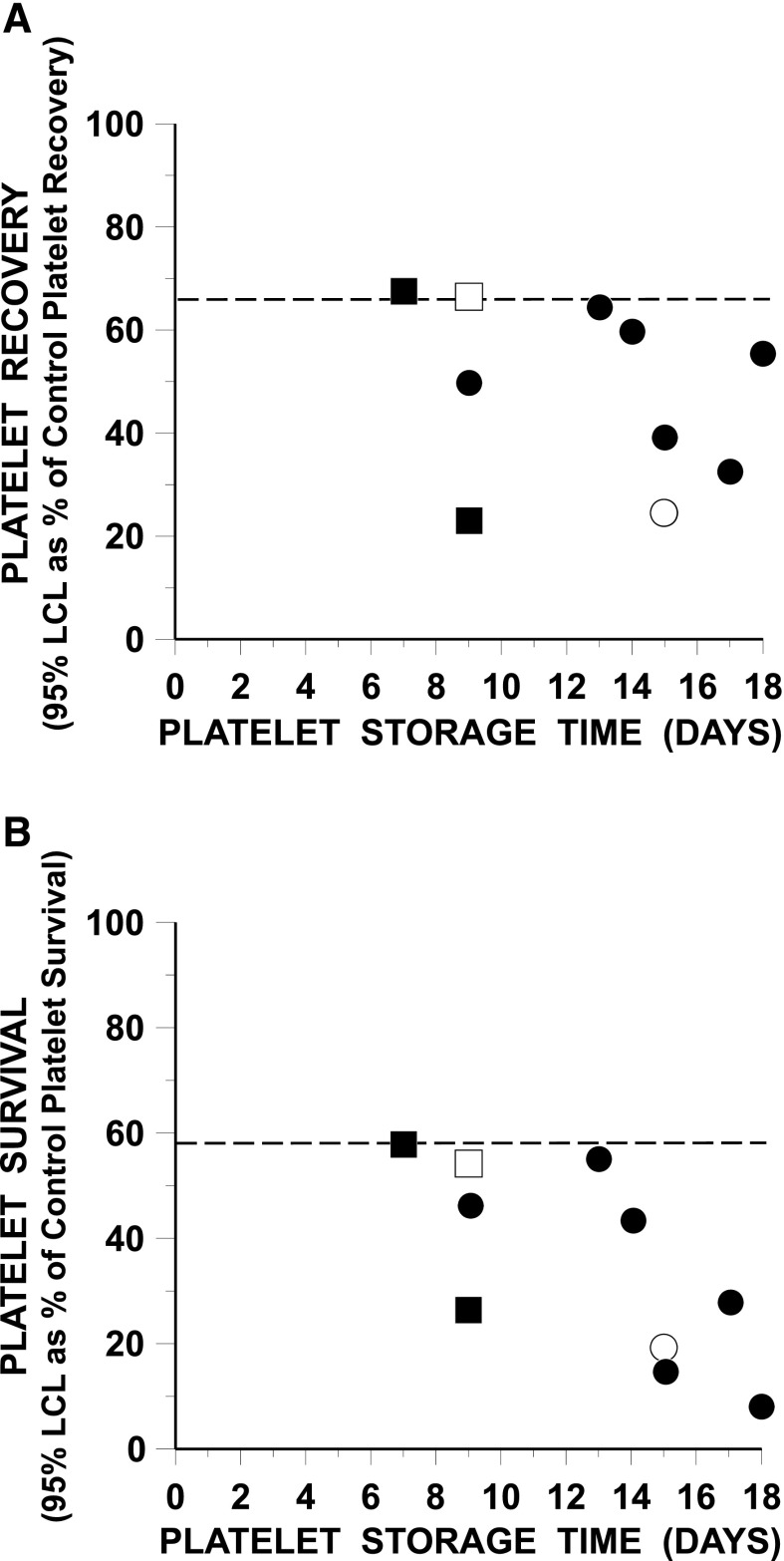
To evaluate the poststorage viability of apheresis platelets stored for up to 18 days in 80% platelet additive solution (PAS)/20% plasma, 117 healthy subjects donated platelets using the Haemonetics MCS+, COBE Spectra (Spectra), or Trima Accel (Trima) systems. Control platelets from the same subjects were compared with their stored test PAS platelets by radiolabeling their stored and control platelets with either (51)chromium or (111)indium. Trima platelets met Food and Drug Administration poststorage platelet viability criteria for only 7 days vs almost 13 days for Haemonetics platelets; ie, platelet recoveries after these storage times averaged 44 ± 3% vs 49 ± 3% and survivals were 5.4 ± 0.3 vs 4.6 ± 0.3 days, respectively. The differences in storage duration are likely related to both the collection system and the storage bag. The Spectra and Trima platelets were hyperconcentrated during collection, and PAS was added, whereas the Haemonetics platelets were elutriated with PAS, which may have resulted in less collection injury. When Spectra and Trima platelets were stored in Haemonetics' bags, poststorage viability was significantly improved. Platelet viability is better maintained in vitro than in vivo, allowing substantial increases in platelet storage times. However, implementation will require resolution of potential bacterial overgrowth during storage.
Figures
References
-
- Rock G, Swenson SD, Adams GA. Platelet storage in a plasma-free medium. Transfusion. 1985;25(6):551–556. - PubMed
-
- Holme S, Heaton WA, Courtright M. Improved in vivo and in vitro viability of platelet concentrates stored for seven days in a platelet additive solution. Br J Haematol. 1987;66(2):233–238. - PubMed
-
- van der Meer PF, Pietersz RN, Tiekstra MJ, Huijgens PC, Dekker WJ, Reesink HW. WBC-reduced platelet concentrates from pooled buffy coats in additive solution: an evaluation of in vitro and in vivo measures. Transfusion. 2001;41(7):917–922. - PubMed
-
- Vamvakas EC, Blajchman MA. Transfusion-related mortality: the ongoing risks of allogeneic blood transfusion and the available strategies for their prevention. Blood. 2009;113(15):3406–3417. - PubMed
-
- Heddle NM, Klama L, Singer J, et al. The role of the plasma from platelet concentrates in transfusion reactions. N Engl J Med. 1994;331(10):625–628. - PubMed
Publication types
MeSH terms
Substances
Grants and funding
LinkOut - more resources
Full Text Sources
Other Literature Sources
Miscellaneous
