


Cross vascular risk for first and recurrent hospitalised atherothrombosis determined retrospectively from linked data
- PMID: 24259391
- PMCID: PMC3840350
- DOI: 10.1136/bmjopen-2013-003813
Cross vascular risk for first and recurrent hospitalised atherothrombosis determined retrospectively from linked data
Abstract
Objectives: To determine the sex-specific and age-specific risk ratios for the first-ever and recurrent hospitalisation for cerebrovascular, coronary and peripheral arterial disease in persons with other vascular history versus without other vascular history in Western Australia from 2005to 2007.
Design: Cross-sectional linkage study.
Setting: Hospitalised population in a representative Australian State.
Participants: All persons aged 34-85 years between 1 January 2005 and 31 December 2007 were hospitalised with a principal diagnosis of atherothrombosis.
Data sources: Person-linked file of statutory-collected administrative morbidity and mortality records.
Main outcome measures: Sex-specific and age-specific risk ratios for the first-ever and recurrent hospitalisations for symptomatic atherothrombosis of the brain, coronary and periphery using a 15-year look-back period lead to the determining of prior events.
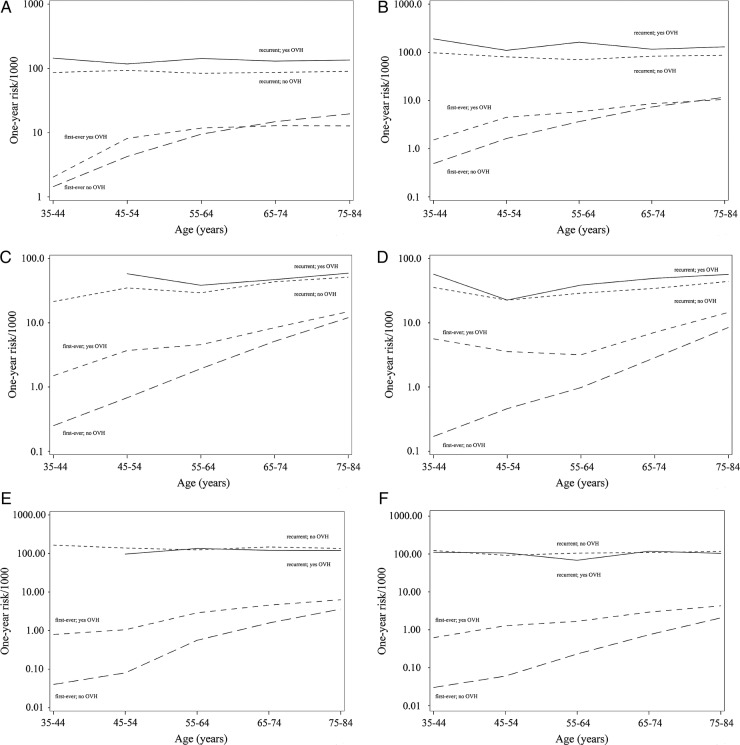
Results: Over 3 years, 40 877 (66% men; 55% first-ever) were hospitalised for atherothrombosis. For each arterial territory, age-specific recurrent rates were higher than the corresponding first-ever rates, with the biggest difference seen in the youngest age groups. For all types of first-ever atherothrombosis, the rates were higher in those with other vascular history and the risk ratios declined with an advancing age (trend: all p<0.0001) and remained significantly >1 even for 75-84 years old. However, for recurrent events, the rates were marginally higher in those with other vascular history and no risk ratio age trend was apparent with several not significantly >1 (trend: all p>0.13).
Conclusions: This study of hospitalised atherothrombosis suggests first-events predominate and that the risk of further events in the same or other arterial territory is very high for all ages and both sexes, accentuating the necessity for an early and sustained active prevention.
Keywords: PREVENTIVE MEDICINE; VASCULAR MEDICINE.
Figures
References
-
- Rothwell PM, Coull AJ, Silver LE, et al. Oxford vascular study. Population-based study of event-rate, incidence, case fatality, and mortality for all acute vascular events in all arterial territories. Lancet 2005;366:1773–83 - PubMed
-
- Bhatt DL, Steg PG, Ohman M, et al. REACH Registry Investigators International prevalence, recognition, and treatment of cardiovascular risk factors in outpatients with atherothrombosis. JAMA 2006;295:180–9 - PubMed
-
- Clark A, Preen DB, Ng JQ, et al. Is Western Australia representative of other Australian States and Territories in terms of key socio-demographic and health economic indicators? Aust Health Rev 2010;34:210–15 - PubMed
-
- Holman CDJ, Bass AJ, Rouse IL, et al. Population-based linkage of health records in Western Australia: development of a health services research linked database. Aust N Z J Public Health 1999;23:453–9 - PubMed
-
- World Health Organization International Classification of Diseases: the International Statistical Classification of diseases, injuries, and causes of death. http://www.who.int/classifications/icd/en/ (accessed 20 Jun 2013) - PubMed
LinkOut - more resources
Full Text Sources
Other Literature Sources
