


Differences in Rheobase and Chronaxie between the Paretic and Non-Paretic Sides of Hemiplegic Stroke Patients: a Pilot Study
- PMID: 24259837
- PMCID: PMC3805009
- DOI: 10.1589/jpts.25.717
Differences in Rheobase and Chronaxie between the Paretic and Non-Paretic Sides of Hemiplegic Stroke Patients: a Pilot Study
Abstract
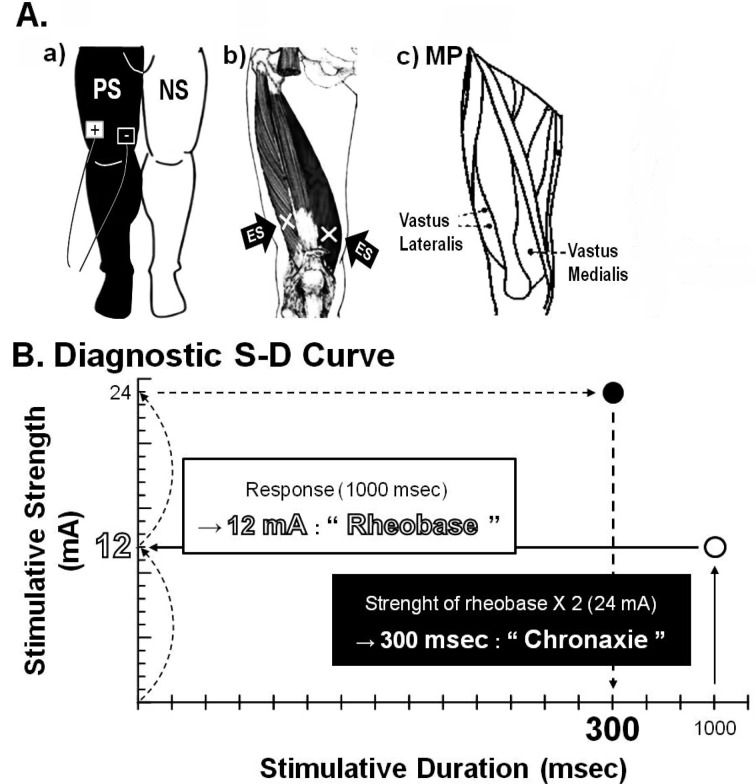
[Purpose] Rheobase and chronaxie are used to confirm muscle degeneration. For stroke patients, however, the uses of rheobase and chronaxie in determining paretic side muscle degeneration is not yet fully understood. Thus, in this study, we examined the electrical properties of the quadriceps muscles of stroke patients' paretic side and compared them with their respective values on the non-paretic side. [Method] The subjects were six stroke patients (three females, three males). The pad of an electrical stimulator was applied to the vastus lateralis and vastus medialis regions to measure rheobase and chronaxie until the contractive muscle response to electrical stimulation became visible. [Result] Rheobase was significantly increased on the paretic side compared to that of the non-paretic side of hemiplegic stroke patients. Furthermore, chronaxie was significantly increased on the paretic side compared to the non-paretic side of hemiplegic stroke patients. [Conclusion] These results suggest that stroke affects the sensitivity of skeletal muscle contraction. Therefore, this data may contribute to our understanding of the muscle status of stroke patients.
Keywords: Chronaxie; Hemiplegic stroke patients; Rheobase.
Figures
References
-
- Twitchell TE: The restoration of motor function following hemiplegia in man. Brain, 1951, 74: 443–480 - PubMed
-
- Kim MY, Kim JH, Lee JU, et al. : The effects of functional electrical stimulation on balance of stroke patients in the standing posture. J Phys Ther Sci, 2012, 24: 77–81
-
- Kim MY, Kim JH, Lee JU, et al. : The effect of low frequency repetitive transcranial magnetic stimulation combined with range of motion exercise on paretic hand function in female patients after stroke. Neurosci Med, 2012, (in press).
LinkOut - more resources
Full Text Sources
Other Literature Sources