


Relationship between the Berg Balance Scale and Static Balance Test in Hemiplegic Patients with Stroke
- PMID: 24259912
- PMCID: PMC3820219
- DOI: 10.1589/jpts.25.1043
Relationship between the Berg Balance Scale and Static Balance Test in Hemiplegic Patients with Stroke
Abstract
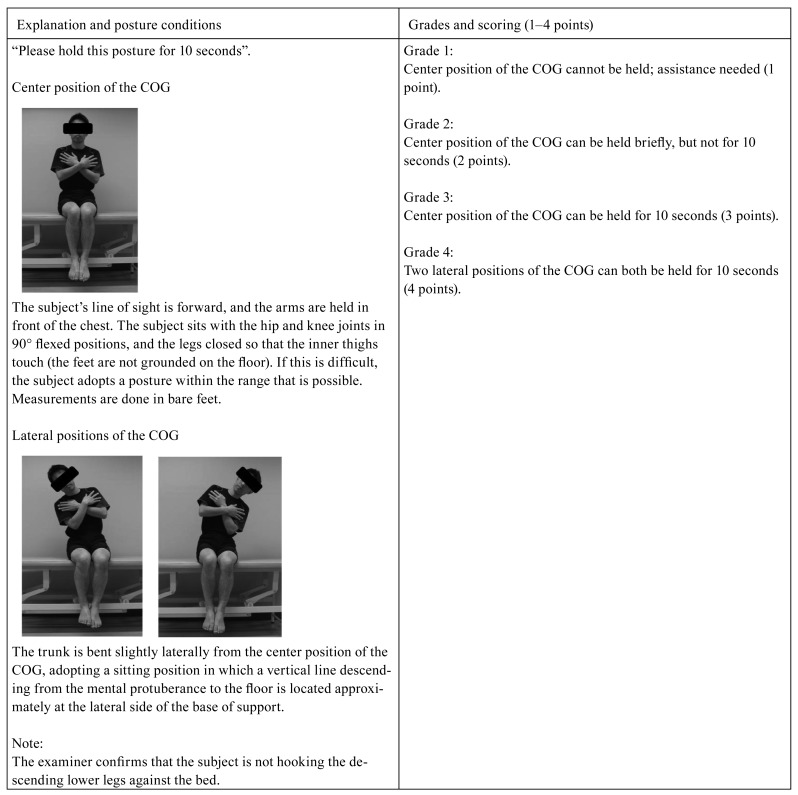
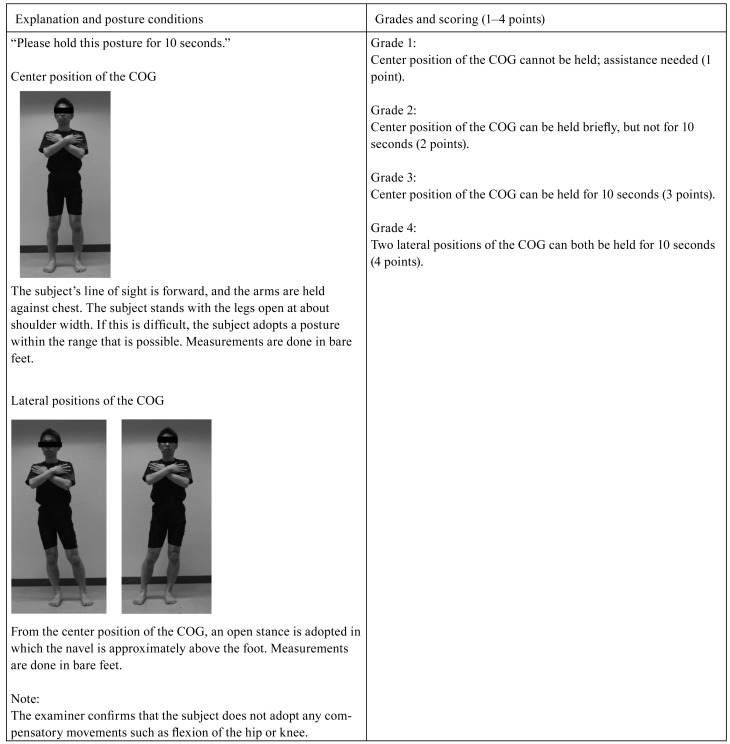
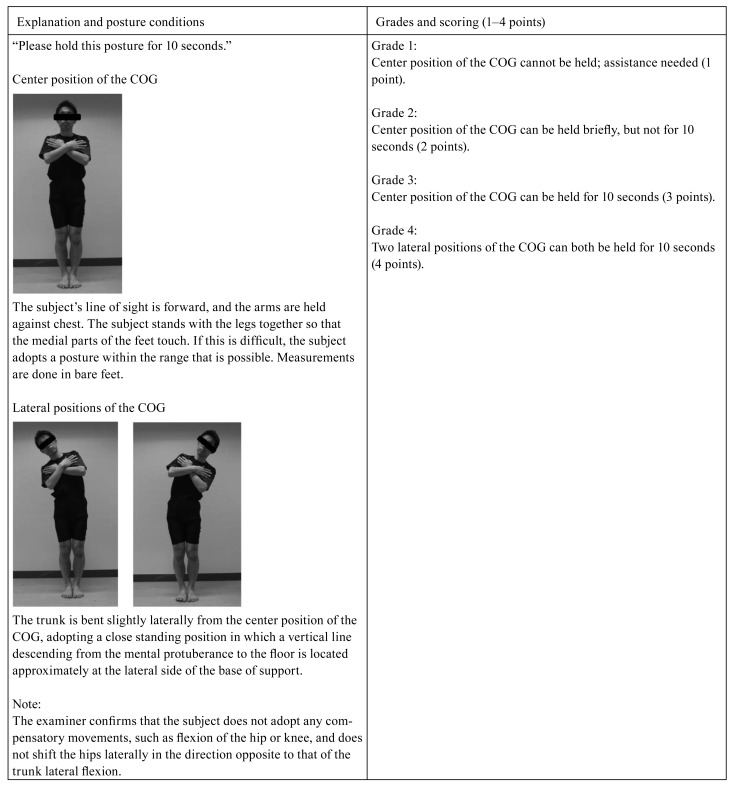
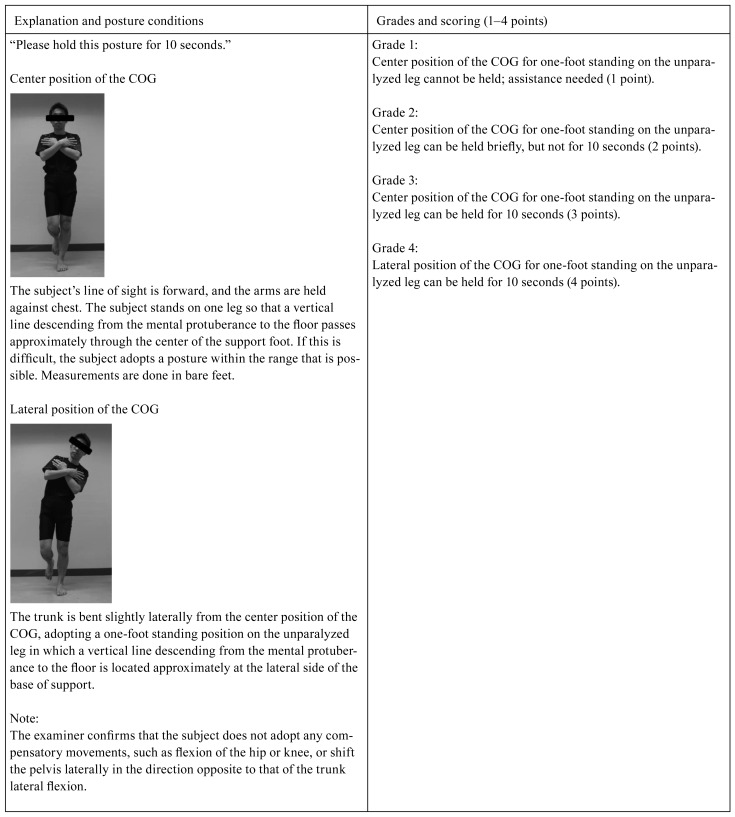
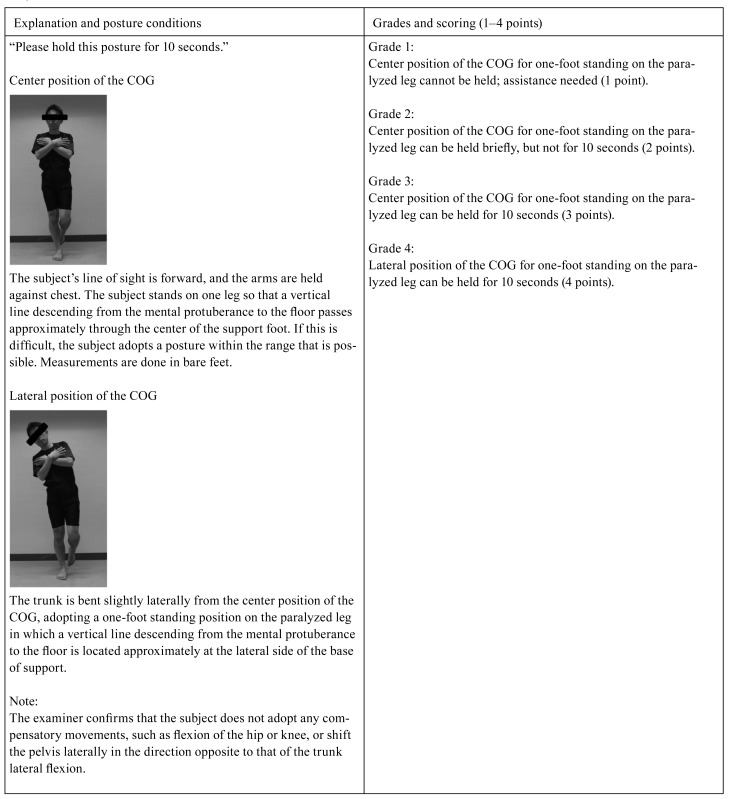
[Purpose] The purpose of this study was to analyze the relationship between results of the Berg Balance Scale (BBS) and Static Balance Test (SBT) in hemiplegic patients with stroke. [Subjects] The subjects were 39 hemiplegic patients (25 men, 14 women; mean age, 69.4 ± 11.0 years) with stroke that had occurred within the preceding 6 months and who had good understanding of verbal instructions. [Methods] The SBT consists of five posture-holding tasks (sitting, stride standing, close standing, one-foot standing on the unparalyzed leg, and one-foot standing on the paralyzed leg). Four grades, 1-4, are used to judge the ability of patients to hold these postures. The SBT and BBS were each implemented, and the relationship between test results was analyzed using correlation coefficients. [Results] The correlation coefficient for the BBS score and SBT score was 0.87. Thus, a strong correlation was seen between the BBS and SBT. [Conclusion] The SBT is thought to be an assessment index that can predict overall balance ability.
Keywords: Assessment; Balance; Stroke.
References
-
- Murray MP, Seireg AA, Sepic SB: Normal postural stability and steadiness: quantitative assessment. J Bone Joint Surg, 1975, 57: 510–516 - PubMed
-
- Suzuki M, Murakami K, Sakaki N, et al. : Development of a method for assessing the balance performance of hemiplegic patients –Part 1: The validity and reliability of the assessment method–. Rigakuryoho Kagaku, 2010, 25: 607–613(in Japanese)
-
- Suzuki M, Murakami K, Sakaki N, et al. : Development of a method for assessing balance performance of hemiplegic patients –Part 2: Relationship between static balance test and balance performance–. Rigakuryoho Kagaku, 2010, 25: 873–880(in Japanese)
-
- Berg K, Wood-Dauphinée S, Williams JI, et al. : Measuring balance in the elderly: preliminary development of an instrument. Physiother Can, 1989, 41: 304–311
-
- Thorbahn L, Newton R: Use of the Berg balance test to predict falls in elderly persons. Phys Ther, 1996, 76: 567–583 - PubMed
LinkOut - more resources
Full Text Sources
Other Literature Sources
Medical