


Wii-based Balance Therapy to Improve Balance Function of Children with Cerebral Palsy: A Pilot Study
- PMID: 24259928
- PMCID: PMC3818755
- DOI: 10.1589/jpts.25.1123
Wii-based Balance Therapy to Improve Balance Function of Children with Cerebral Palsy: A Pilot Study
Abstract
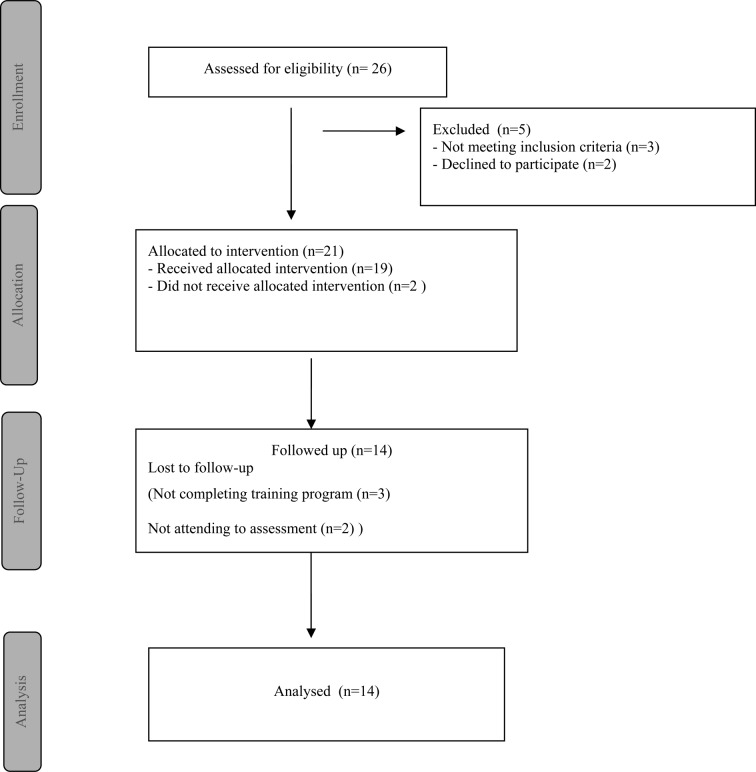
[Purpose] Cerebral palsy is a sensorimotor disorder that affects the control of posture and movement. The Nintendo(®) Wii Fit offers an inexpensive, enjoyable, suitable alternative to more complex systems for children with cerebral palsy. The aim of this study was to investigate the efficacacy of Wii-based balance therapy for children with ambulatory cerebral palsy. [Subjects] This pilot study design included fourteen ambulatory patients with cerebral palsy (11 males, 3 females; mean age 12.07 ± 3.36 years). [Methods] Balance functions before and after treatment were evaluated using one leg standing, the functional reach test, the timed up and go test, and the 6-minute walking test. The physiotherapist prescribed the Wii Fit activities,and supervised and supported the patients during the therapy sessions. Exercises were performed in a standardized program 2 times a week for 12 weeks. [Results] Balance ability of every patient improved. Statistically significant improvements were found in all outcome measures after 12 weeks. [Conclusion] The results suggest that the Nintendo(®) Wii Fit provides a safe, enjoyable, suitable and effective method that can be added to conventional treatments to improve the static balance of patients with cerebral palsy; however, further work is required.
Keywords: Balance; Cerebral palsy; Nintendo® Wii Fit.
References
-
- Bax M, Goldstein M, Rosenbaum P, et al. : Executive committee for the definition of cerebral palsy. Proposed definition and classification of cerebral palsy. Dev Med Child Neurol, 2005, 47: 571–576 - PubMed
-
- Taylor JR, Kopriva PG: Cerebral palsy. In. Medical, Psychosocial, and Vocational Aspects of Disability. Athens: Elliott Fitzpatrick Press, 2002, pp 387–400.
-
- Benda W, McGibbon NH, Grant KL: Improvements in muscle symmetry in children with cerebral palsy after equine-assisted therapy (hippotherapy). J Altern Complement Med, 2003, 9: 817–825 - PubMed
-
- Massion J, Alexandrov A, Frolov A: Why and how are posture and movement coordinated? Prog Brain Res, 2004, 143: 13–27 - PubMed
LinkOut - more resources
Full Text Sources
Other Literature Sources
Medical