


Risk factors for the progression of cystic fibrosis lung disease throughout childhood
- PMID: 24261460
- PMCID: PMC3972988
- DOI: 10.1513/AnnalsATS.201309-303OC
Risk factors for the progression of cystic fibrosis lung disease throughout childhood
Abstract
Rationale: Previous studies of risk factors for progression of lung disease in cystic fibrosis (CF) have suffered from limitations that preclude a comprehensive understanding of the determinants of CF lung disease throughout childhood. The epidemiologic component of the 27-year Wisconsin Randomized Clinical Trial of CF Neonatal Screening Project (WI RCT) afforded us a unique opportunity to evaluate the significance of potential intrinsic and extrinsic risk factors for lung disease in children with CF.
Objectives: Describe the most important intrinsic and extrinsic risk factors for progression of lung disease in children with CF.
Methods: Variables hypothesized at the onset of the WI RCT study to be determinants of the progression of lung disease and potential risk factors previously identified in the WI RCT study were assessed with multivariable generalized estimating equation models for repeated measures of chest radiograph scores and pulmonary function tests in the WI RCT cohort.
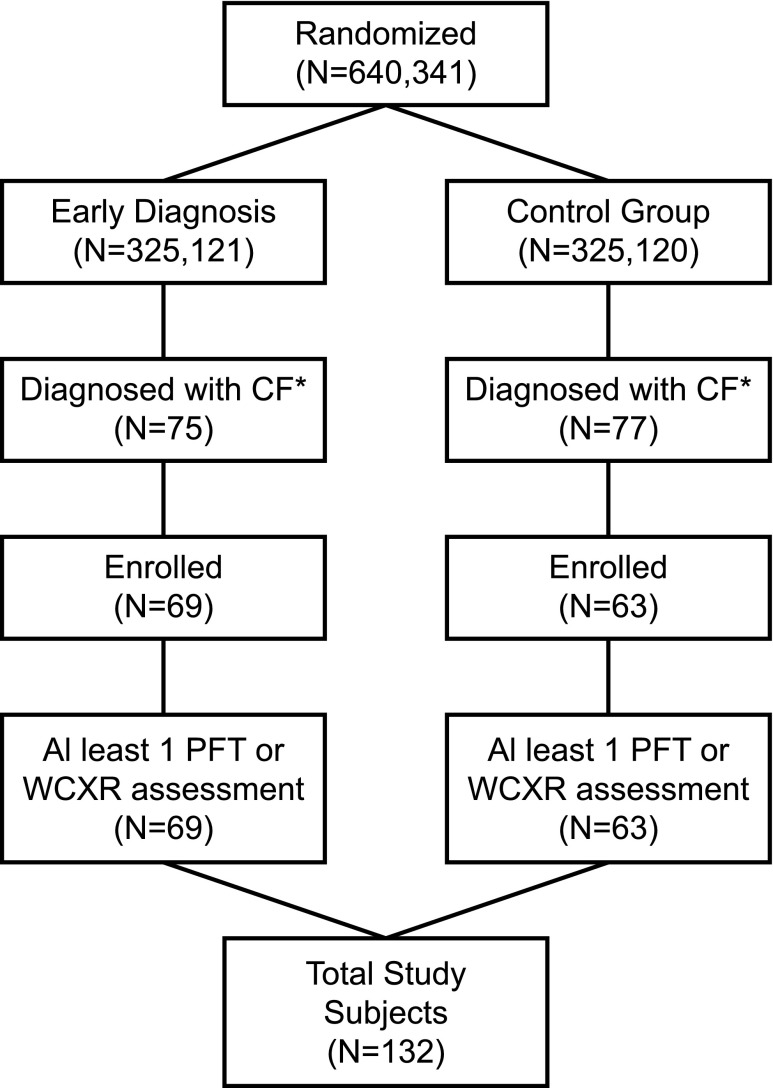
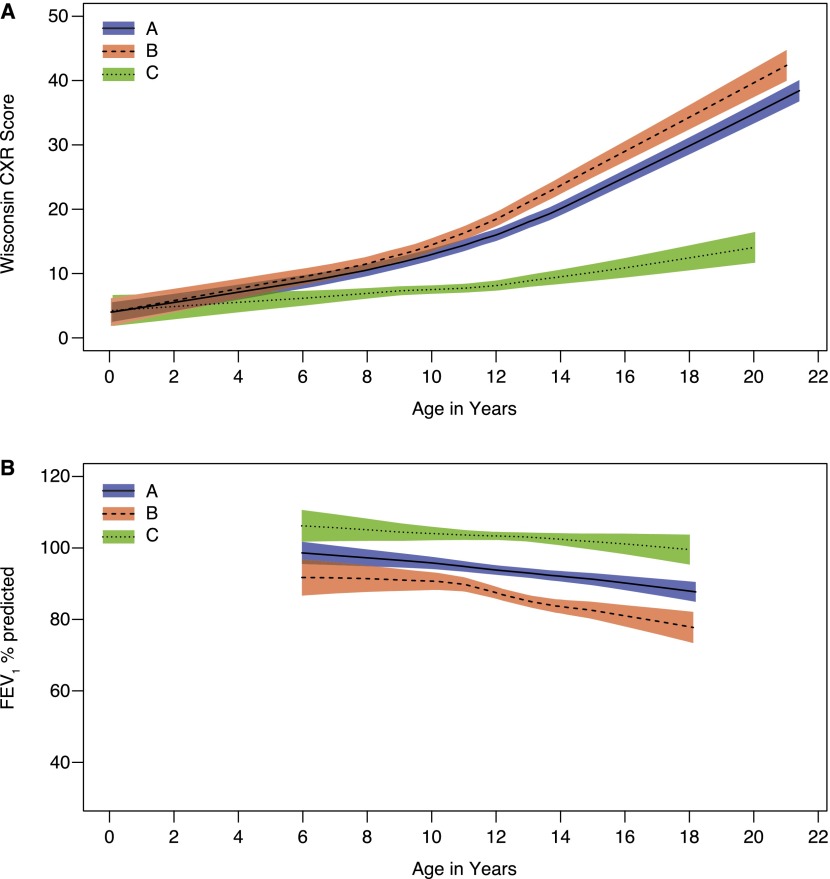
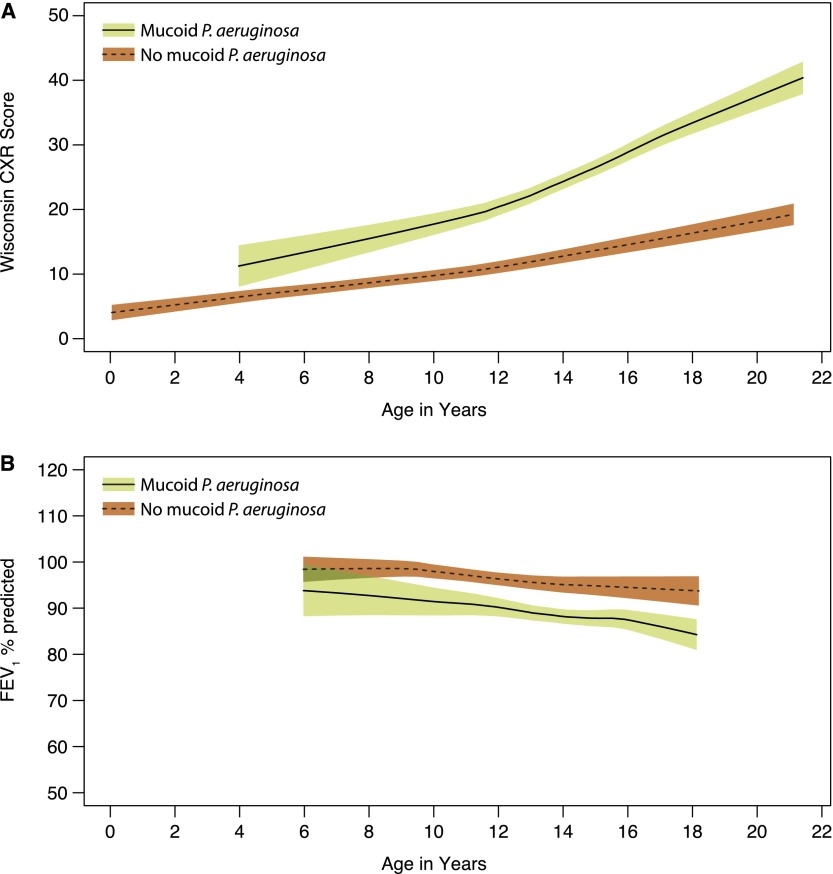
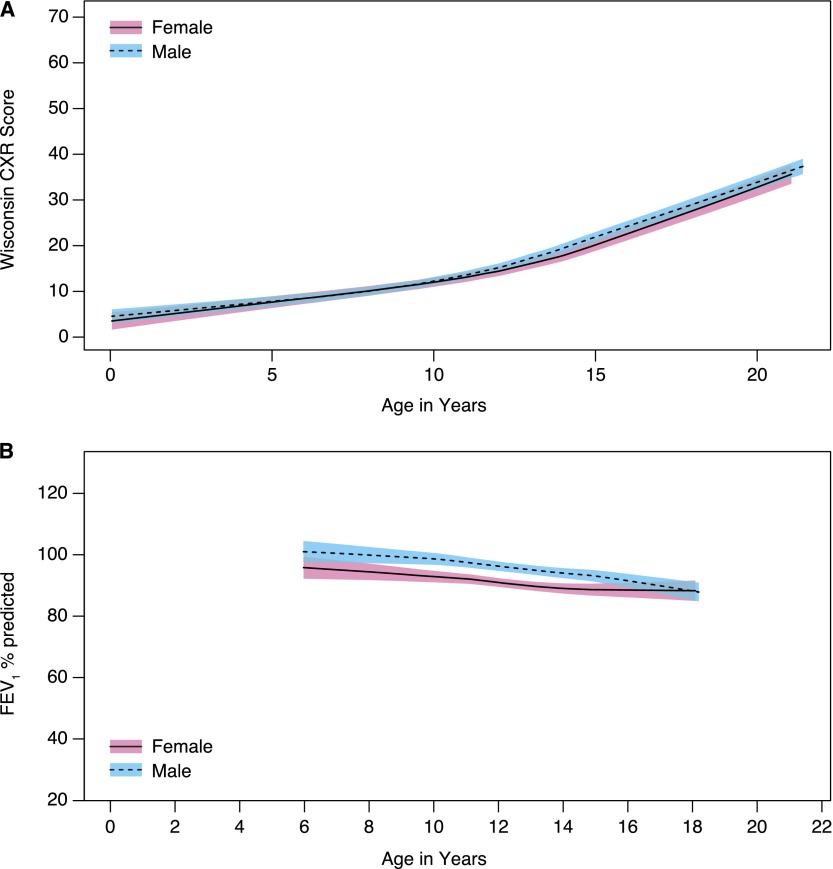
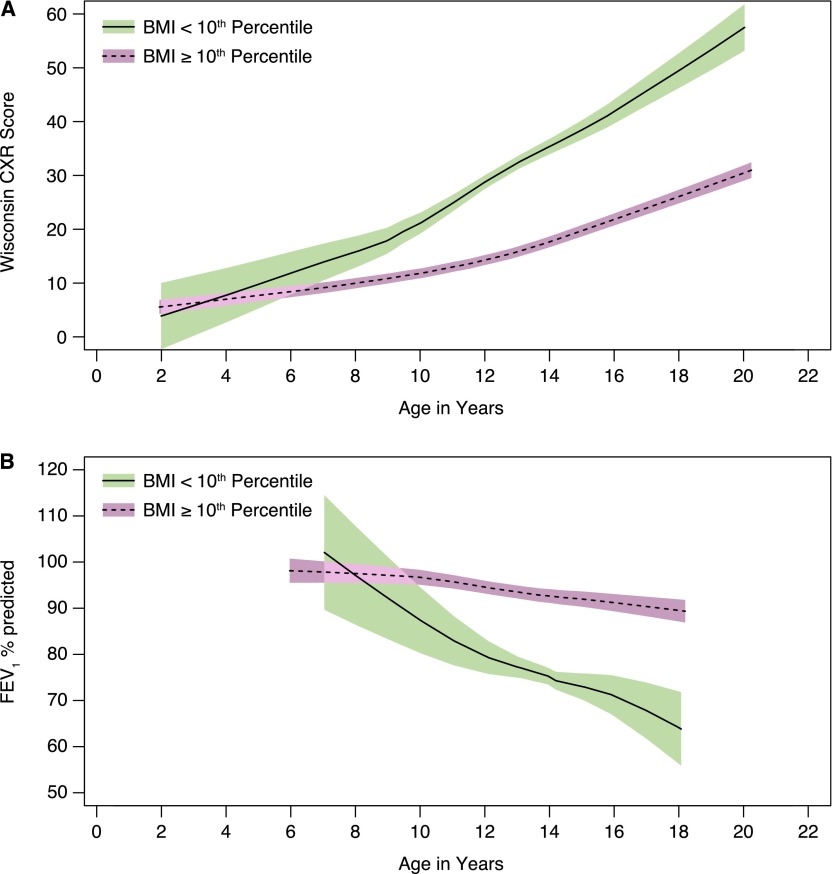
Measurements and main results: Combining all patients in the WI RCT, 132 subjects were observed for a mean of 16 years and contributed 1,579 chest radiographs, and 1,792 pulmonary function tests. The significant determinants of lung disease include genotype, poor growth, hospitalizations, meconium ileus, and infection with mucoid Pseudomonas aeruginosa. The previously described negative effect of female sex was not seen.
Conclusions: Modifiable extrinsic risk factors are the major determinants of progression of lung disease in children with CF. Better interventions to prevent or treat these risk factors may lead to improvements in lung health for children with CF.
Figures
References
-
- Cystic Fibrosis Foundation 2011 patient registry annual data report Bethesda, MD: Cystic Fibrosis Foundation; 2012[accessed 2013 Aug 26]Available from: http://www.cff.org/UploadedFiles/research/ClinicalResearch/2011-Patient-...
-
- Konstan M, Morgan W, Butler S, Pasta D, Craib M, Silva S, Stokes D, Wohl M, Wagener J, Regelmann W, et al. Risk factors for rate of decline in forced expiratory volume in one second in children and adolescents with cystic fibrosis J Pediatr 2007151134–139.139.e1 - PubMed
-
- Waters V, Stanojevic S, Atenafu EG, Lu A, Yau Y, Tullis E, Ratjen F. Effect of pulmonary exacerbations on long-term lung function decline in cystic fibrosis. Eur Respir J. 2012;40:61–66. - PubMed
-
- Zemel BS, Jawad AF, FitzSimmons S, Stallings VA. Longitudinal relationship among growth, nutritional status, and pulmonary function in children with cystic fibrosis: analysis of the Cystic Fibrosis Foundation National CF Patient Registry. J Pediatr. 2000;137:374–380. - PubMed
-
- Sanders DB, Bittner RC, Rosenfeld M, Redding GJ, Goss CH. Pulmonary exacerbations are associated with subsequent FEV1 decline in both adults and children with cystic fibrosis. Pediatr Pulmonol. 2011;46:393–400. - PubMed
Publication types
MeSH terms
Substances
Grants and funding
LinkOut - more resources
Full Text Sources
Other Literature Sources
Medical
