


Behavioral impairments in rats with chronic epilepsy suggest comorbidity between epilepsy and attention deficit/hyperactivity disorder
- PMID: 24262783
- PMCID: PMC3946735
- DOI: 10.1016/j.yebeh.2013.10.004
Behavioral impairments in rats with chronic epilepsy suggest comorbidity between epilepsy and attention deficit/hyperactivity disorder
Abstract
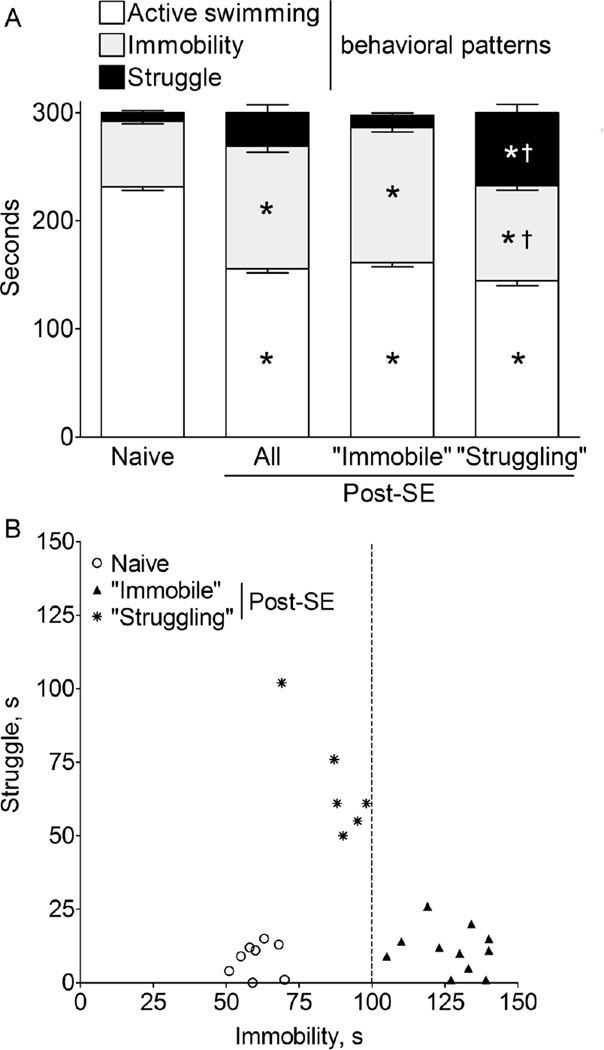
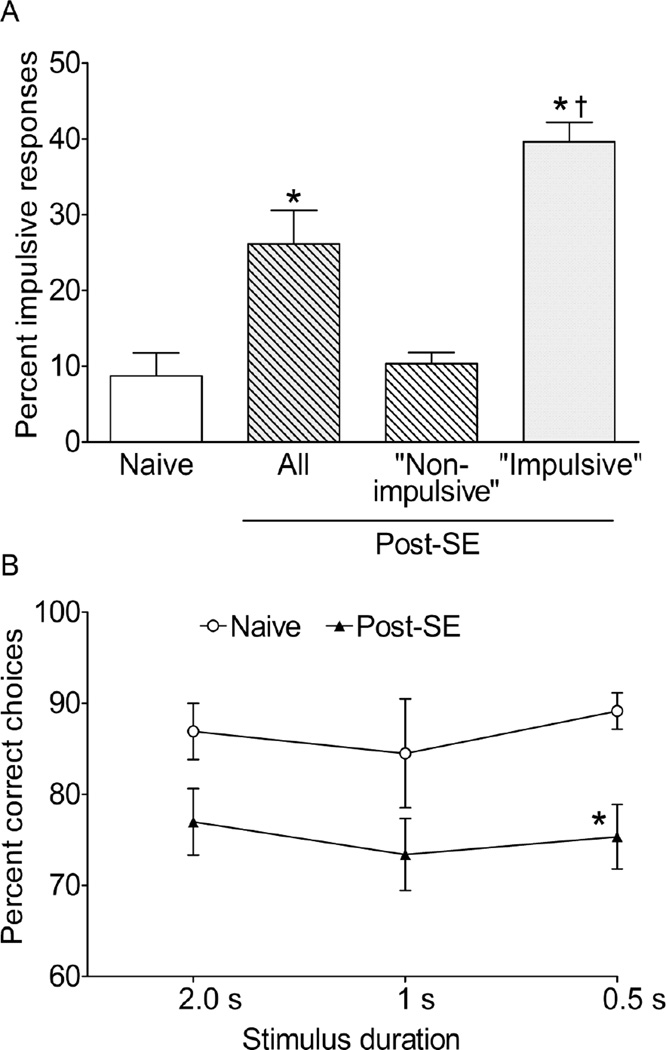
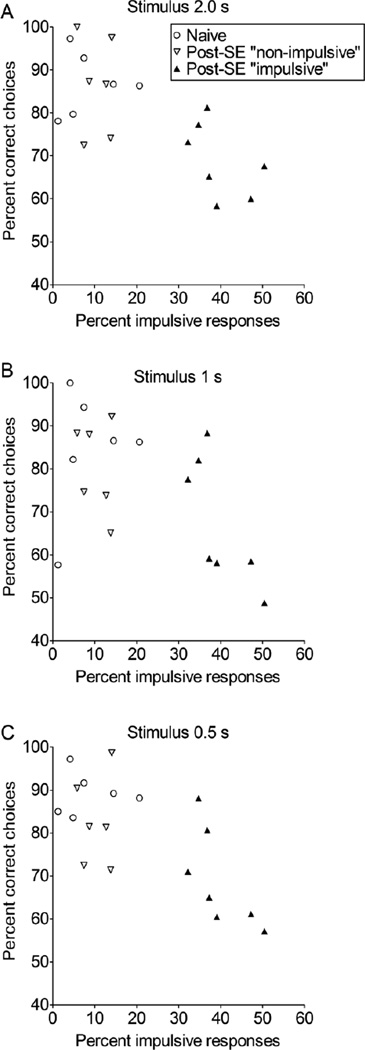
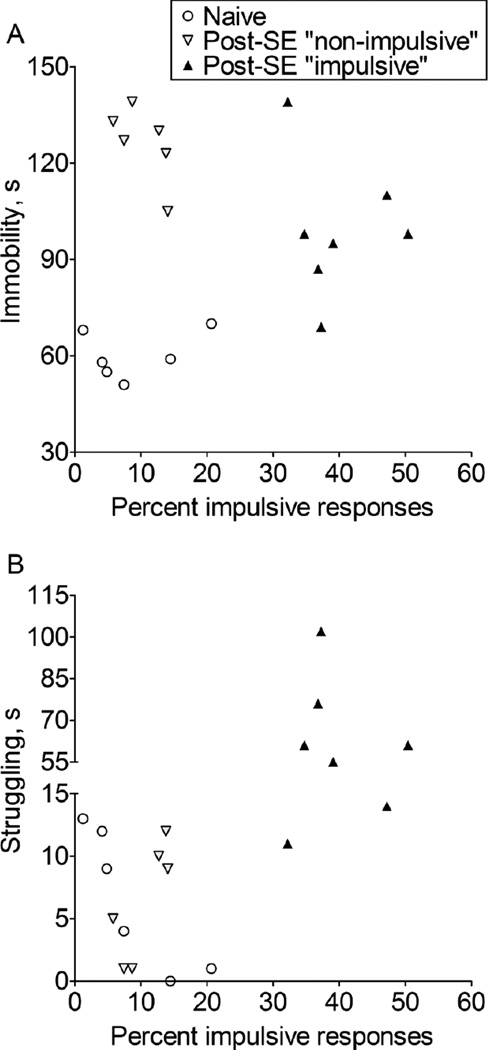
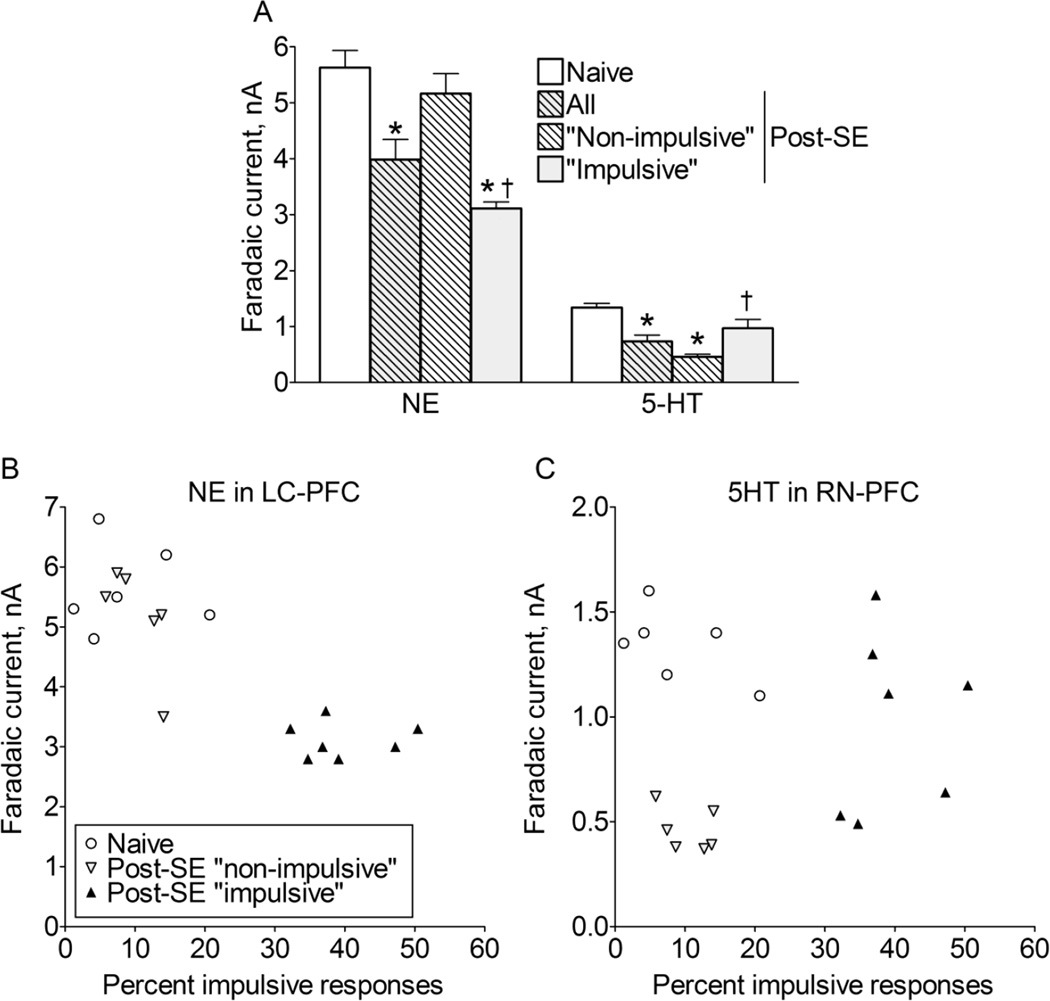
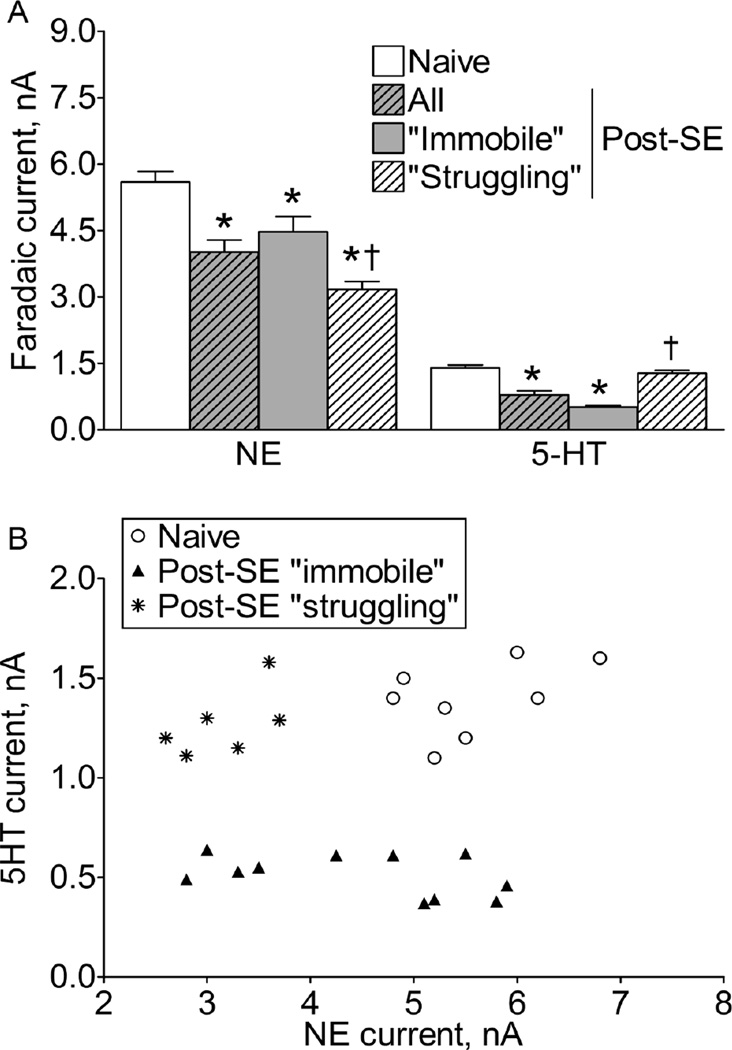
Attention deficit/hyperactivity disorder (ADHD) is encountered among patients with epilepsy at a significantly higher rate than in the general population. Mechanisms of epilepsy-ADHD comorbidity remain largely unknown. We investigated whether a model of chronic epilepsy in rats produces signs of ADHD, and thus, whether it can be used for studying mechanisms of this comorbidity. Epilepsy was induced in male Wistar rats via pilocarpine status epilepticus. Half of the animals exhibited chronic ADHD-like abnormalities, particularly increased impulsivity and diminished attention in the lateralized reaction-time task. These impairments correlated with the suppressed noradrenergic transmission in locus coeruleus outputs. The other half of animals exhibited depressive behavior in the forced swimming test congruently with the diminished serotonergic transmission in raphe nucleus outputs. Attention deficit/hyperactivity disorder and depressive behavior appeared mutually exclusive. Therefore, the pilocarpine model of epilepsy affords a system for reproducing and studying mechanisms of comorbidity between epilepsy and both ADHD and/or depression.
Keywords: 5-HT; ADHD; Attention deficit/hyperactivity disorder; Depression; EPMT; Epilepsy; FCV; FST; LC; LRTT; Lateralized reaction-time task; NE; Norepinephrine; PFC; RN; SE; Serotonin; TLE; attention deficit/hyperactivity disorder; elevated plus maze test; fast cyclic voltammetry; forced swimming test; lateralized reaction-time task; locus coeruleus; norepinephrine; prefrontal cortex; raphe nucleus; serotonin; status epilepticus; temporal lobe epilepsy.
© 2013.
Conflict of interest statement
Dr. Jentsch and Dr. Griesbach report receiving research support from NIH. Dr. Sankar reports receiving research support from Pfizer and consultancy and speaker bureau fees from UCB, Lundbeck, Sunovian, Upsher-Smith and Supernus. Dr. Dr. Mazarati reports receiving research support from the NIH and the Today and Tomorrow Children’s Fund.
Figures
References
-
- Schubert R. Attention deficit disorder and epilepsy. Pediatric neurology. 2005;32:1–10. - PubMed
-
- Parisi P, Moavero R, Verrotti A, Curatolo P. Attention deficit hyperactivity disorder in children with epilepsy. Brain & development. 2010;32:10–16. - PubMed
-
- Kaufmann R, Goldberg-Stern H, Shuper A. Attention-deficit disorders and epilepsy in childhood: incidence, causative relations and treatment possibilities. Journal of child neurology. 2009;24:727–733. - PubMed
-
- Kanner AM. The use of psychotropic drugs in epilepsy: what every neurologist should know. Seminars in neurology. 2008;28:379–388. - PubMed
-
- Hesdorffer DC, Ludvigsson P, Olafsson E, Gudmundsson G, Kjartansson O, Hauser WA. ADHD as a risk factor for incident unprovoked seizures and epilepsy in children. Archives of general psychiatry. 2004;61:731–736. - PubMed
Publication types
MeSH terms
Substances
Grants and funding
LinkOut - more resources
Full Text Sources
Other Literature Sources
Medical
Miscellaneous
