


Factors affecting visual outcomes in patients with diabetic macular edema treated with ranibizumab
- PMID: 24263379
- PMCID: PMC3965803
- DOI: 10.1038/eye.2013.245
Factors affecting visual outcomes in patients with diabetic macular edema treated with ranibizumab
Abstract
Purpose: To identify factors associated with visual outcomes in patients with diabetic macular edema (DME) treated with ranibizumab (RBZ) in the Ranibizumab for Edema of the mAcula in Diabetes-Protocol 2 (READ-2) Study.
Patients and methods: Optical coherence tomography scans, fundus photographs, and fluorescein angiograms (FAs) were graded and along with baseline characteristics were correlated with month (M) 24 visual outcome of best-corrected visual acuity (BCVA) ≤20/100 (poor outcome) vs >20/100 (better outcome).
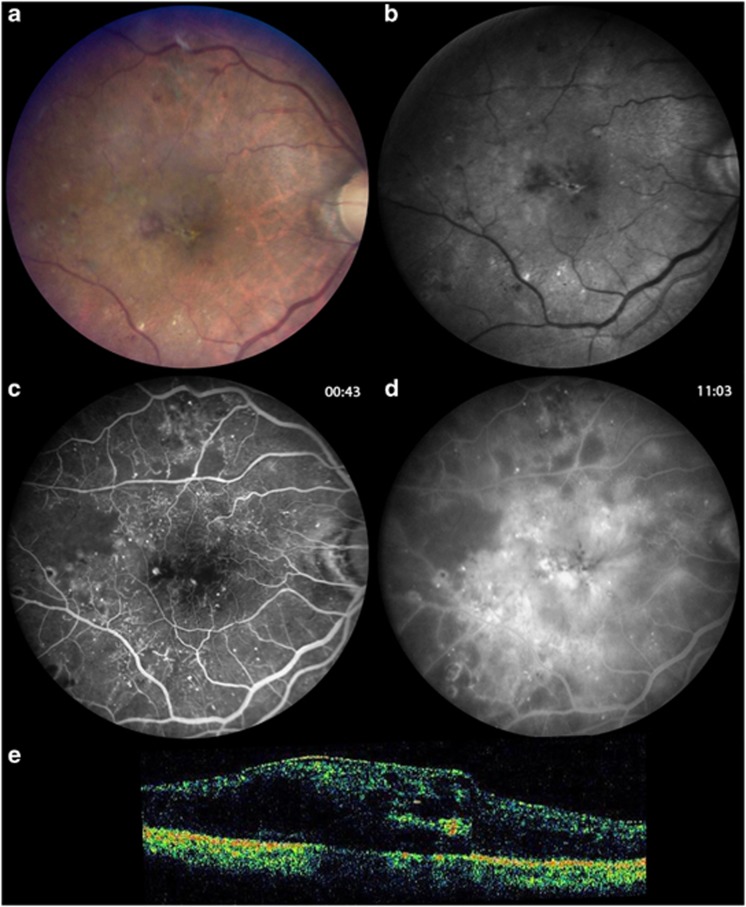
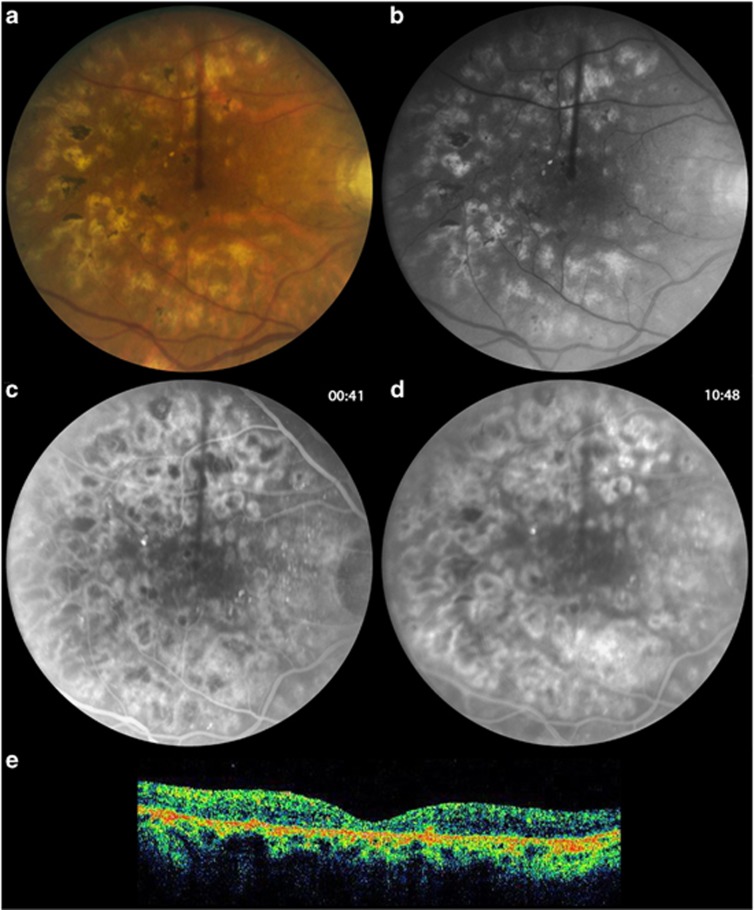
Results: Of 101 patients with a M20 visit or beyond, 27 (27%) had BCVA ≤20/100. Comparison of patients with or without poor outcome showed mean baseline BCVA of 16.8 letters (20/125) in the former compared with 30.4 letters (20/63; P<0.001). Mean change in BCVA between baseline and M24 was -2.6 letters in the poor outcome group compared with +9.8 letters (P<0.001). Foveal thickness (FTH) at M24 was 374.1 μm in the poor outcome group compared with 268.8 μm (P<0.01), a difference driven by 14 patients with mean FTH of 450.3 μm. Foveal atrophy occurred in 65% (11/17) in the poor outcome group compared with 17%(12/71, P=0.001). Persistent edema was noted in 52% (14/27) of patients with poor outcome. Laser scars near foveal center were significantly more common in patients with poor outcome who did not have edema vs those who did (78% (7/9) vs 23% (3/13) P=0.03).
Conclusion: Poor baseline BCVA (≤20/125) in DME patients predicts poor visual outcome (≤20/100) after 2 years of treatment with RBZ and/or focal/grid laser, often due to foveal atrophy and/or persistent edema.
Figures
References
-
- Klein R, Klein B.Vision disorders in diabetesIn: Group NDD editor,Diabetes in America2nd ed.National Institutes of Health: Washington, DC, USA; 1995293–330.
-
- Nguyen QD, Tatlipinar S, Shah SM, Haller JA, Quinlan E, Sung J, et al. Vascular endothelial growth factor is a critical stimulus for diabetic macular edema. Am J Ophthalmol. 2006;142:961–969. - PubMed
-
- Nguyen QD, Shah SM, Heier JS, Do DV, Lim J, Boyer D, et al. Primary end point (six months) results of the Ranibizumab for Edema of the mAcula in Diabetes (READ-2) Study. Ophthalmology. 2009;116:2175–2181. - PubMed
-
- Nguyen QD, Shah SM, Khwaja AA, Channa R, Hatef E, Do DV, et al. Two-year outcomes of the Ranibizumab for Edema of the mAcula in Diabetes (READ-2) study. Ophthalmology. 2010;117:2146–2151. - PubMed
Publication types
MeSH terms
Substances
Grants and funding
LinkOut - more resources
Full Text Sources
Other Literature Sources
Medical
Research Materials
Miscellaneous
