


Impact of various exercise modalities on hepatic mitochondrial function
- PMID: 24263979
- PMCID: PMC4028392
- DOI: 10.1249/MSS.0000000000000223
Impact of various exercise modalities on hepatic mitochondrial function
Abstract
Purpose: Hepatic mitochondrial adaptations to exercise are largely unknown. In this study, we sought to determine the effects of various exercise modalities on measures of hepatic mitochondrial function and metabolism.
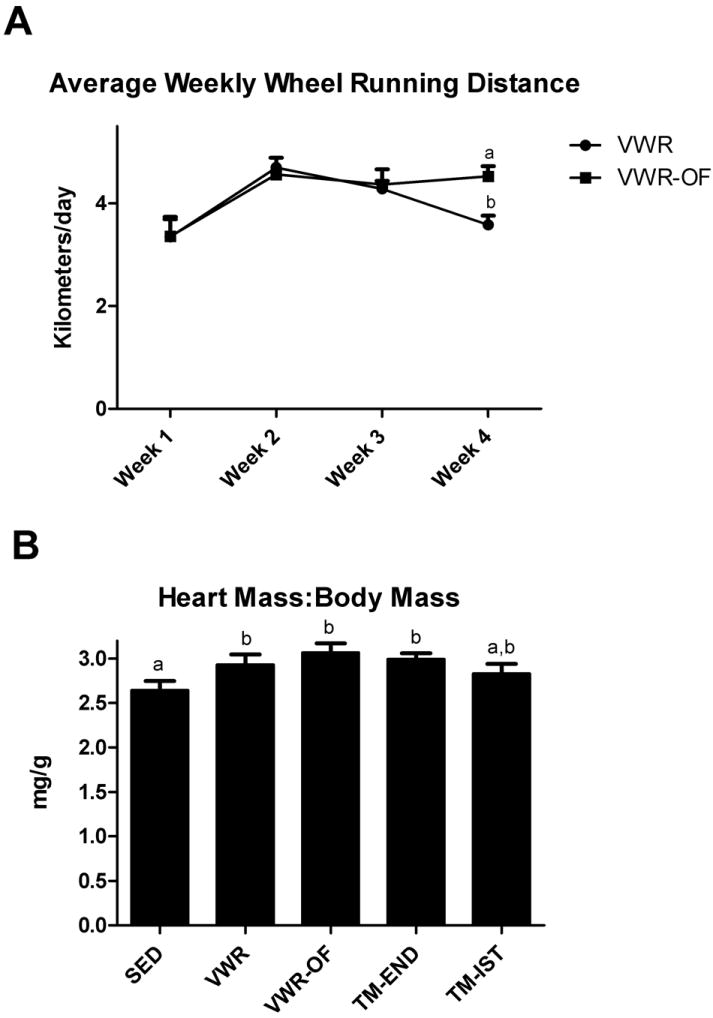
Methods: Male Sprague-Dawley rats were randomly assigned (n = 8-10 per group) into sedentary (SED), voluntary wheel running (VWR), VWR with food pulled during the dark cycle (VMR-OF), treadmill endurance exercise (TM-END; 30 m·min, 12% gradient, 60 min·d, 5 d·wk), or treadmill interval sprint training (TM-IST; 50 m·min, 12% gradient, 6 × 2.5 min bouts, 5 d·wk) groups for a 4-wk intervention.
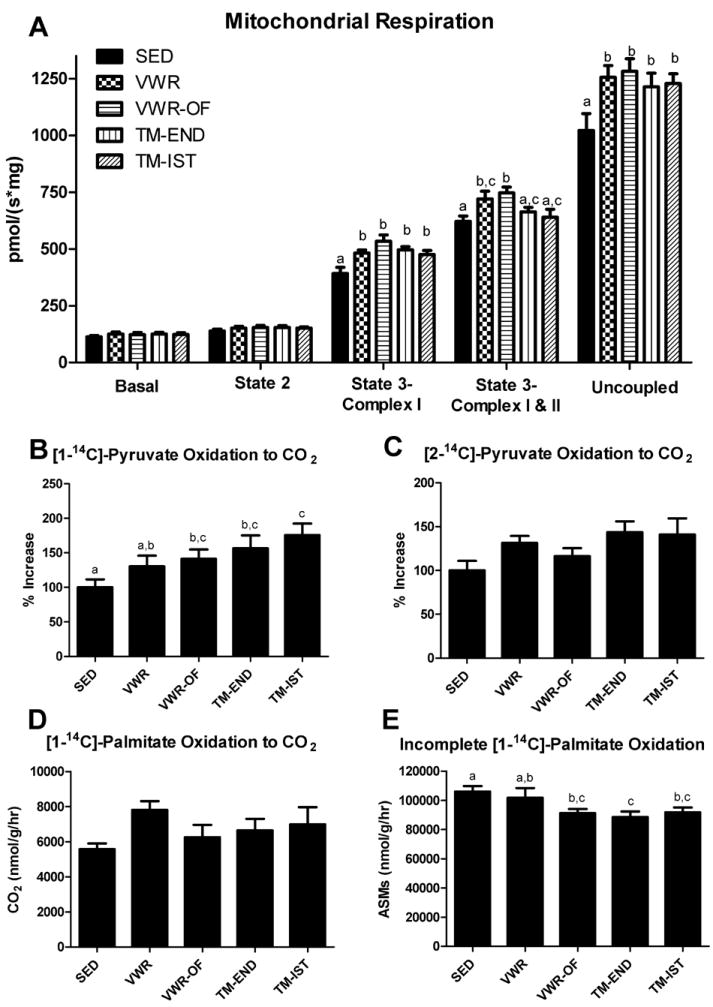
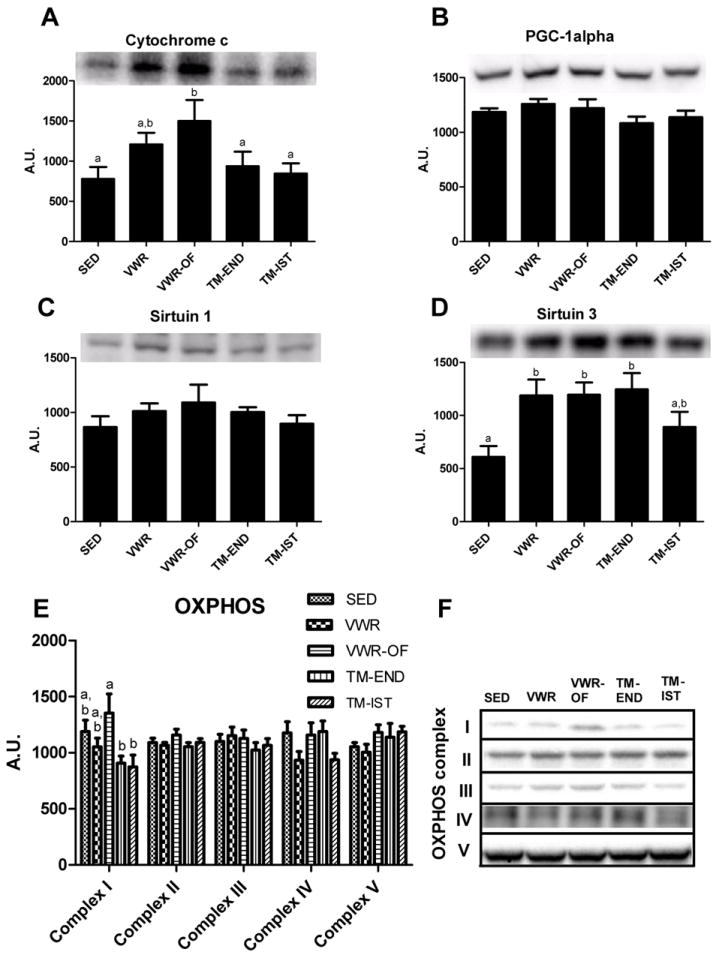
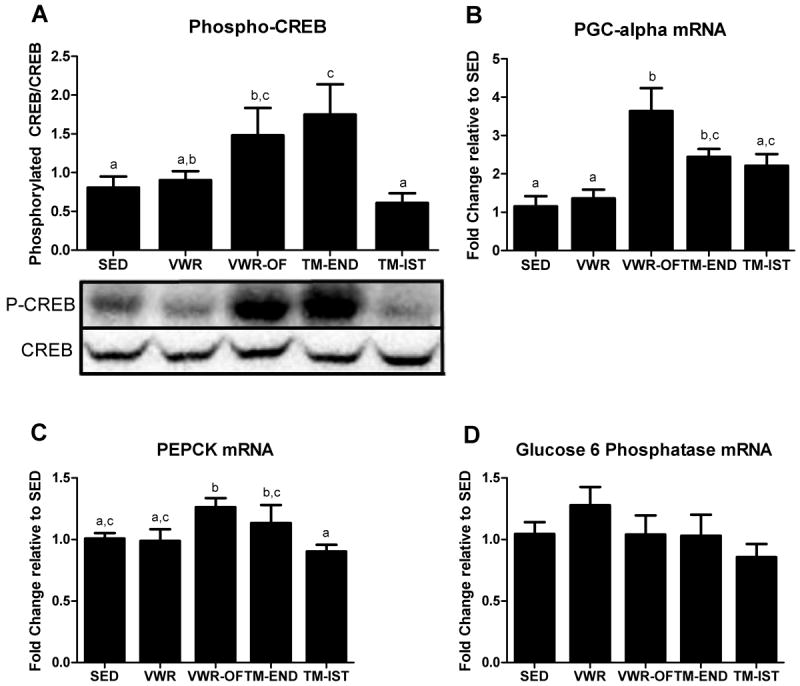
Results: Hepatic mitochondrial state 3 and maximal uncoupled respiration were significantly (P < 0.05) increased in all four exercise groups compared with SED animals. In addition, hepatic mitochondrial [1-C] pyruvate oxidation to CO2, an index of pyruvate dehydrogenase (PDH) activity, was significantly increased in VWR-OF, TM-END, and TM-IST rats (P < 0.05), whereas exercise-induced increases in [2-C] pyruvate oxidation and [1-C] palmitate oxidation to CO2 did not reach statistical significance. Hepatic mitochondrial sirtuin 3 protein content, which putatively increases activity of mitochondrial proteins, was elevated in the VWR, VWR-OF, and TM-END groups (P < 0.05). In addition, only VWR-OF animals experienced increases in hepatic cytochrome c protein content and phosphoenolpyruvate carboxykinase mRNA, whereas PGC-1α mRNA expression and phospho-CREB protein content was increased in VWR-OF and TM-END groups.
Conclusion: Four weeks of exercise training, regardless of exercise modality, significantly increased hepatic mitochondrial respiration and evoked other unique improvements in mitochondrial metabolism that do not appear to be dependent on increases in mitochondrial content.
Conflict of interest statement
The authors have no conflicts of interest to disclose.
Figures
References
-
- Ascensao A, Goncalves IO, Lumini-Oliveira J, Marques-Aleixo I, Dos Passos E, Rocha-Rodrigues S, Machado NG, Moreira AC, Oliveira PJ, Torrella JR, Magalhaes J. Endurance training and chronic intermittent hypoxia modulate in vitro salicylate-induced hepatic mitochondrial dysfunction. Mitochondrion. 2012;12(6):607–16. - PubMed
-
- Bass A, Brdiczka D, Eyer P, Hofer S, Pette D. Metabolic differentiation of distinct muscle types at the level of enzymatic organization. Eur J Biochem. 1969;10(2):198–206. - PubMed
Publication types
MeSH terms
Substances
Grants and funding
LinkOut - more resources
Full Text Sources
Other Literature Sources
Research Materials
