


Number of lymph nodes associated with maximal reduction of long-term mortality risk in pathologic node-negative non-small cell lung cancer
- PMID: 24266949
- PMCID: PMC3946669
- DOI: 10.1016/j.athoracsur.2013.09.058
Number of lymph nodes associated with maximal reduction of long-term mortality risk in pathologic node-negative non-small cell lung cancer
Abstract
Background: Forty-four percent of patients with pathologic node negative (pN0) non-small cell lung cancer (NSCLC) die within 5 years of curative-intent surgical procedures. Heterogeneity in pathologic nodal examination practice raises concerns about the accuracy of nodal staging in these patients. We hypothesized a reciprocal relationship between the number of lymph nodes examined and the probability of missed lymph node metastasis and sought to identify the number of lymph nodes associated with the lowest mortality risk in pN0 NSCLC.
Methods: We analyzed resections for first primary pN0 NSCLC in the United States Surveillance, Epidemiology, and End Results (SEER) database from 1998 to 2009, with survival updated to December 31, 2009.
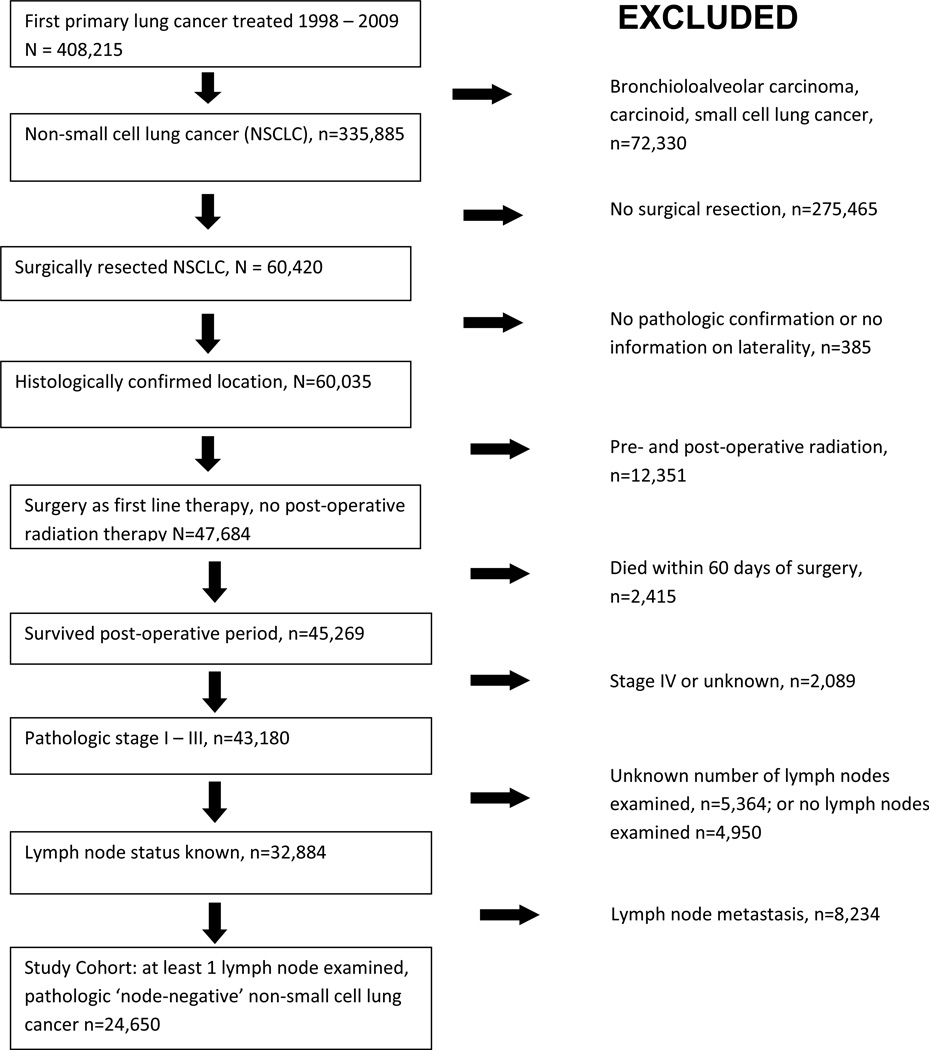
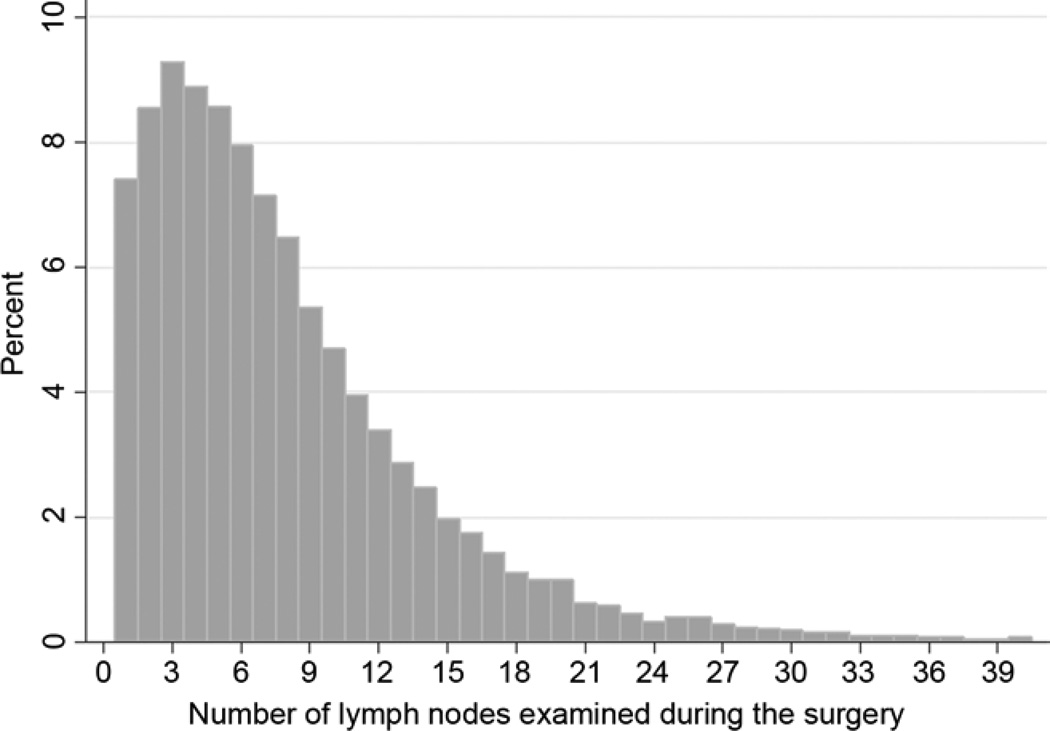
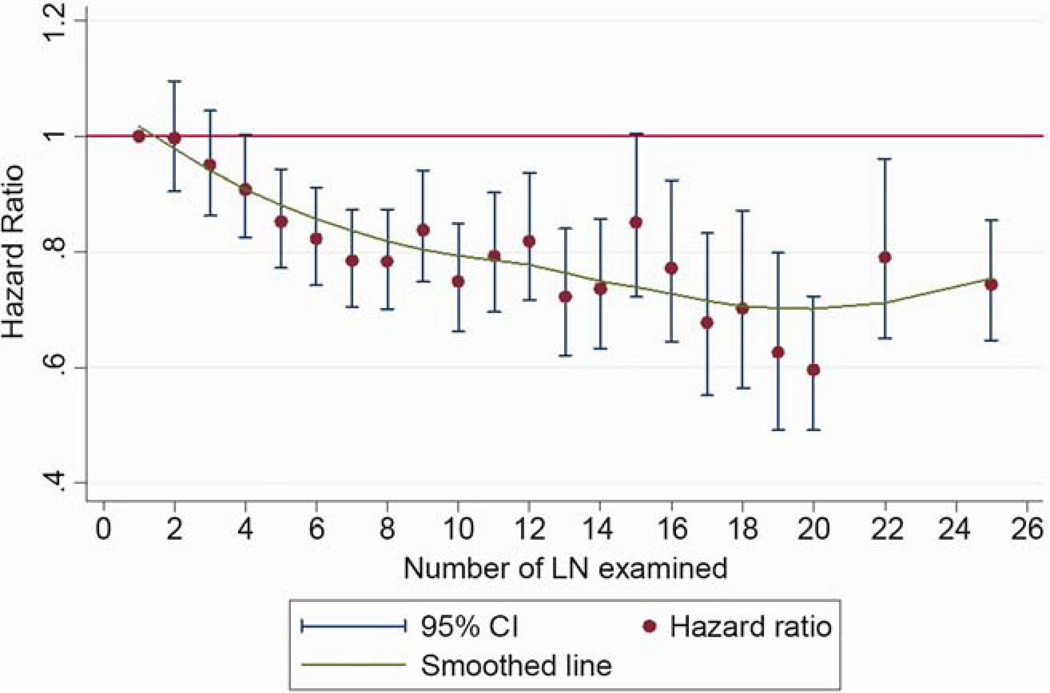
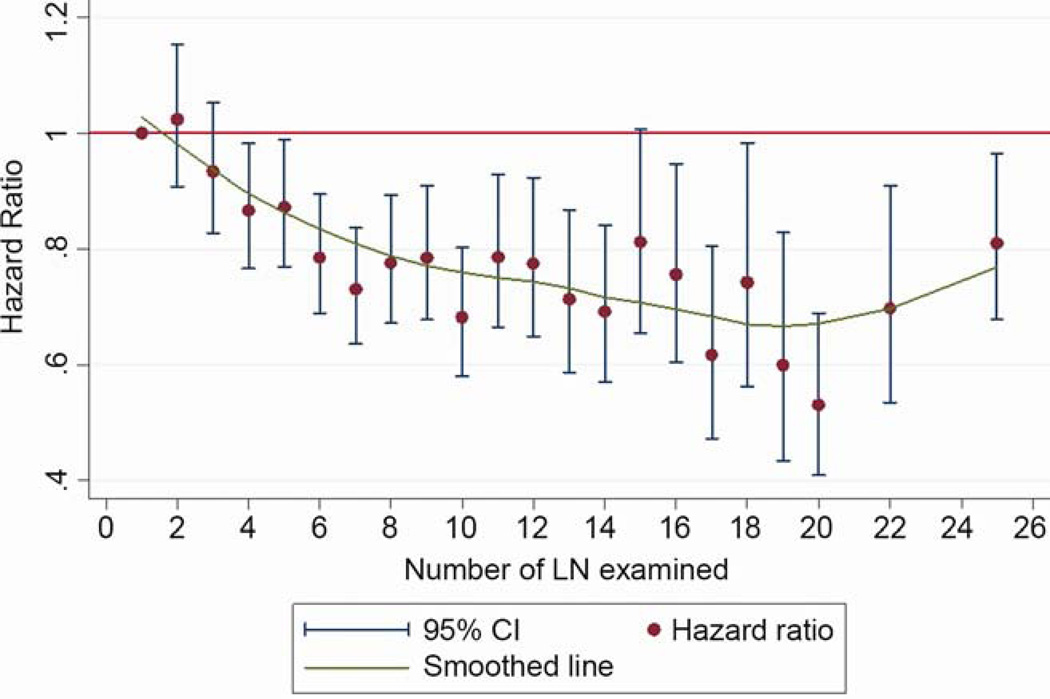
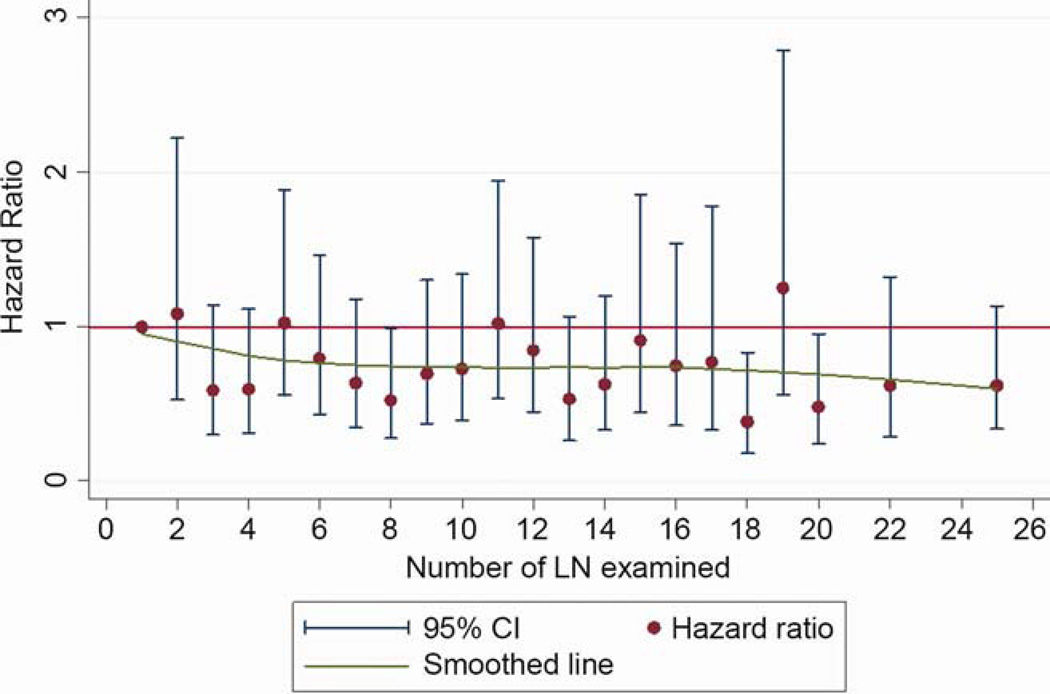
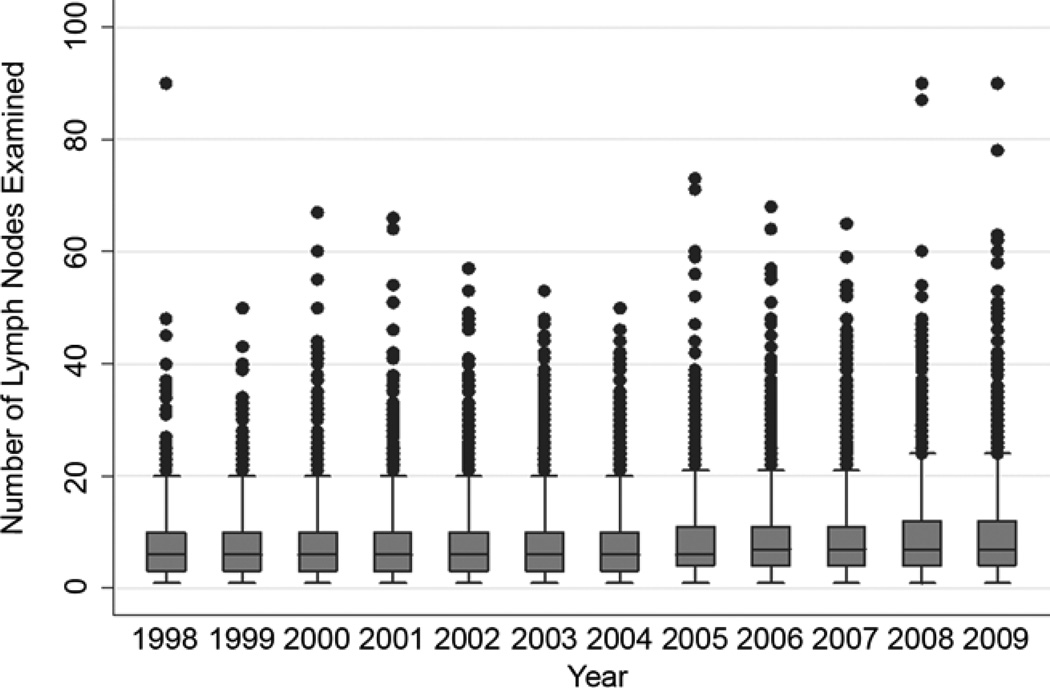
Results: In 24,650 eligible patients, there was a significant sequential reduction in mortality risk with examination of more lymph nodes. The lowest mortality risk occurred in those with 18 to 21 lymph nodes examined. The hazard ratio for all-cause mortality was 0.65 and the 95% confidence interval (CI) was 0.57 to 0.73; for lung cancer-specific mortality, hazard ratio was 0.62 and CI was 0.53 to 0.73 (p<0.001 for both). The median number of lymph nodes examined was only 6.
Conclusions: Lymph node evaluation falls far short of optimal in patients with resected pN0 NSCLC, raising the odds of underestimation of long-term mortality risk and failure to identify candidates for postoperative adjuvant therapy. This represents a major quality gap for which corrective intervention is warranted.
Keywords: 10.
Copyright © 2014 The Society of Thoracic Surgeons. Published by Elsevier Inc. All rights reserved.
Figures
Comment in
-
Invited commentary.Ann Thorac Surg. 2014 Feb;97(2):393. doi: 10.1016/j.athoracsur.2013.10.075. Ann Thorac Surg. 2014. PMID: 24484783 No abstract available.
-
Prognostic stratification of node-negative NSCLC patients: is it worthwhile?Ann Thorac Surg. 2014 Oct;98(4):1527. doi: 10.1016/j.athoracsur.2014.04.112. Ann Thorac Surg. 2014. PMID: 25282241 No abstract available.
-
Reply: To PMID 24266949.Ann Thorac Surg. 2014 Oct;98(4):1527-8. doi: 10.1016/j.athoracsur.2014.07.014. Ann Thorac Surg. 2014. PMID: 25282242 No abstract available.
References
-
- Jemal A, Center MM, DeSantis C, et al. Global patterns of cancer incidence and mortality rates and trends. Cancer Epidemiol Biomarkers Prev. 2010;19:1893–1907. - PubMed
-
- Siegel R, Naishadham D, Jemal A. Cancer statistics, 2012. CA Cancer J Clin. 2012;62:10–29. - PubMed
-
- Goldstraw P, Crowley J, Chansky K, et al. The IASLC lung cancer staging project: Proposals for the revision of the TNM stage groupings in the forthcoming (seventh) edition of the TNM classification of malignant tumors. J Thorac Oncol. 2007;2:706–714. - PubMed
-
- Rusch VW, Crowley J, Giroux DJ, et al. The IASLC lung cancer staging project: Proposals for the revision of the N descriptors in the forthcoming seventh edition of the TNM classification for lung cancer. J Thorac Oncol. 2007;2:603–612. - PubMed
-
- Gajra A, Newman N, Gamble GP, et al. Effect of number of lymph nodes sampled on outcome of patients with stage I non-small-cell lung cancer. J Clin Oncol. 2003;21:1029–1034. - PubMed
MeSH terms
Grants and funding
LinkOut - more resources
Full Text Sources
Other Literature Sources
Medical
Miscellaneous
