


Trophic factor and hormonal regulation of neurite outgrowth in sensory neuron-like 50B11 cells
- PMID: 24269872
- PMCID: PMC3903183
- DOI: 10.1016/j.neulet.2013.11.018
Trophic factor and hormonal regulation of neurite outgrowth in sensory neuron-like 50B11 cells
Abstract
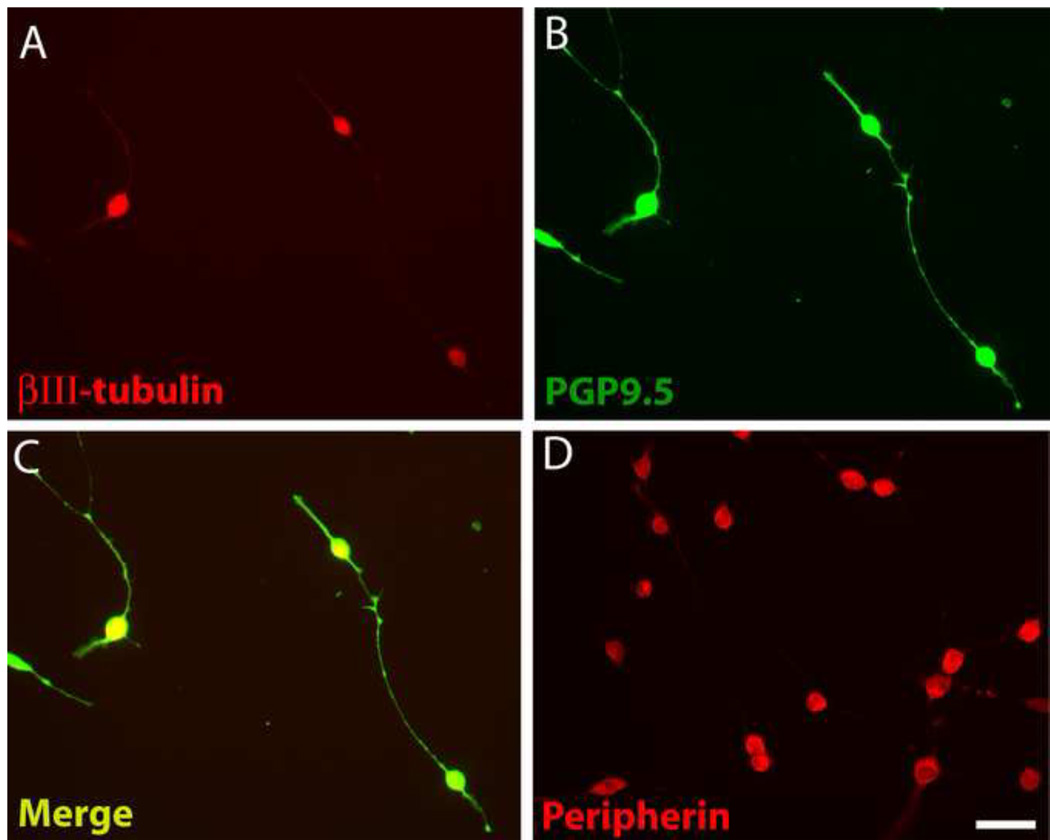
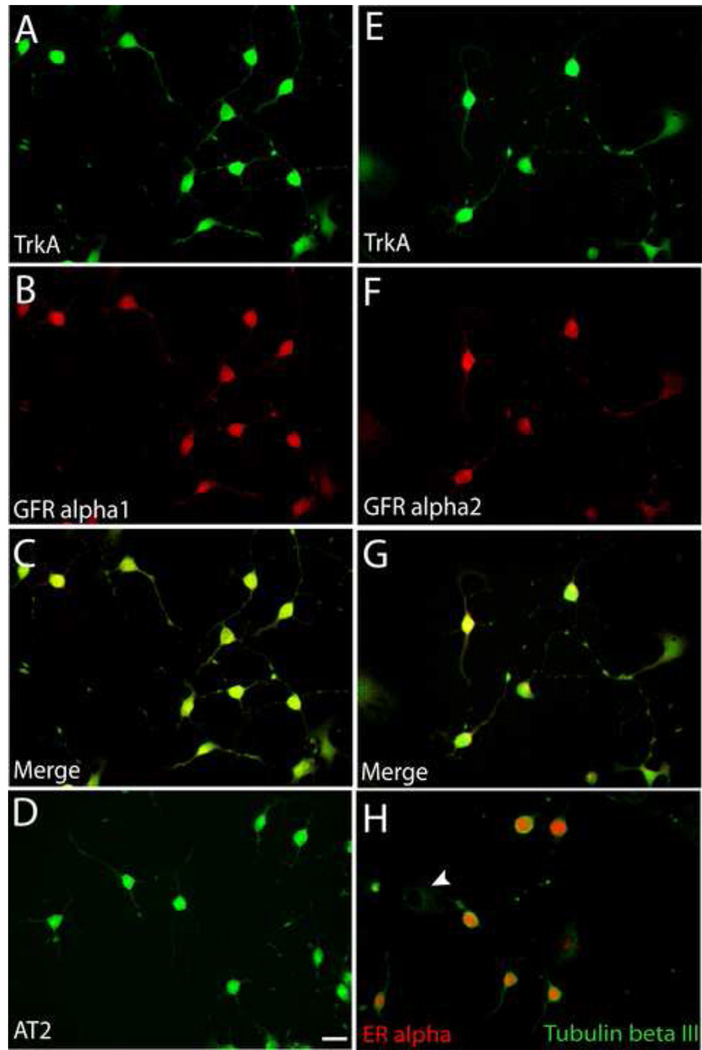
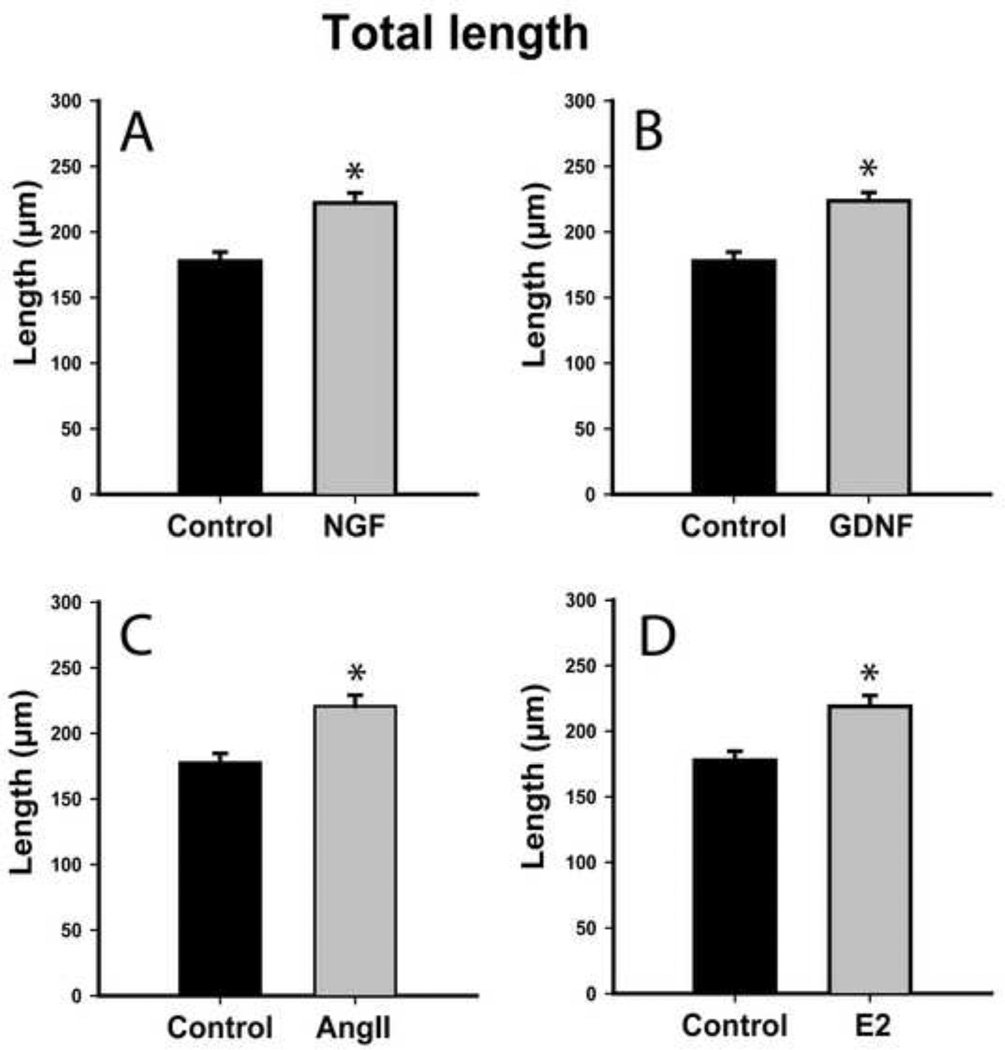
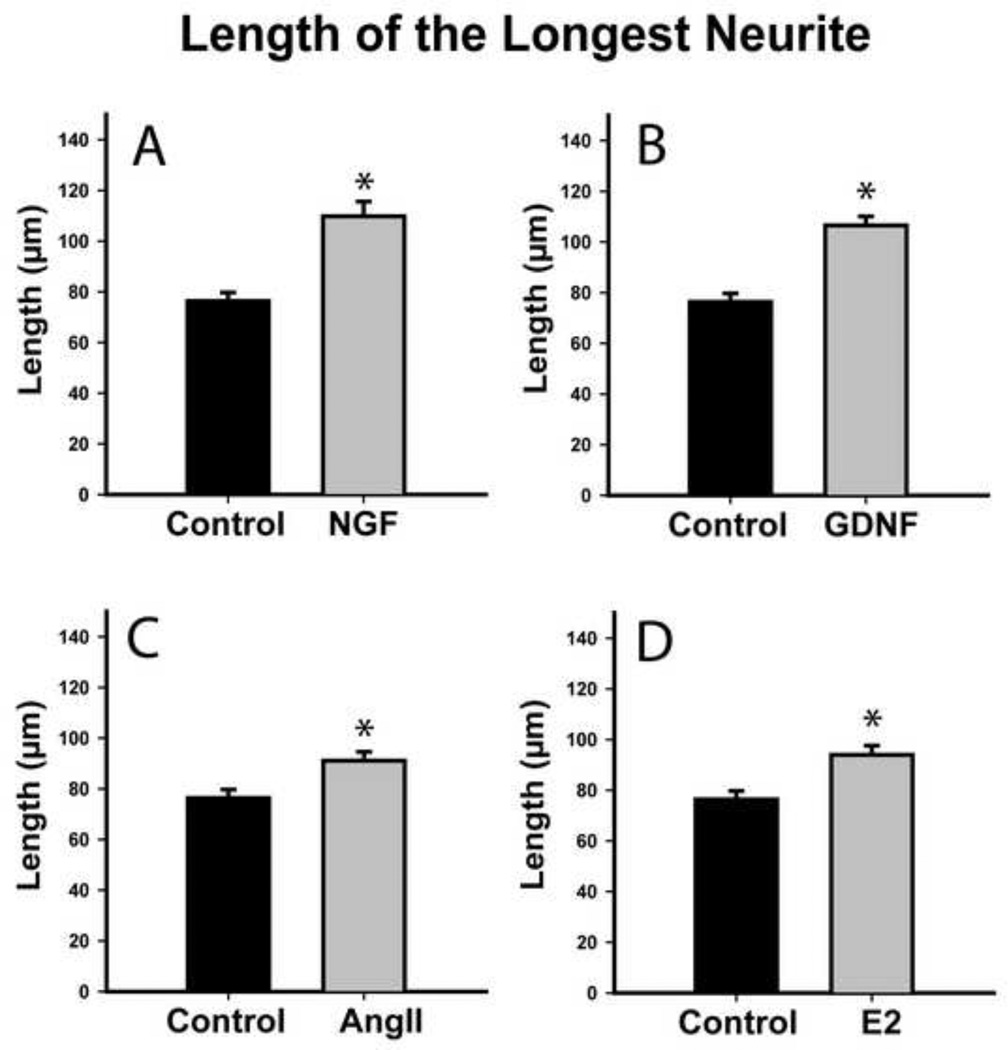
Sensory axon integrity and regenerative capacity are important considerations in understanding neuropathological conditions characterized by hyper- or insensitivity. However, our knowledge of mechanisms regulating axon outgrowth are limited by an absence of suitable high-throughput assay systems. The 50B11 cell line generated from rat embryonic dorsal root ganglion neurons offers a promising model for screening assays. Prior characterization shows that these cells express cytoskeletal proteins and genes encoding ion channels and neurotrophin receptors in common with sensory nociceptor neurons. In the present study we further characterized 50B11 cells in regard to their phenotypes and responsiveness to neurotrophic and hormonal factors. 50B11 cells express neuronal cytoplasmic proteins including beta-3 tubulin, peripherin (a marker of unmyelinated neurons), and the pan-neuronal ubiquitin hydrolase, PGP9.5. Only PGP9.5 immunoreactivity was uniformly distributed throughout soma and axons, and therefore presents the best means for visualizing the entire axon arbor. All cells co-express both NGF and GDNF receptors and addition of ligands increased neurite length. 50B11 cells also showed immunoreactivity for the estrogen receptor-α and the angiotensin receptor type II, and both 17-β estradiol and angiotensin II increased outgrowth by differentiated cells. 50B11 cells therefore show features reported previously for primary unmyelinated nociceptor neurons, including responsiveness to classical neurotrophins and hormonal modulators. Coupled with their ease of culture and predictable differentiation, 50B11 cells represent a promising cell line on which to base assays that more clearly reveal mechanisms regulating axon outgrowth and integrity.
Keywords: ANGII; AT2; Axon; DRG; Dorsal root ganglion; E2; ER; GDNF; High throughput screening; Hormones; NGF; Neurotrophic factors; Outgrowth; PGP9.5; angiotensin II; angiotensin II receptor type 2; dorsal root ganglion; estradiol or estrogen; estrogen receptor; glial cell line derived neurotrophic factor; immunoreactivity; ir; nerve growth factor; protein gene product 9.5.
Copyright © 2013 Elsevier Ireland Ltd. All rights reserved.
Figures
References
-
- Alfredson H. Chronic midportion Achilles tendinopathy: an update on research and treatment. Clin Sports Med. 2003;22:727–741. - PubMed
-
- Baloh RH, Tansey MG, Lampe PA, Fahrner TJ, Enomoto H, Simburger KS, Leitner ML, Araki T, Johnson EM, Jr, Milbrandt J. Artemin, a novel member of the GDNF ligand family, supports peripheral and central neurons and signals through the GFRalpha3-RET receptor complex. Neuron. 1998;21:1291–1302. - PubMed
-
- Barker-Gibb AL, Dougherty KD, Einheber S, Drake CT, Milner TA. Hippocampal tyrosine kinase A receptors are restricted primarily to presynaptic vesicle clusters. J Comp Neurol. 2001;430:182–199. - PubMed
-
- Blacklock AD, Cauveren JA, Smith PG. Estrogen selectively increases sensory nociceptor innervation of arterioles in the female rat. Brain Res. 2004;1018:55–65. - PubMed
-
- Blacklock AD, Johnson MS, Krizsan-Agbas D, Smith PG. Estrogen increases sensory nociceptor neuritogenesis in vitro by a direct, nerve growth factor-independent mechanism. Eur J Neurosci. 2005;21:2320–2328. - PubMed
Publication types
MeSH terms
Substances
Grants and funding
LinkOut - more resources
Full Text Sources
Other Literature Sources
Medical
Research Materials
