


A mechanistic view of polybrominated diphenyl ether (PBDE) developmental neurotoxicity
- PMID: 24270005
- PMCID: PMC4028440
- DOI: 10.1016/j.toxlet.2013.11.011
A mechanistic view of polybrominated diphenyl ether (PBDE) developmental neurotoxicity
Abstract
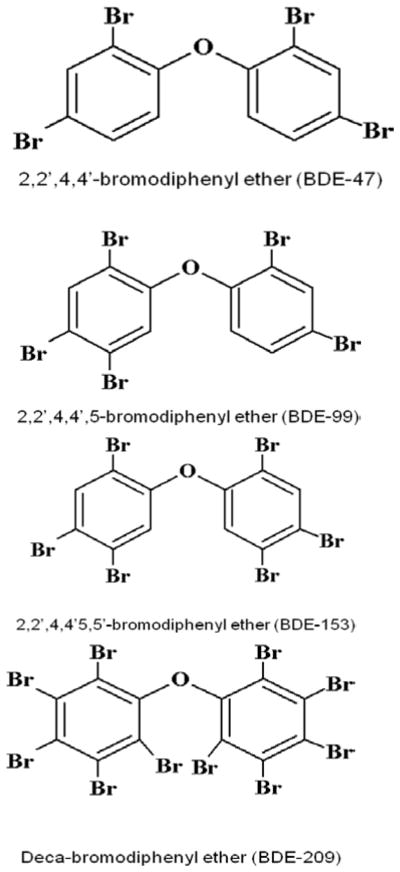
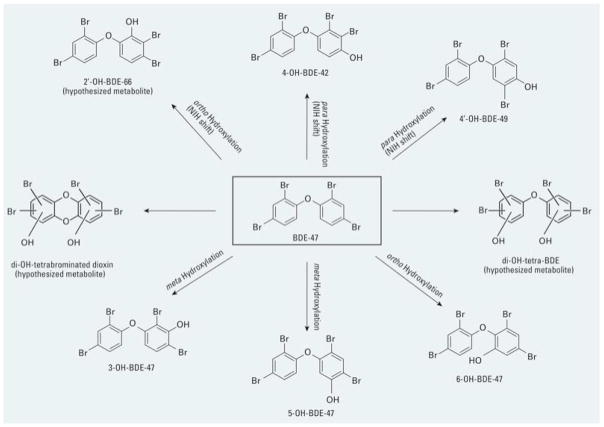
Polybrominated diphenyl ethers (PBDEs), extensively used in the past few decades as flame retardants in a variety of consumer products, have become world-wide persistent environmental pollutants. Levels in North America are usually higher than those in Europe and Asia, and body burden is 3-to-9-fold higher in infants and toddlers than in adults. The latter has raised concern for potential developmental toxicity and neurotoxicity of PBDEs. Experimental studies in animals and epidemiological observations in humans suggest that PBDEs may be developmental neurotoxicants. Pre- and/or post-natal exposure to PBDEs may cause long-lasting behavioral abnormalities, particularly in the domains of motor activity and cognition. The mechanisms underlying the developmental neurotoxic effects of PBDEs are not known, though several hypotheses have been put forward. One general mode of action relates to the ability of PBDEs to impair thyroid hormone homeostasis, thus indirectly affecting the developing brain. An alternative or additional mode of action involves a direct effect of PBDEs on nervous system cells; PBDEs can cause oxidative stress-related damage (DNA damage, mitochondrial dysfunction, apoptosis), and interfere with signal transduction (particularly calcium signaling), and with neurotransmitter systems. Important issues such as bioavailability and metabolism of PBDEs, extrapolation of results to low level of exposures, and the potential effects of interactions among PBDE congeners and between PBDEs and other contaminants also need to be taken into account.
Keywords: Apoptosis; Calcium signaling; Developmental neurotoxicity; Oxidative stress; Polybrominated diphenyl ethers; Thyroid hormone homeostasis.
Copyright © 2013 Elsevier Ireland Ltd. All rights reserved.
Figures
References
-
- Abdelouahab N, Suvorov A, Pasquier JC, Langlois MF, Praud JP, Takser L. Thyroid hormone disruption by low-dose BDE-47 in prenatally exposed lambs. Neonatology. 2009;96:120–124. - PubMed
-
- Abdelouahab N, Langlois MF, Lavoie L, Corbin F, Pasquier JC, Takser L. Maternal and cord-blood thyroid hormone levels and exposure to polybrominated diphenyl ethers and polychlorinated biphenyls during early pregnancy. Am J Epidemiol. 2013 in press. - PubMed
-
- Albina ML, Alonso V, Linares V, Belles M, Sirvent JJ, Domingo JL, Sanchez DJ. Effects of exposure to BDE-99 on oxidative status of liver and kidney in adult rats. Toxicology. 2010;271:51–56. - PubMed
-
- Alm H, Kultima K, Scholz B, Nilsson A, Andren PE, Fex-Svenningsen A, Dencker L, Stigson M. Exposure to brominated flame retardant PBDE-99 affects cytoskeletal protein expression in the neonatal mouse cerebral cortex. Neurotoxicology. 2008;29:628–637. - PubMed
Publication types
MeSH terms
Substances
Grants and funding
LinkOut - more resources
Full Text Sources
Other Literature Sources
Medical
Miscellaneous
