Outcome prediction of diffuse large B-cell lymphomas associated with hepatitis C virus infection: a study on behalf of the Fondazione Italiana Linfomi
- PMID: 24270404
- PMCID: PMC3943312
- DOI: 10.3324/haematol.2013.094318
Outcome prediction of diffuse large B-cell lymphomas associated with hepatitis C virus infection: a study on behalf of the Fondazione Italiana Linfomi
Abstract
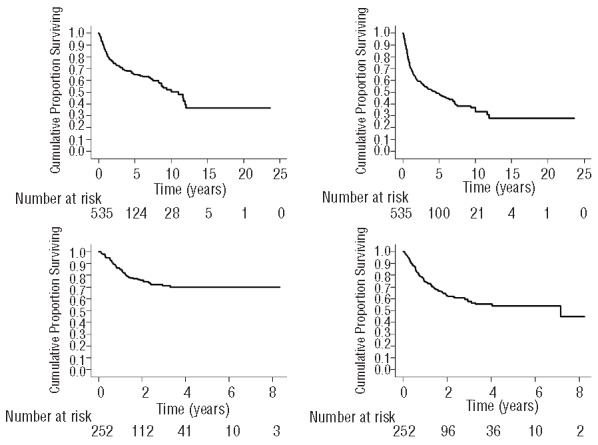
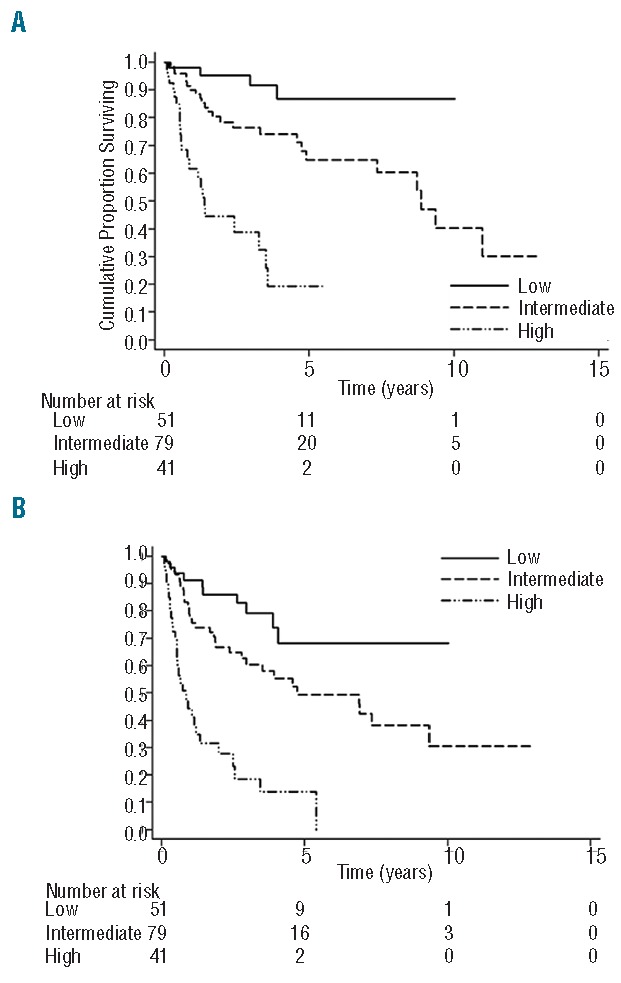
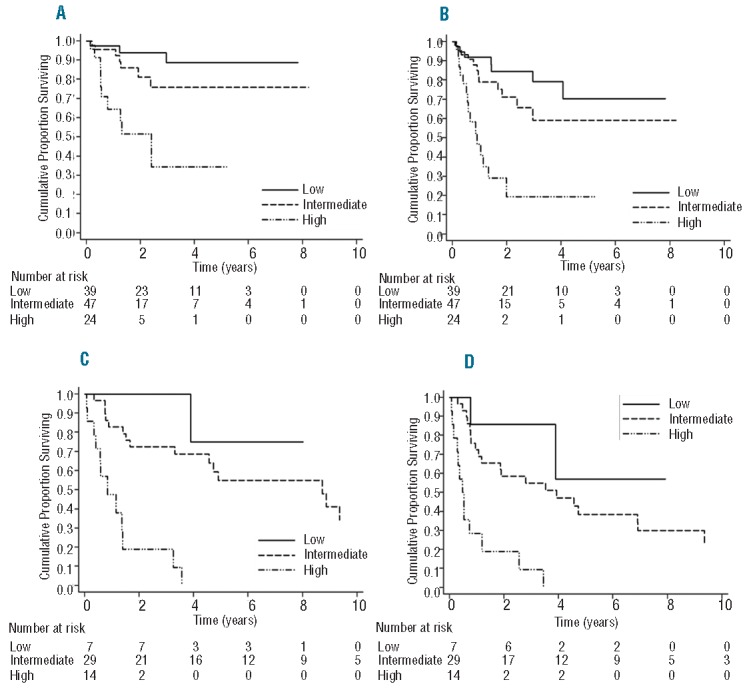
A specific prognostication score for hepatitis C virus-positive diffuse large B-cell lymphomas is not available. For this purpose, the Fondazione Italiana Linfomi (FIL, Italian Lymphoma Foundation) carried out a multicenter retrospective study on a large consecutive series of patients with hepatitis C virus-associated diffuse large B-cell lymphoma to evaluate the prognostic impact of clinical and virological features and to develop a specific prognostic score for this subset of patients. All prognostic evaluations were performed on 535 patients treated with an anthracycline-based induction regimen (with rituximab in 255 cases). Severe hepatotoxicity was observed in 14% of patients. The use of rituximab was not associated with increased rate of severe hepatotoxicity. Three-year overall survival and progression-free survival were 71% and 55%, respectively. At multivariate analysis, ECOG performance status of 2 or over, serum albumin below 3.5 g/dL and HCV-RNA viral load over 1000 KIU/mL retained prognostic significance. We combined these 3 factors in a new "HCV Prognostic Score" able to discriminate 3 risk categories with different overall and progression-free survival (low=0; intermediate=1; high-risk ≥2 factors; P<0.001). This score retained prognostic value in the subgroups of patients treated with and without rituximab (P<0.001). The new score performed better than the International Prognostic Index at multivariate analysis and Harrel C-statistic. With the use of three readily available factors (performance status, albumin level and HCV-RNA viral load), the new "HCV Prognostic Score" is able to identify 3 risk categories with different survival, and may be a useful tool to predict the outcome of hepatitis C virus-associated diffuse large B-cell lymphomas.
Figures
References
-
- Mele A, Pulsoni A, Bianco E, Musto P, Szklo A, Sanpaolo MG, et al. Hepatitis C virus and B-cell non-Hodgkin lymphomas: an Italian multicenter case-control study. Blood. 2003;102(3):996–9 - PubMed
-
- Ennishi D, Maeda Y, Niitsu N, Kojima M, Izutsu K, Takizawa J, et al. Hepatic toxicity and prognosis in hepatitis C virus-infected patients with diffuse large B-cell lymphoma treated with rituximab-containing chemotherapy regimens: a Japanese multi-center analysis. Blood. 2010;116(24):5119–25 - PubMed
-
- Besson C, Canioni D, Lepage E, Pol S, Morel P, Lederlin P, et al. Characteristics and outcome of diffuse large B-cell lymphoma in hepatitis C virus-positive patients in LNH 93 and LNH 98 Groupe d’Etude des Lymphomes de l’Adulte programs. J Clin Oncol. 2006;24(6):953–60 - PubMed
-
- Visco C, Arcaini L, Brusamolino E, Burcheri S, Ambrosetti A, Merli M, et al. Distinctive natural history in hepatitis C virus positive diffuse large B-cell lymphoma: analysis of 156 patients from northern Italy. Ann Oncol. 2006;17(9):1434–40 - PubMed
Publication types
MeSH terms
LinkOut - more resources
Full Text Sources
Other Literature Sources
Medical