


High-throughput genome scaffolding from in vivo DNA interaction frequency
- PMID: 24270850
- PMCID: PMC3880131
- DOI: 10.1038/nbt.2768
High-throughput genome scaffolding from in vivo DNA interaction frequency
Abstract
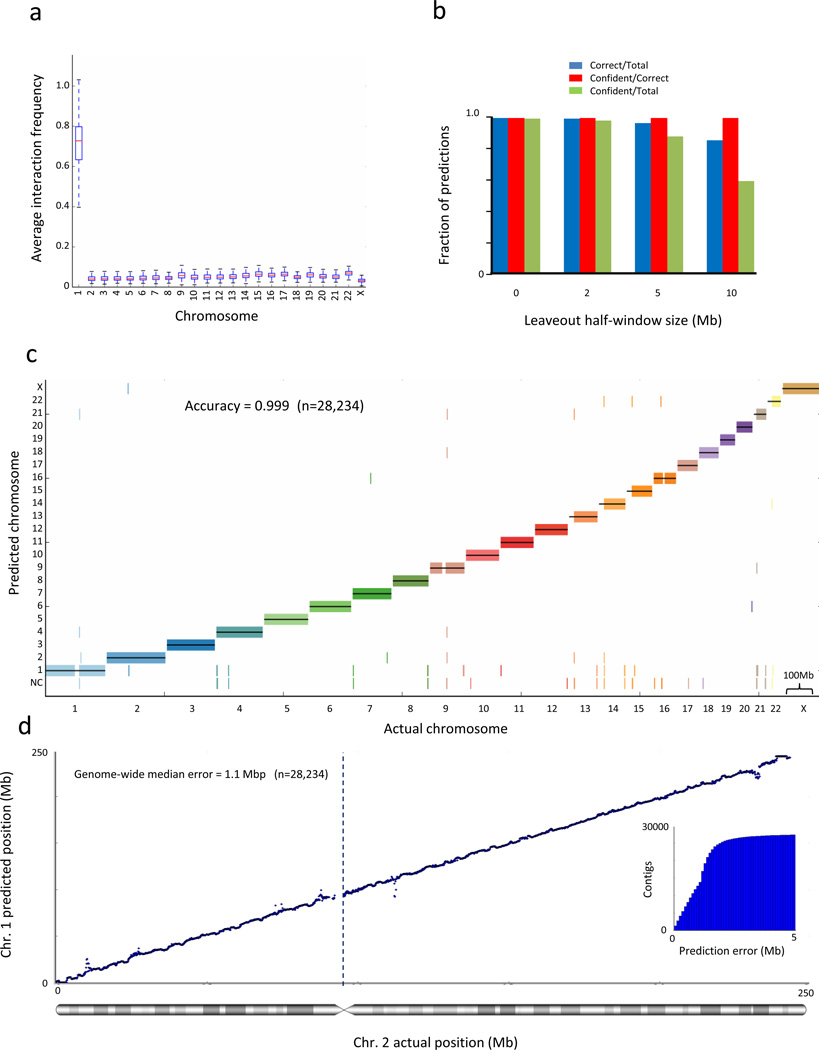
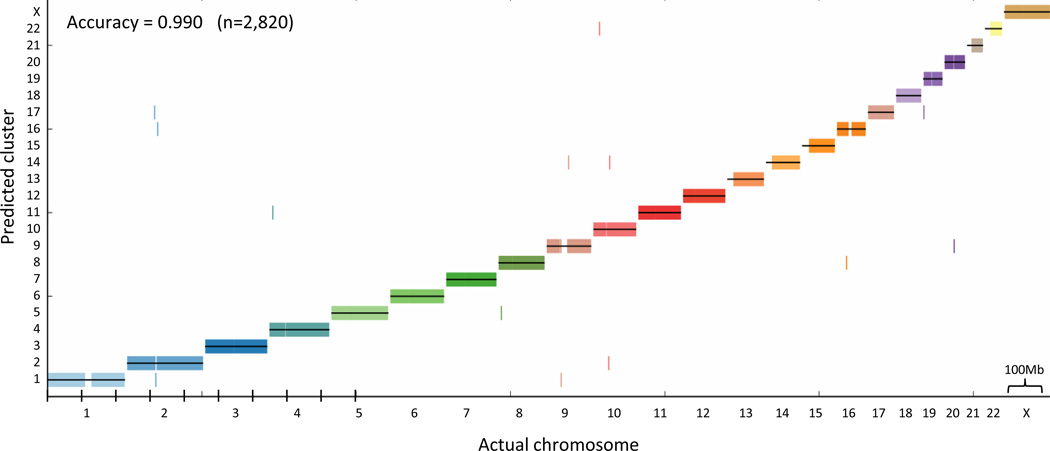
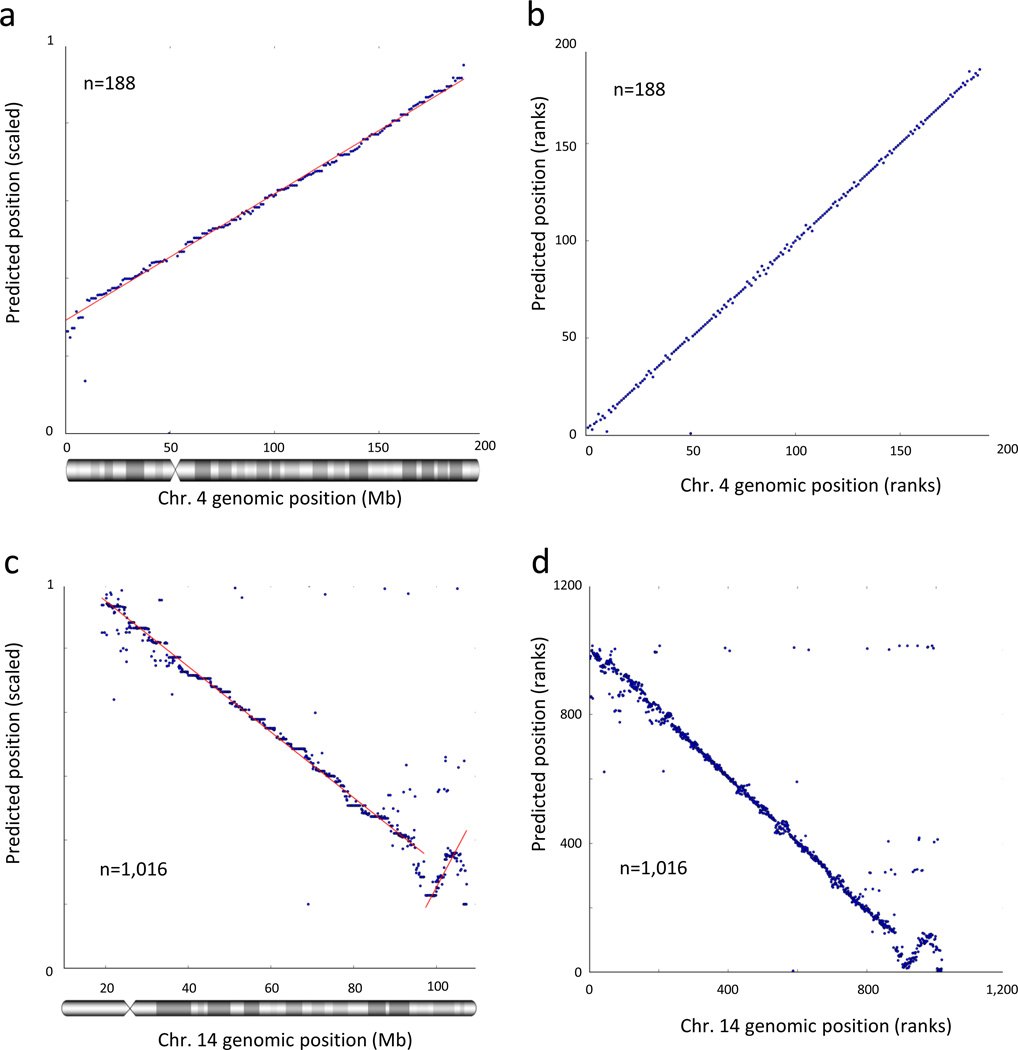
Despite advances in DNA sequencing technology, assembly of complex genomes remains a major challenge, particularly for genomes sequenced using short reads, which yield highly fragmented assemblies. Here we show that genome-wide in vivo chromatin interaction frequency data, which are measurable with chromosome conformation capture-based experiments, can be used as genomic distance proxies to accurately position individual contigs without requiring any sequence overlap. We also use these data to construct approximate genome scaffolds de novo. Applying our approach to incomplete regions of the human genome, we predict the positions of 65 previously unplaced contigs, in agreement with alternative methods in 26/31 cases attempted in common. Our approach can theoretically bridge any gap size and should be applicable to any species for which global chromatin interaction data can be generated.
Figures

Comment in
-
Genome assembly and haplotyping with Hi-C.Nat Biotechnol. 2013 Dec;31(12):1099-101. doi: 10.1038/nbt.2764. Nat Biotechnol. 2013. PMID: 24316648 No abstract available.
-
Genomes in 3D improve one-dimensional assemblies.Nat Methods. 2014 Jan;11(1):5. doi: 10.1038/nmeth.2795. Nat Methods. 2014. PMID: 24524125 No abstract available.
References
Publication types
MeSH terms
Substances
Grants and funding
LinkOut - more resources
Full Text Sources
Other Literature Sources
Miscellaneous
