


A multifaceted strategy using mobile technology to assist rural primary healthcare doctors and frontline health workers in cardiovascular disease risk management: protocol for the SMARTHealth India cluster randomised controlled trial
- PMID: 24274431
- PMCID: PMC4222027
- DOI: 10.1186/1748-5908-8-137
A multifaceted strategy using mobile technology to assist rural primary healthcare doctors and frontline health workers in cardiovascular disease risk management: protocol for the SMARTHealth India cluster randomised controlled trial
Abstract
Background: Blood Pressure related disease affected 118 million people in India in the year 2000; this figure will double by 2025. Around one in four adults in rural India have hypertension, and of those, only a minority are accessing appropriate care. Health systems in India face substantial challenges to meet these gaps in care, and innovative solutions are needed.
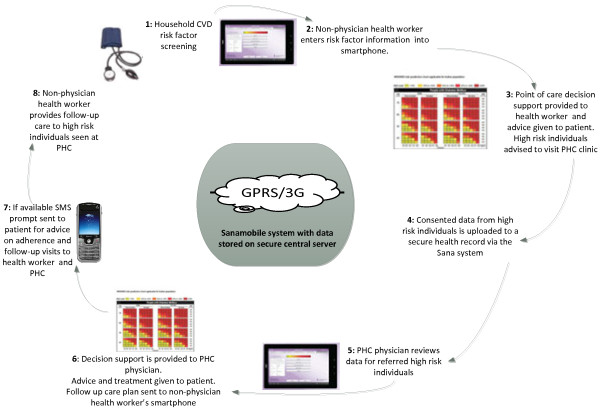
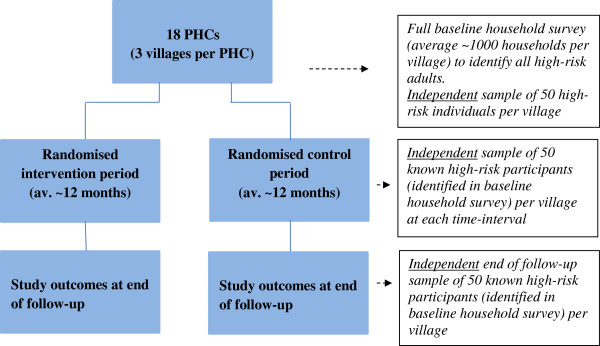
Methods: We hypothesise that a multifaceted intervention involving capacity strengthening of primary healthcare doctors and non-physician healthcare workers through use of a mobile device-based clinical decision support system will result in improved blood pressure control for individuals at high risk of a cardiovascular disease event when compared with usual healthcare. This intervention will be implemented as a stepped wedge, cluster randomised controlled trial in 18 primary health centres and 54 villages in rural Andhra Pradesh involving adults aged ≥40 years at high cardiovascular disease event risk (approximately 15,000 people). Cardiovascular disease event risk will be calculated based on World Health Organisation/International Society of Hypertension's region-specific risk charts. Cluster randomisation will occur at the level of the primary health centres. Outcome analyses will be conducted blinded to intervention allocation.
Expected outcomes: The primary study outcome is the difference in the proportion of people meeting guideline-recommended blood pressure targets in the intervention period vs. the control period. Secondary outcomes include mean reduction in blood pressure levels; change in other cardiovascular disease risk factors, including body mass index, current smoking, reported healthy eating habits, and reported physical activity levels; self-reported use of blood pressure and other cardiovascular medicines; quality of life (using the EQ-5D); and cardiovascular disease events (using hospitalisation data). Trial outcomes will be accompanied by detailed process and economic evaluations.
Significance: The findings are likely to inform policy on a scalable strategy to overcome entrenched inequities in access to effective healthcare for under-served populations in low and middle income country settings.
Trial registration: Clinical Trial Registry India CTRI/2013/06/003753.
Figures
References
-
- Leeder S, Raymond S, Greenberg H, Liu H, Esson K. A race against time. The challenge of cardiovascular disease in developing economies. A race against time. The challenge of cardiovascular disease in developing economies. New York: Columbia University; 2004.
-
- Shah B, Kumar N, Menon GR. Assessment of Burden of Non-communicable Diseases: A Project Supported by WHO. New Delhi, India: Indian Council of Medical Research; 2004. (Book Assessment of Burden of Non-communicable Diseases: A Project Supported by WHO).
-
- Kinra S, Bowen LJ, Lyngdoh T, Prabhakaran D, Reddy KS, Ramakrishnan L, Gupta R, Bharathi AV, Vaz M, Kurpad AV, Smith GD, Ben-Shlomo Y, Ebrahim S. Sociodemographic patterning of non-communicable disease risk factors in rural India: a cross sectional study. BMJ. 2010;341:c4974. doi: 10.1136/bmj.c4974. - DOI - PMC - PubMed
Publication types
MeSH terms
Substances
LinkOut - more resources
Full Text Sources
Other Literature Sources
Medical
