. 2014;58(2):901-8.
doi: 10.1128/AAC.01831-13. Epub 2013 Nov 25.

Investigations of the mode of action and resistance development of cadazolid, a new antibiotic for treatment of Clostridium difficile infections

Affiliations

Investigations of the mode of action and resistance development of cadazolid, a new antibiotic for treatment of Clostridium difficile infections

Hans H Locher et al. Antimicrob Agents Chemother. 2014.

Abstract

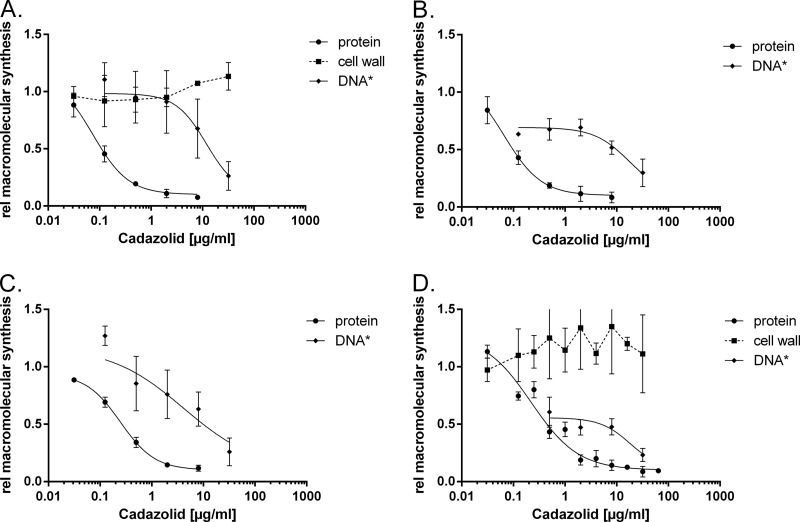
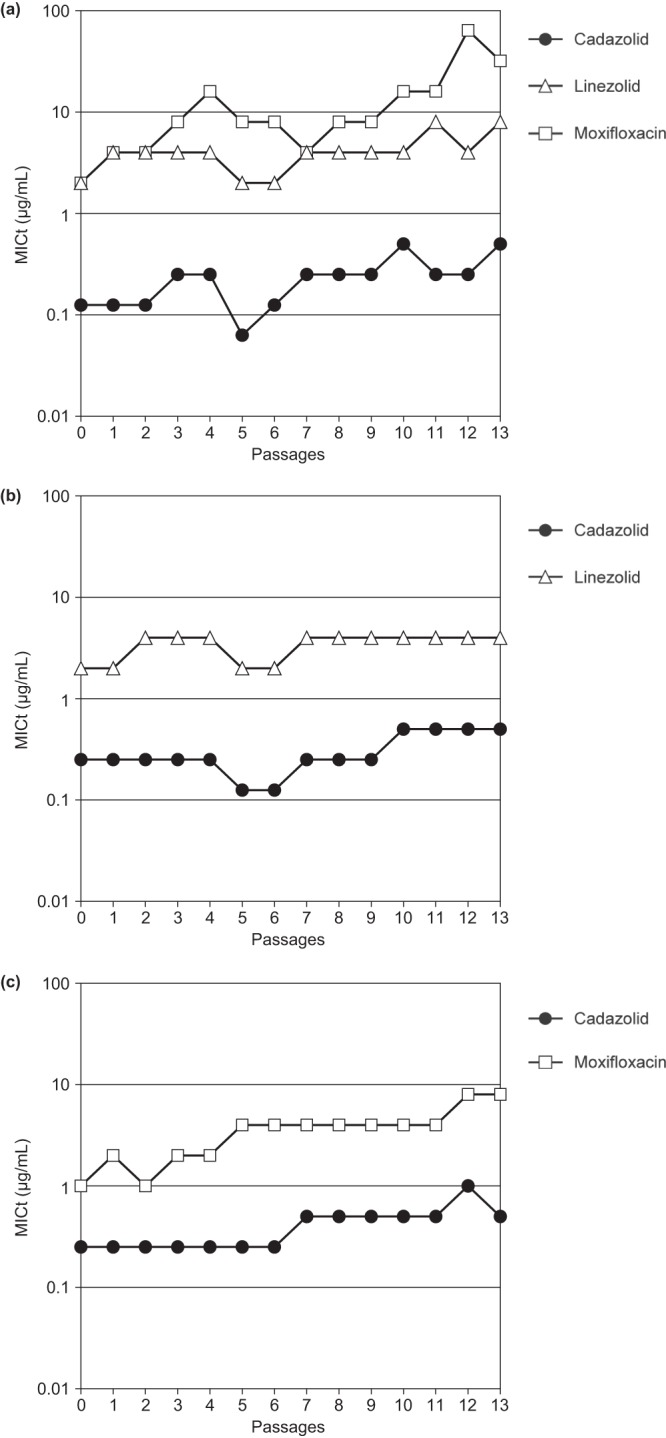
Cadazolid is a new oxazolidinone-type antibiotic currently in clinical development for the treatment of Clostridium difficile-associated diarrhea. Here, we report investigations on the mode of action and the propensity for spontaneous resistance development in C. difficile strains. Macromolecular labeling experiments indicated that cadazolid acts as a potent inhibitor of protein synthesis, while inhibition of DNA synthesis was also observed, albeit only at substantially higher concentrations of the drug. Strong inhibition of protein synthesis was also obtained in strains resistant to linezolid, in agreement with low MICs against such strains. Inhibition of protein synthesis was confirmed in coupled transcription/translation assays using extracts from different C. difficile strains, including strains resistant to linezolid, while inhibitory effects in DNA topoisomerase assays were weak or not detectable under the assay conditions. Spontaneous resistance frequencies of cadazolid were low in all strains tested (generally <10(-10) at 2× to 4× the MIC), and in multiple-passage experiments (up to 13 passages) MICs did not significantly increase. Furthermore, no cross-resistance was observed, as cadazolid retained potent activity against strains resistant or nonsusceptible to linezolid, fluoroquinolones, and the new antibiotic fidaxomicin. In conclusion, the data presented here indicate that cadazolid acts primarily by inhibition of protein synthesis, with weak inhibition of DNA synthesis as a potential second mode of action, and suggest a low potential for spontaneous resistance development.


Figures
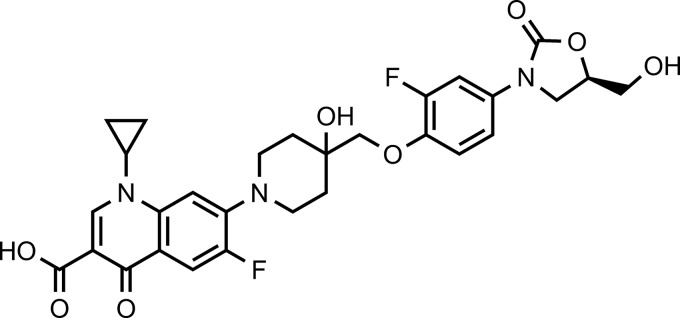
FIG 1
FIG 1
Chemical structure of cadazolid (1-cyclopropyl-6-fluoro-7-{4-[2-fluoro-4-((R)-5-hydroxymethyl-2-oxo-oxazolidin-3-yl)-phenoxymethyl]-4-hydroxy-piperidin-1-yl}-4-oxo-1,4-dihydro-quinoline-3-carboxylic acid).
FIG 2
FIG 2
Concentration-dependent inhibition of macromolecular labeling by cadazolid in C. difficile strains. The inhibition of protein (•), DNA (◆), and cell wall (■) synthesis was measured as the decrease of acid-precipitable 3H labels with different concentrations of inhibitors. The C. difficile strains used were ATCC 43602 (wild type) (A), NCTC 13366 (quinolone resistant) (B), A-1291 (linezolid resistant) (C), and A-1410 (quinolone and linezolid resistant) (D). Curves were generated using a log (inhibitor) versus response model with variable slope and a least-squares fit. If no convergence was achieved, then a connection dashed line was drawn.
FIG 3
FIG 3
Test of development of resistance to cadazolid and comparator antibiotics by serial passages in liquid medium. C. difficile strains ATCC 9689 (a), NCTC 13366 (fluoroquinolone resistant) (b), and A-1290 (linezolid resistant) (c). Tubes containing 2 ml of 2-fold serial dilutions of the test antibiotics were inoculated with approximately 5 × 10⁶ to 2 × 10⁷ CFU. After incubation for 48 h at 37°C, the tube with the highest antibiotic concentration permitting growth was used to inoculate the next series of tubes (1%, vol/vol). This procedure was repeated for 13 passages, and the lowest antibiotic concentration inhibiting growth in the tubes (MICt) was recorded at the end of every passage.

References

    1. Rupnik M, Wilcox MH, Gerding DN. 2009. Clostridium difficile infection: new developments in epidemiology and pathogenesis. Nat. Rev. Microbiol. 7:526–536. 10.1038/nrmicro2164 - DOI - PubMed
    1. Dubberke E. 2012. Clostridium difficile infection: the scope of the problem. J. Hosp. Med. 7(Suppl 3):S1–S4. 10.1002/jhm.1916 - DOI - PubMed
    1. Razavi B, Apisarnthanarak A, Mundy LM. 2007. Clostridium difficile: emergence of hypervirulence and fluoroquinolone resistance. Infection 35:300–307. 10.1007/s15010-007-6113-0 - DOI - PubMed
    1. Gerding DN, Johnson S. 2011. Clostridium difficile infection in 2010: advances in pathogenesis, diagnosis and management of CDI. Nat. Rev. Gastroenterol. Hepatol. 8:67–68. 10.1038/nrgastro.2010.215 - DOI - PubMed
    1. Ananthakrishnan AN. 2011. Clostridium difficile infection: epidemiology, risk factors and management. Nat. Rev. Gastroenterol. Hepatol. 8:17–26. 10.1038/nrgastro.2010.190 - DOI - PubMed

MeSH terms

LinkOut - more resources