


Snakebite and its socio-economic impact on the rural population of Tamil Nadu, India
- PMID: 24278244
- PMCID: PMC3836953
- DOI: 10.1371/journal.pone.0080090
Snakebite and its socio-economic impact on the rural population of Tamil Nadu, India
Abstract
Background: Snakebite represents a significant health issue worldwide, affecting several million people each year with as many as 95,000 deaths. India is considered to be the country most affected, but much remains unknown about snakebite incidence in this country, its socio-economic impact and how snakebite management could be improved.
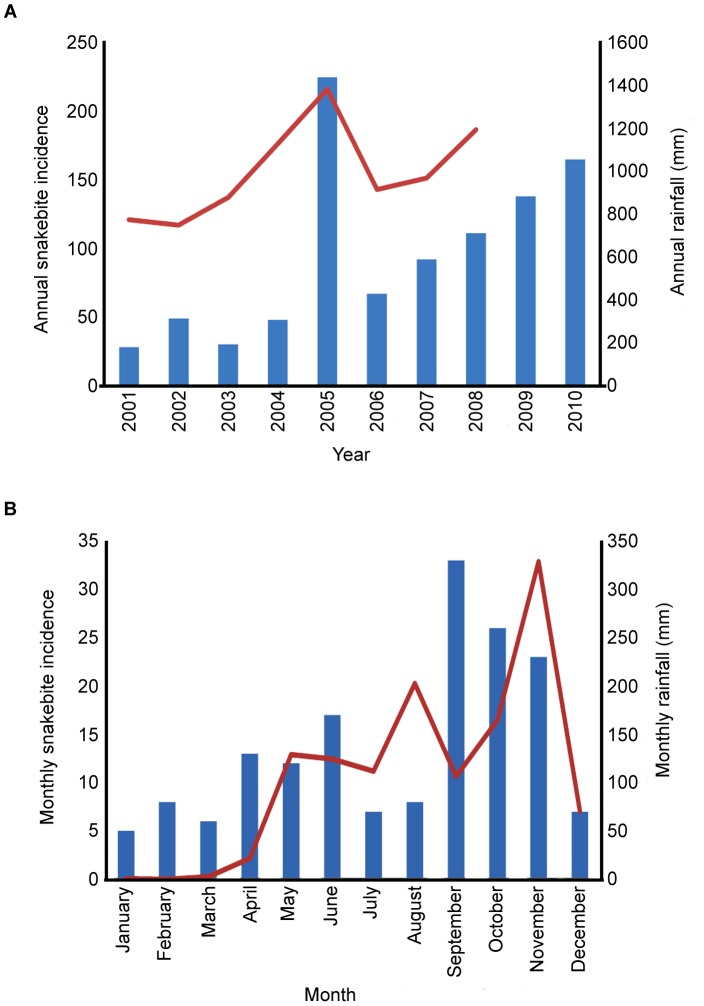
Methods/principal findings: We conducted a study within rural villages in Tamil Nadu, India, which combines a household survey (28,494 people) of snakebite incidence with a more detailed survey of victims in order to understand the health and socio-economic effects of the bite, the treatments obtained and their views about future improvements. Our survey suggests that snakebite incidence is higher than previously reported. 3.9% of those surveyed had suffered from snakebite and the number of deaths corresponds to 0.45% of the population. The socio-economic impact of this is very considerable in terms of the treatment costs and the long-term effects on the health and ability of survivors to work. To reduce this, the victims recommended improvements to the accessibility and affordability of antivenom treatment.
Conclusions: Snakebite has a considerable and disproportionate impact on rural populations, particularly in South Asia. This study provides an incentive for researchers and the public to work together to reduce the incidence and improve the outcomes for snake bite victims and their families.
Conflict of interest statement
Figures
References
-
- White J (2000) Bites and stings from venomous animals: a global overview. Ther Drug Monit 22: 65–68. - PubMed
-
- Warrell DA (2010) Snake bite. Lancet 375: 77–88. - PubMed
-
- Kochar DK, Tanwar PD, Norris RL, Sabir M, Nayak KC, et al. (2007) Rediscovery of severe saw-scaled viper (Echis sochureki) envenoming in the Thar desert region of Rajasthan, India. Wilderness Environ Med 18: 75–85. - PubMed
Publication types
MeSH terms
LinkOut - more resources
Full Text Sources
Other Literature Sources
Medical
