


Expansion of the Spinocerebellar ataxia type 10 (SCA10) repeat in a patient with Sioux Native American ancestry
- PMID: 24278426
- PMCID: PMC3835687
- DOI: 10.1371/journal.pone.0081342
Expansion of the Spinocerebellar ataxia type 10 (SCA10) repeat in a patient with Sioux Native American ancestry
Abstract
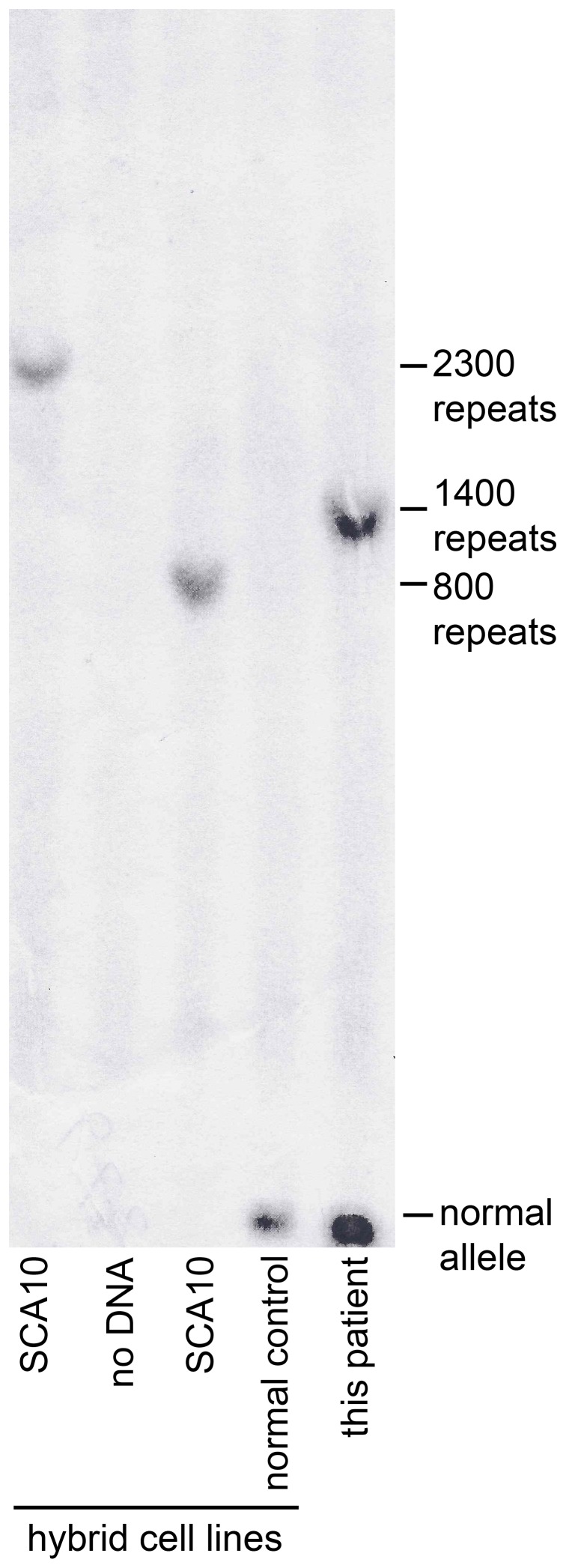
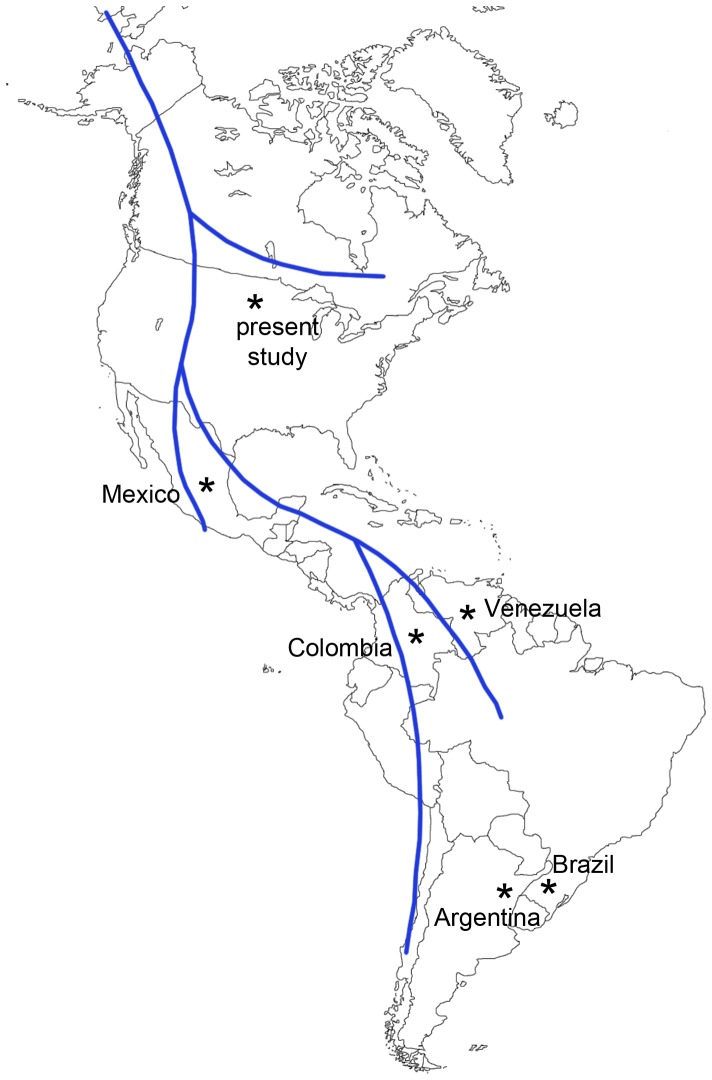
Spinocerebellar ataxia type 10 (SCA10), an autosomal dominant cerebellar ataxia, is caused by the expansion of the non-coding ATTCT pentanucleotide repeat in the ATAXIN 10 gene. To date, all cases of SCA10 are restricted to patients with ancestral ties to Latin American countries. Here, we report on a SCA10 patient with Sioux Native American ancestry and no reported Hispanic or Latino heritage. Neurological exam findings revealed impaired gait with mild, age-consistent cerebellar atrophy and no evidence of epileptic seizures. The age at onset for this patient, at 83 years of age, is the latest documented for SCA10 patients and is suggestive of a reduced penetrance allele in his family. Southern blot analysis showed an SCA10 expanded allele of 1400 repeats. Established SNPs surrounding the SCA10 locus showed a disease haplotype consistent with the previously described "SCA10 haplotype". This case suggests that the SCA10 expansion represents an early mutation event that possibly occurred during the initial peopling of the Americas.
Conflict of interest statement
Figures
References
-
- Teive HA, Munhoz RP, Arruda WO, Raskin S, Werneck LC, et al. (2011) Spinocerebellar ataxia type 10 - A review. Parkinsonism Relat Disord 17: 655–661. - PubMed
-
- Matsuura T, Yamagata T, Burgess DL, Rasmussen A, Grewal RP, et al. (2000) Large expansion of the ATTCT pentanucleotide repeat in spinocerebellar ataxia type 10. Nat Genet 26: 191–194. - PubMed
-
- Wang JL, Wu YQ, Lei LF, Shen L, Jiang H, et al. (2010) [Polynucleotide repeat expansion of nine spinocerebellar ataxia subtypes and dentatorubral-pallidoluysian atrophy in healthy Chinese Han population]. Zhonghua Yi Xue Yi Chuan Xue Za Zhi 27: 501–505. - PubMed
-
- Alonso I, Jardim LB, Artigalas O, Saraiva-Pereira ML, Matsuura T, et al. (2006) Reduced penetrance of intermediate size alleles in spinocerebellar ataxia type 10. Neurology 66: 1602–1604. - PubMed
Publication types
MeSH terms
Substances
Supplementary concepts
Grants and funding
LinkOut - more resources
Full Text Sources
Other Literature Sources
