


Acute adverse events from over-the-counter Chinese herbal medicines: a population-based survey of Hong Kong Chinese
- PMID: 24279604
- PMCID: PMC4222756
- DOI: 10.1186/1472-6882-13-336
Acute adverse events from over-the-counter Chinese herbal medicines: a population-based survey of Hong Kong Chinese
Abstract
Background: Although over-the-counter traditional Chinese herbal medicine (COTC) is commonly used to treat everyday illness in many parts of the world, no population-based study has been done to examine the prevalence and factors associated with COTC-related adverse events.
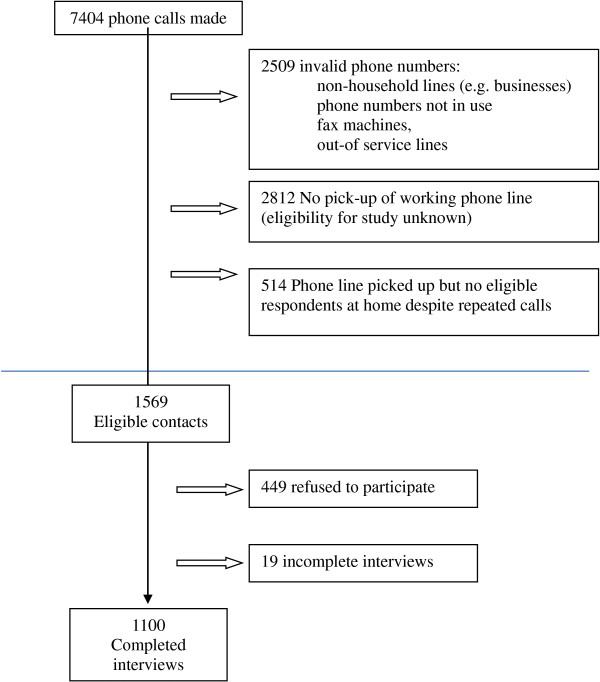
Methods: A cross-sectional telephone survey was conducted among Hong Kong Chinese adults in 2011 (n = 1100) with informed verbal consent. Stepwise logistic regression of demographic, attitudinal and behavioral variables was used to determine factors associated with past-year adverse events.
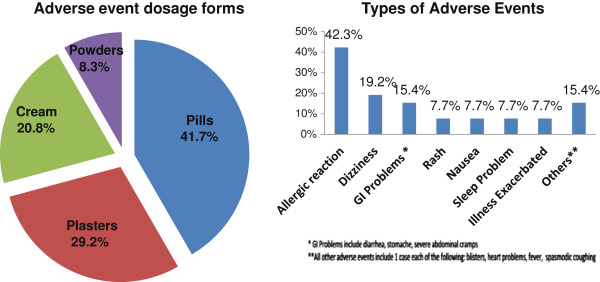
Results: Of study respondents, 71.7% (789/1100) reported past-year COTC use and 2.3% (25/1100) reported at least one COTC-related adverse event in the past year. Of the 27 adverse events cases reported among COTC users, the most common were allergic reactions (n = 11) dizziness (n = 5), and gastro-intestinal problems (n = 4). Pills/capsules were the dosage form that caused the highest proportion of adverse events (n = 10), followed by plasters (n = 7), creams/ointments (n = 5), and ingestible powders (n = 2).Although COTC users reporting adverse events were more likely to report greater practices to avoid adverse events (OR = 6.47; 95% CI: 1.38-30.3); they were also more likely to possess lower education levels (OR = 9.64, 95% CI: 2.20-42.3) and to have received COTC information from non-reliable, mass-media information sources such as magazines (OR = 3.32; 95% CI: 1.01-8.50) or television (OR = 2.93; 95% CI: 1.03-10.7). Package labels were also felt to be unclear by 42.9% of COTC users. A large proportion of COTC users demonstrated low levels of COTC-related knowledge, while the main impediment to greater information-seeking was the belief that reliable COTC information is not obtainable from Western health professionals.
Conclusions: Despite global movements toward more stringent complementary medicine regulation, the limited accessibility of reliable information and widespread misperceptions among consumers present major challenges for the safe use of complementary medicine.
Figures
References
-
- World Health Organization. WHO Traditional Medicine Strategy 2002–2005. Geneva; 2002. Accessed from: http://www.who.int/medicines/publications/traditionalpolicy/en/
Publication types
MeSH terms
Substances
LinkOut - more resources
Full Text Sources
Other Literature Sources
Medical
Miscellaneous
