The orthotic treatment of acute and chronic disease of the cervical and lumbar spine
- PMID: 24280429
- PMCID: PMC3831239
- DOI: 10.3238/arztebl.2013.0737
The orthotic treatment of acute and chronic disease of the cervical and lumbar spine
Abstract
Background: Orthoses are external aids that are often used to treat pain and diseases affecting the spine, such as lumbago, whiplash, and disc herniation. In this review, we assess the effectiveness and complications of orthotic treatment for typical spinal conditions and after spinal surgery. The orthotic treatment of fractures and postural abnormalities are beyond the scope of this article.
Method: This review is based on a selective search in the Medline database with consideration of controlled trials, systematic reviews, and the recommendations of the relevant medical societies.
Results: Three relevant systematic reviews and four controlled trials were found. Very few controlled trials to date have studied the efficacy of orthotic treatment compared to other conservative treatments and surgery. No definitive evidence was found to support the use of orthoses after surgery, in lumbar radiculopathy, or after whiplash injuries of the cervical spine. In a single trial, short-term immobilization was an effective treatment of cervical radiculopathy. Orthoses are not recommended for nonspecific low back pain. The potential complications of cervical orthoses include pressure-related skin injuries and dysphagia.
Conclusion: No definitive evidence as yet supports the use of orthoses after spinal interventions or in painful conditions of the cervical or lumbar spine. They should, therefore, be used only after individual consideration of the indications in each case.
Figures
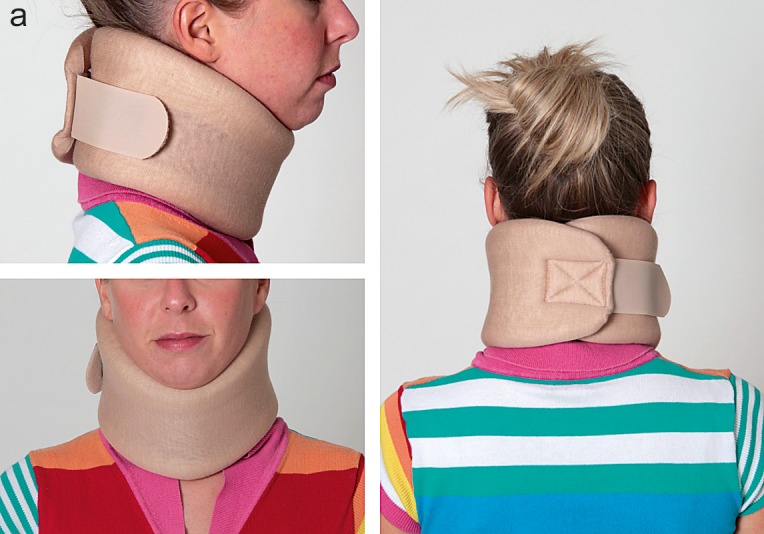
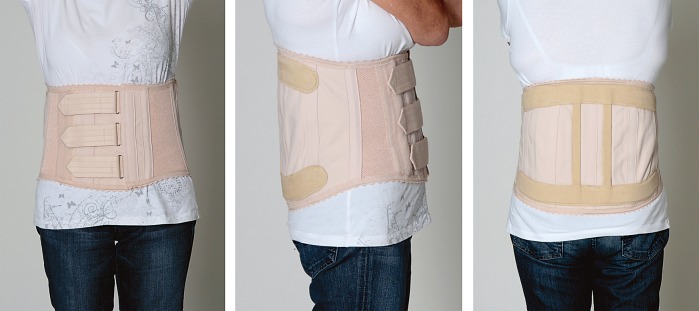
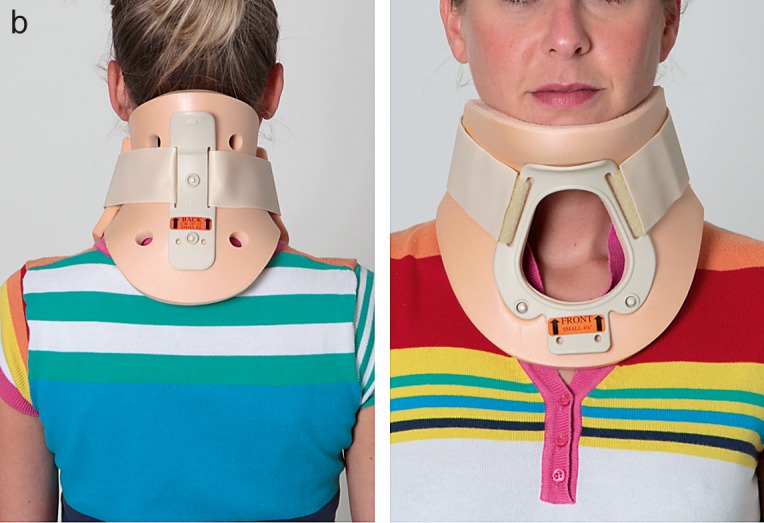
Comment in
-
Use new approaches.Dtsch Arztebl Int. 2014 Mar 14;111(11):195. doi: 10.3238/arztebl.2014.0195a. Dtsch Arztebl Int. 2014. PMID: 24698075 Free PMC article. No abstract available.
-
Multiple causes.Dtsch Arztebl Int. 2014 Mar 14;111(11):195-6. doi: 10.3238/arztebl.2014.0195b. Dtsch Arztebl Int. 2014. PMID: 24698076 Free PMC article. No abstract available.
-
In reply.Dtsch Arztebl Int. 2014 Mar 14;111(11):196. doi: 10.3238/arztebl.2014.0196. Dtsch Arztebl Int. 2014. PMID: 24698077 Free PMC article. No abstract available.
References
-
- Spitzenverband G. Hilfsmittelverzeichnis 2012. Available from: https://hilfsmittelgkv-spitzenverband.de/home.action. 2012 Last accessed on 26 November.
-
- Anderson G. The epidemiology of spinal disorders. In: Frymeyer JW, editor. The adult spine: principle and practice. 2nd ed. Philadelphia: Lippincott-Raven Publishers; 1997. pp. 93–141.
-
- Dillingham TR. Lumbar supports for prevention of low back pain in the workplace. JAMA. 1998;279:1826–1828. - PubMed
-
- Agabegi SS, Asghar FA, Herkowitz HN. Spinal orthoses. J Am Acad Orthop Surg. 2010;18:657–667. - PubMed
-
- Jellema P, van Tulder MW, van Poppel MN, Nachemson AL, Bouter LM. Lumbar supports for prevention and treatment of low back pain: A systematic review within the framework of the cochrane back review group. Spine (Phila Pa 1976) 2001;26:377–386. - PubMed
Publication types
MeSH terms
LinkOut - more resources
Full Text Sources
Other Literature Sources
Medical