


Acute improvement in hemodynamic control after osteopathic manipulative treatment in the third trimester of pregnancy
- PMID: 24280470
- PMCID: PMC3893141
- DOI: 10.1016/j.ctim.2013.08.008
Acute improvement in hemodynamic control after osteopathic manipulative treatment in the third trimester of pregnancy
Abstract
Objectives: The physiological changes that occur during pregnancy, including increased blood volume and cardiac output, can affect hemodynamic control, most profoundly with positional changes that affect venous return to the heart. By using Osteopathic Manipulative Treatment (OMT), a body-based modality theorized to affect somatic structures related to nervous and circulatory systems, we hypothesized that OMT acutely improves both autonomic and hemodynamic control during head-up tilt and heel raise in women at 30 weeks gestation.
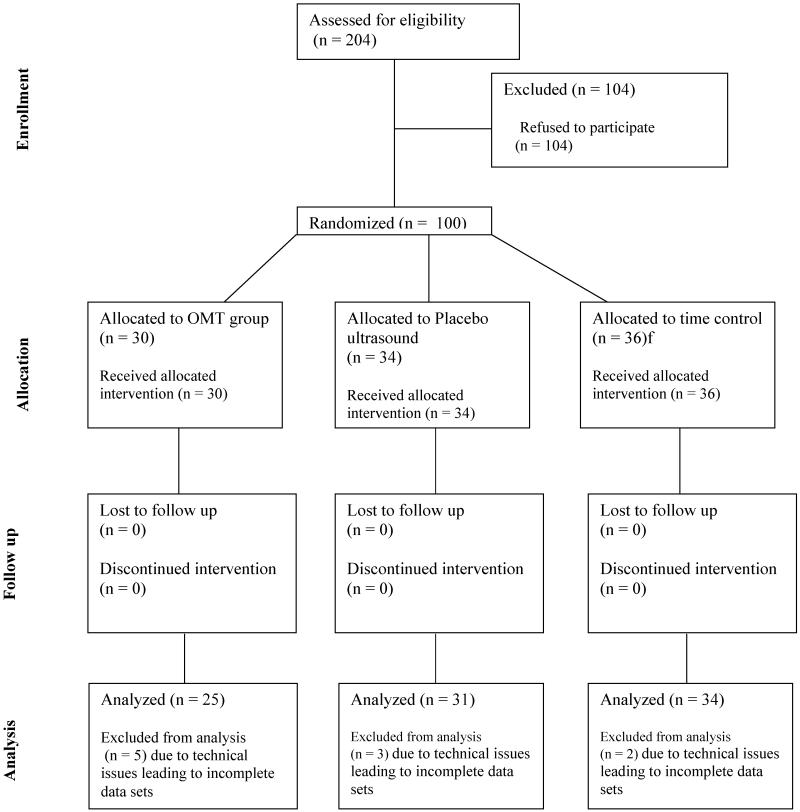
Design: One hundred subjects were recruited at 30 weeks gestation.
Setting: The obstetric clinics of UNTHealth in Fort Worth, TX.
Intervention: Subjects were randomized into one of three treatment groups: OMT, placebo ultrasound, or time control. Ninety subjects had complete data (N=25, 31 and 34 in each group respectively).
Main outcome measures: Blood pressure and heart rate were recorded during 5 min of head-up tilt followed by 4 min of intermittent heel raising.
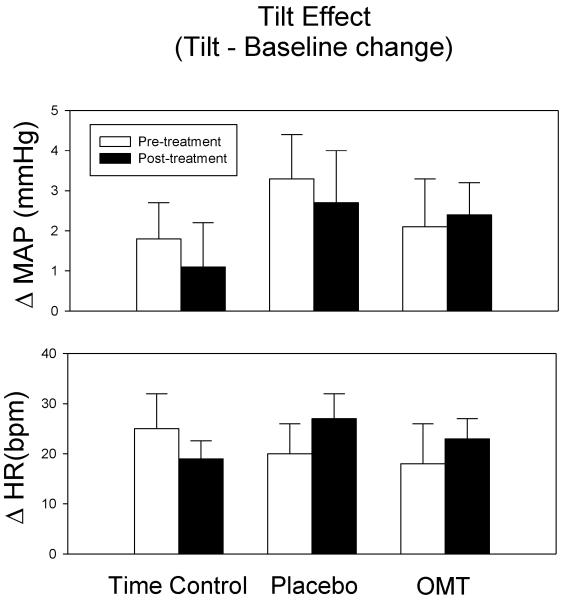
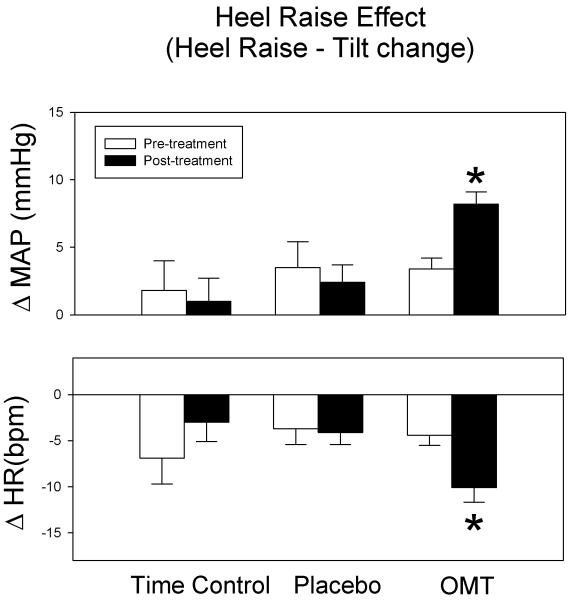
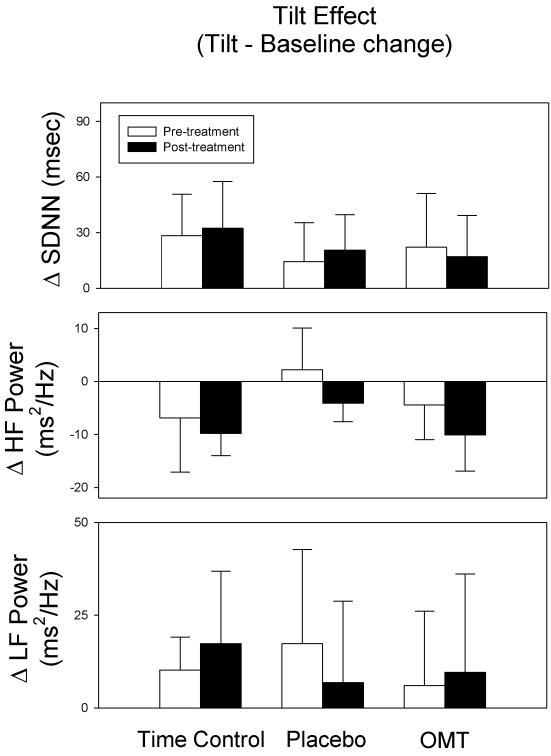
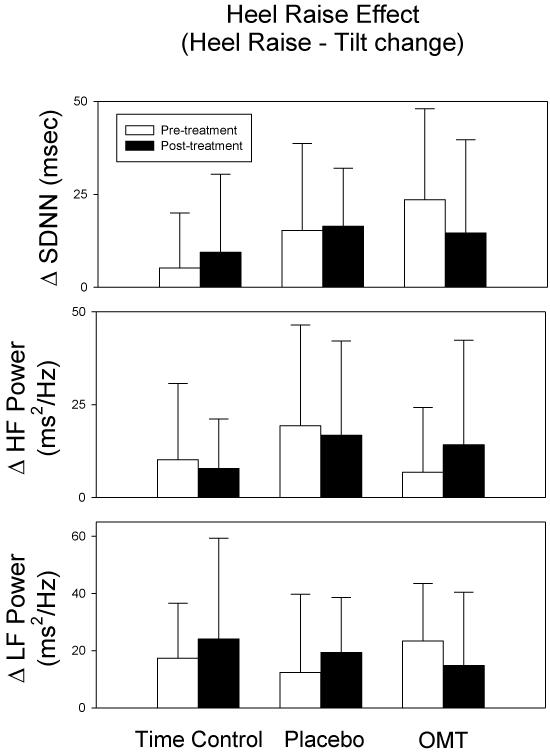
Results: No significant differences in blood pressure, heart rate or heart rate variability were observed between groups with tilt before or after treatment (p>0.36), and heart rate variability was not different between treatment groups (p>0.55). However, blood pressure increased significantly (p=0.02) and heart rate decreased (p<0.01) during heel raise after OMT compared to placebo or time control.
Conclusions: These data suggest that OMT can acutely improve hemodynamic control during engagement of the skeletal muscle pump and this was most likely due to improvement of structural restrictions to venous return.
Keywords: Blood pressure; Hypotension; Muscle pump; Osteopathic manipulation; Tilt.
Copyright © 2013 Elsevier Ltd. All rights reserved.
Figures
References
-
- Duvekot JJ, Peeters LL. Maternal cardiovascular hemodynamic adaptation to pregnancy. Obstet Gynecol Surv. 1994;49(12 Suppl):S1–14. - PubMed
-
- Greenwood JP, Stoker JB, Walker JJ, Mary DA. Sympathetic nerve discharge in normal pregnancy and pregnancy-induced hypertension. J Hypertens. 1998;16(5):617–624. - PubMed
-
- Schobel HP, Fischer T, Heuszer K, Geiger H, Schmieder RE. Preeclampsia -- a state of sympathetic overactivity. N Engl J Med. 1996;335(20):1480–1485. - PubMed
-
- Hobel C, Culhane J. Role of psychosocial and nutritional stress on poor pregnancy outcome. J Nutr. 2003;133(5 Suppl 2):1709S–1717S. - PubMed
-
- McLean M, Smith R. Corticotrophin-releasing hormone and human parturition. Reproduction. 2001;121(4):493–501. - PubMed
Publication types
MeSH terms
Grants and funding
LinkOut - more resources
Full Text Sources
Other Literature Sources
Medical
