


High glucose modulates antiproliferative effect and cytotoxicity of 5-fluorouracil in human colon cancer cells
- PMID: 24283362
- PMCID: PMC3929122
- DOI: 10.1089/dna.2013.2161
High glucose modulates antiproliferative effect and cytotoxicity of 5-fluorouracil in human colon cancer cells
Abstract
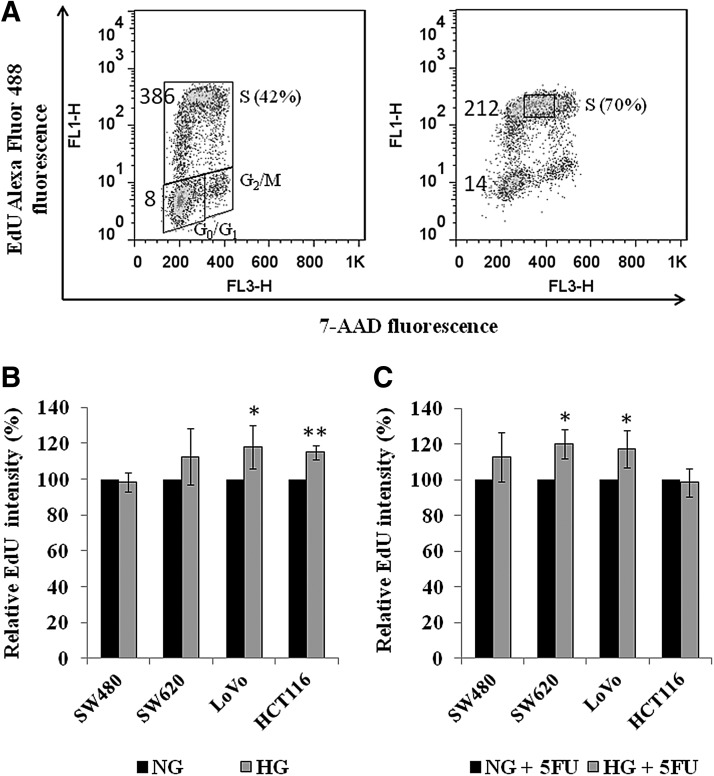
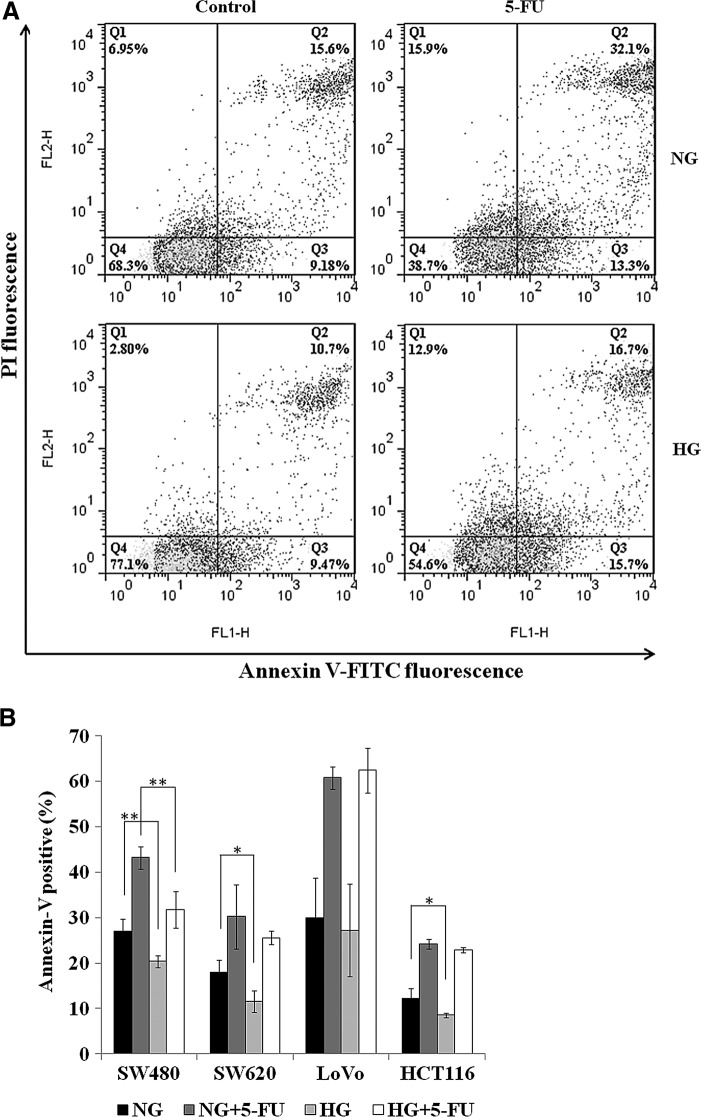
5-Fluorouracil (5-FU)-based chemotherapy is widely used for the treatment of colorectal cancer (CRC). While optimal doses of 5-FU are generally established based on a patient's estimated body surface area, the plasma concentrations of 5-FU vary among patients. In addition, hyperglycemia in patients with CRC has been reported as a risk factor in poor prognosis. The aim of the present study was to investigate whether hyperglycemia affects antiproliferative effect of 5-FU on the human colon cancer cells (SW480, SW620, LoVo, and HCT116). Growth inhibition of 5-FU was accessed by WST-8 assay. The effect of high glucose (HG, 15 mM) and 5-FU on the cellular proliferation was evaluated by flow cytometry analysis using 5-ethynyl-2'-deoxy-uridine (EdU) incorporation plus 7-AAD. Cell death was determined by flow cytometry using Annexin V-FITC and PI. The results showed that HG, compared to physiological normal glucose (NG) concentration (5 mM), leads to increased cell proliferation and increased GI50 of 5-FU in the four colon cancer cell lines. When the cells were pretreated with a low-dose 5-FU in NG condition, subsequent HG treatment eliminated inhibitory effect of 5-FU in cancer cell growth. In the presence of 5-FU (0.5 μg/mL for LoVo and HCT116; 1 μg/mL for SW480 and SW620), culture with HG for 72 h does not significantly altered cell cycle profile in the four cell lines but significantly increased DNA replication in SW620 (21%) and LoVo (17%). Flow cytometric analysis showed that HG protects cells against 5-FU-induced cell death in SW480. Finally, HG did not alter intracellular level of reactive oxygen species (ROS), although 5-FU indeed induced higher intracellular level of ROS. In conclusion, HG attenuates growth inhibition of 5-FU and our results indicate that decreased cell death and increased DNA replication may account for the attenuating effect of a HG environment on 5-FU-induced tumor growth inhibition.
Figures
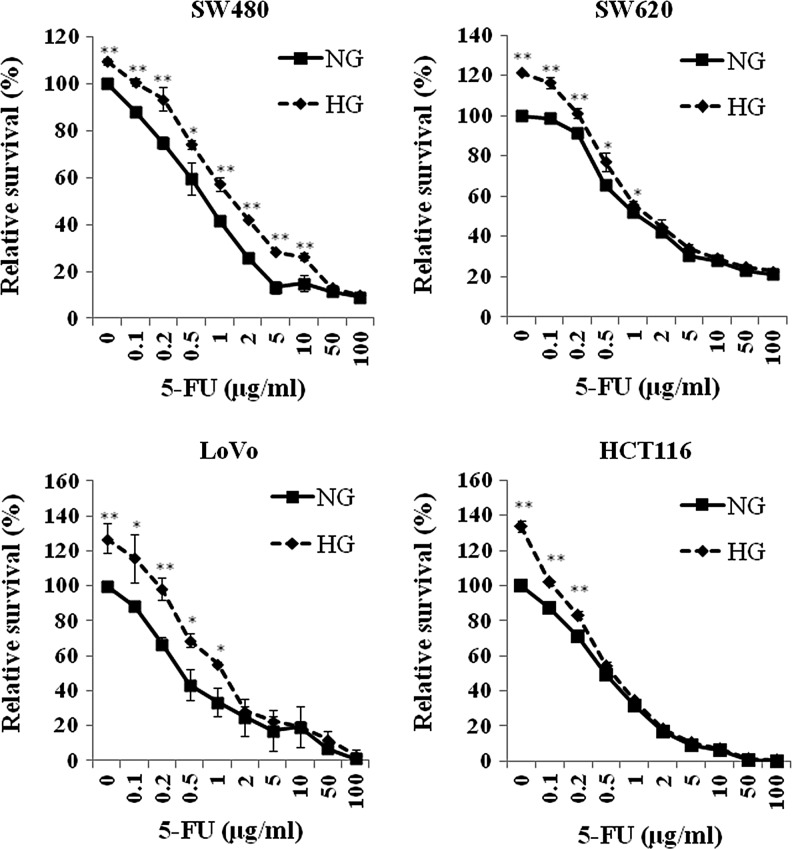
 ) for 24 h. Then, the cells were treated with various concentration of 5-fluorouracil (5-FU) for 3 days. The cellular proliferation was assessed by WST-8 assay as described. Cellular proliferation of each colon cancer cell was significantly enhanced by the treatment of high glucose. The proliferation diminished with the increase of 5-FU dose. High glucose eliminated the growth inhibition of 5-FU when the dose of 5-FU was at least higher than GI50 for each cells. These analyses were mean±standard deviation (SD) of three independent experiments from at least three replications. **p<0.01, *p<0.05.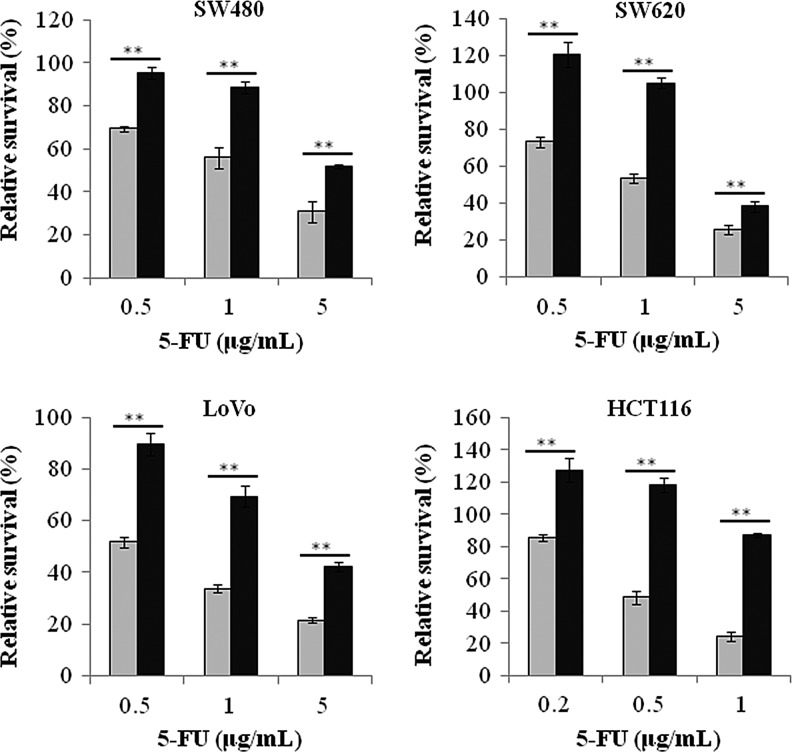
References
-
- Barnes B.R., and Zierath J.R. (2005). Role of AMP-activated protein kinase in the control of glucose homeostasis. Curr Mol Med 5,341–348 - PubMed
-
- Buck S.B., Bradford J., Gee K.R., Agnew B.J., Clarke S.T., and Salic A. (2008). Detection of S-phase cell cycle progression using 5-ethynyl-2′-deoxyuridine incorporation with click chemistry, an alternative to using 5-bromo-2′-deoxyuridine antibodies. Biotechniques 44,927–929 - PubMed
Publication types
MeSH terms
Substances
LinkOut - more resources
Full Text Sources
Other Literature Sources
Medical
Research Materials
Miscellaneous
