


Purinergic and muscarinic modulation of ATP release from the urothelium and its paracrine actions
- PMID: 24285497
- PMCID: PMC3920053
- DOI: 10.1152/ajprenal.00291.2013
Purinergic and muscarinic modulation of ATP release from the urothelium and its paracrine actions
Abstract
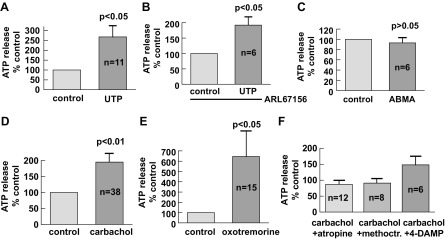
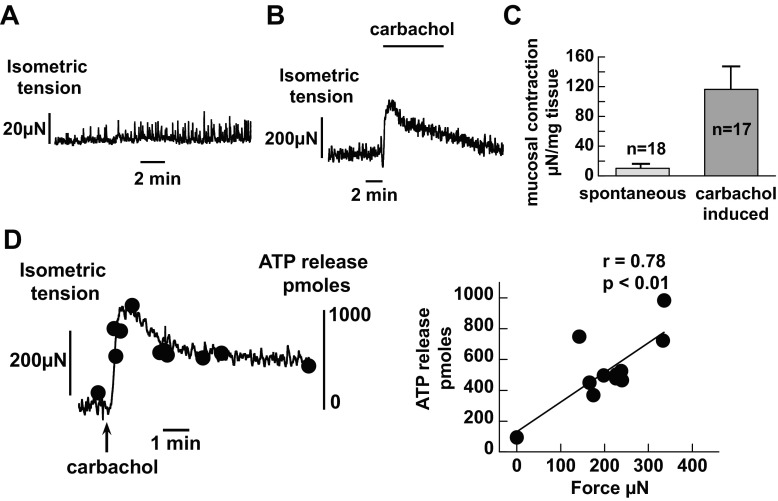
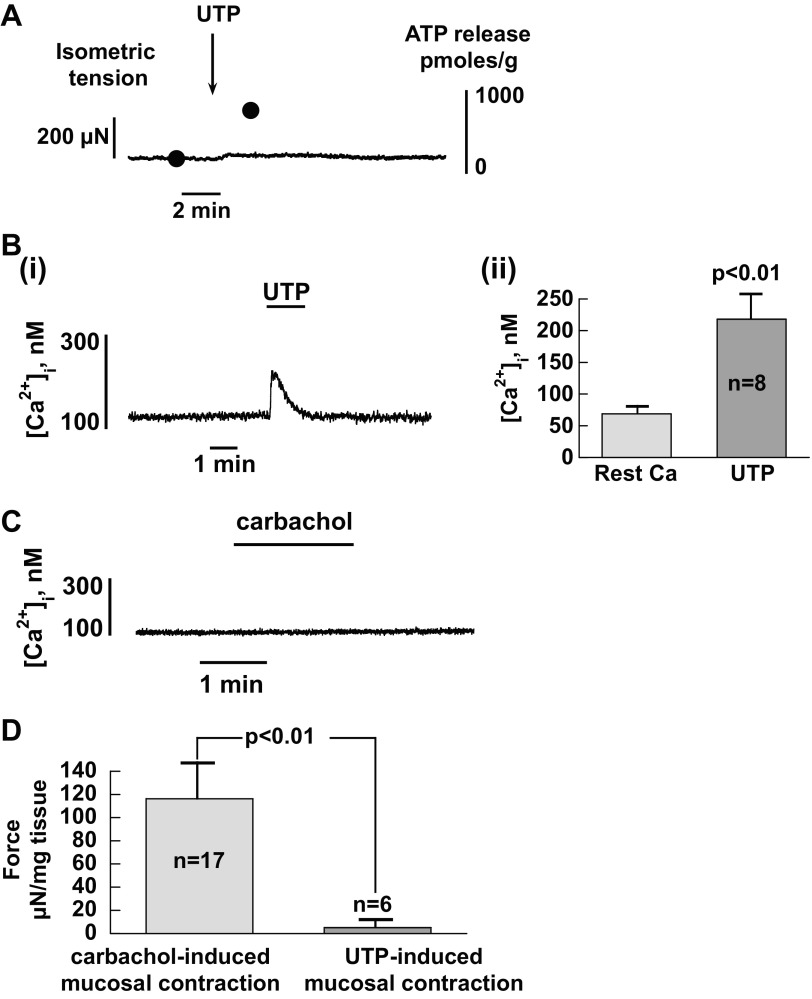
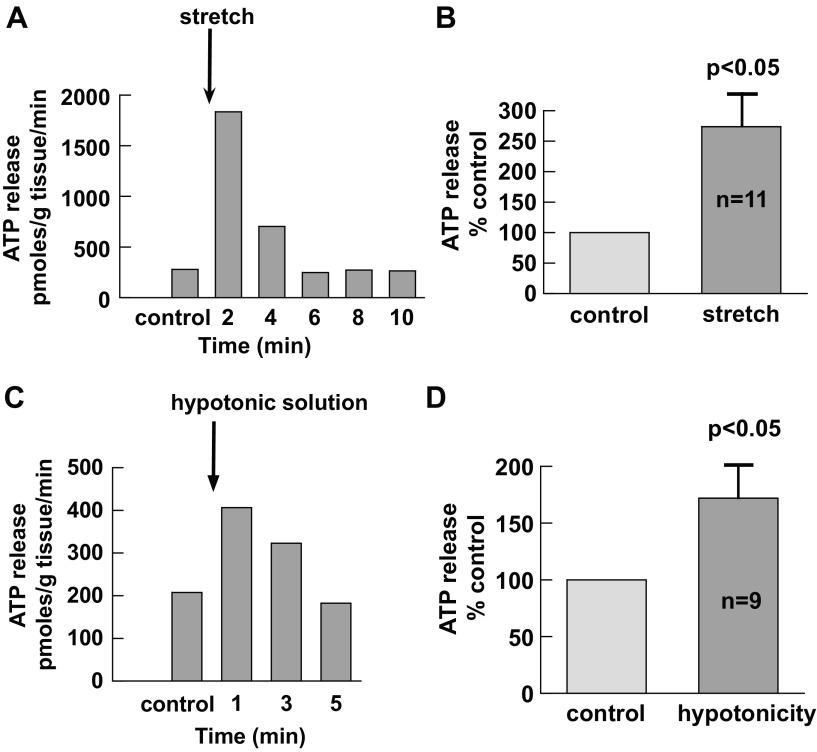
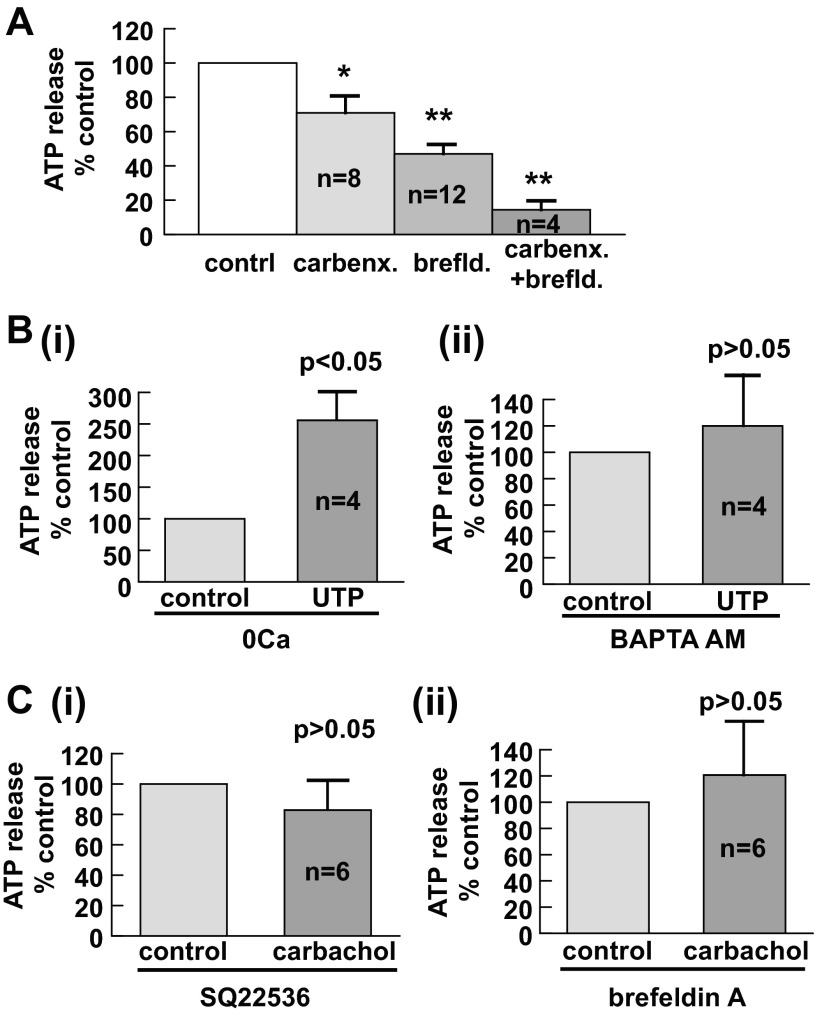
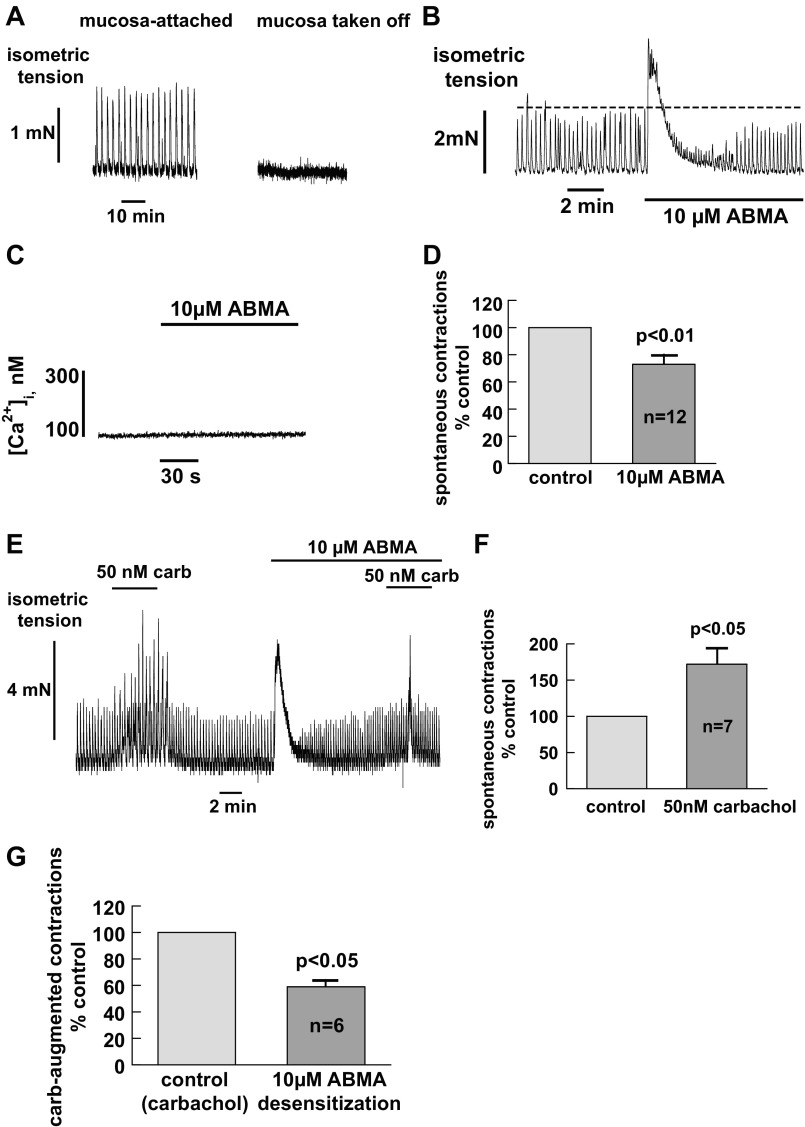
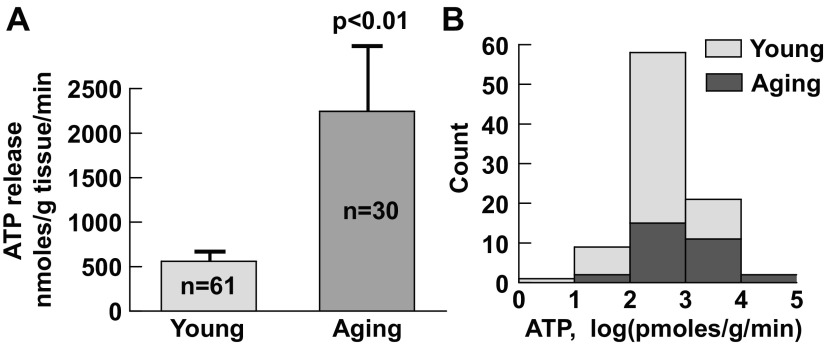
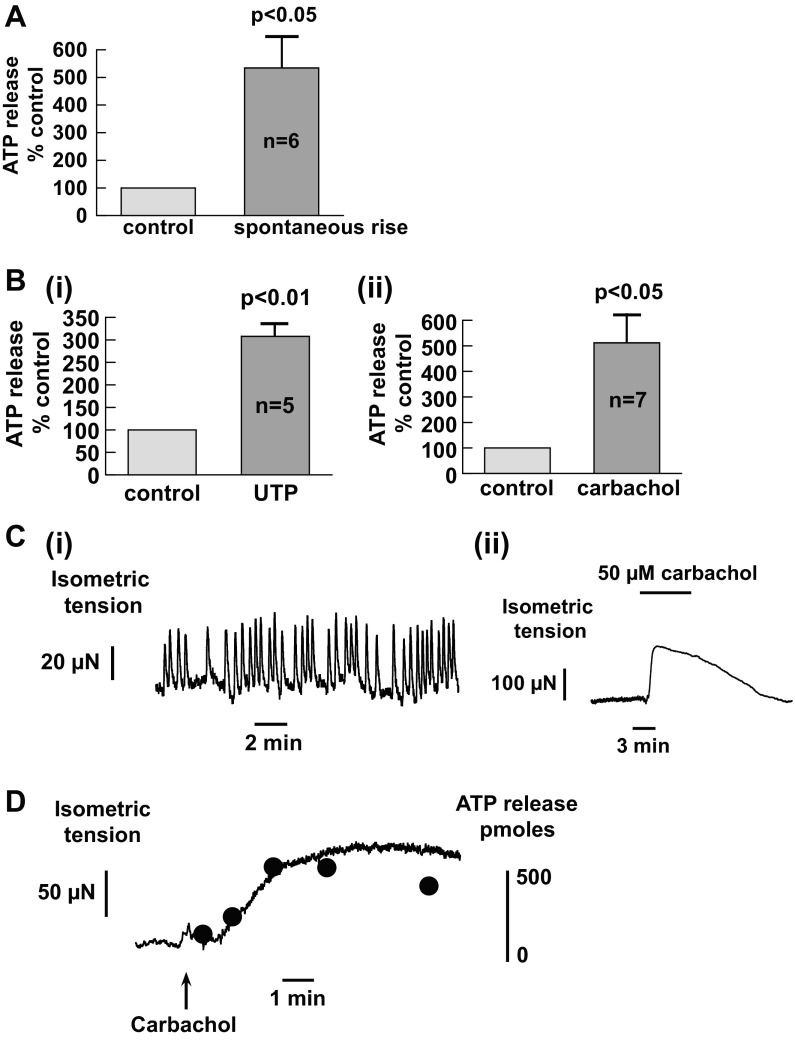
The urothelium is a newly recognized sensory structure that detects bladder fullness. Pivotal to this sensory role is the release of ATP from the urothelium. However, the routes for urothelial ATP release, its modulation by receptor-mediated pathways, and the autocrine/paracrine role of ATP are poorly understood, especially in native tissue. We examined the action of key neurotransmitters: purinergic and muscarinic agonists on ATP release and its paracrine effect. Guinea pig and human urothelial mucosa were mounted in a perfusion trough; superfusate ATP was measured using a luciferin-luciferase assay, and tissue contractions were recorded with a tension transducer. Intracellular Ca²⁺ was measured in isolated urothelial cells with fura-2. The P2Y agonist UTP but not the P2X agonist α,β-methylene-ATP generated ATP release. The muscarinic agonist carbachol and the M₂-preferential agonist oxotremorine also generated ATP release, which was antagonized by the M₂-specific agent methoctramine. Agonist-evoked ATP release was accompanied by mucosal contractions. Urothelial ATP release was differentially mediated by intracellular Ca²⁺ release, cAMP, exocytosis, or connexins. Urothelium-attached smooth muscle exhibited spontaneous contractions that were augmented by subthreshold concentrations of carbachol, which had little direct effect on smooth muscle. This activity was attenuated by desensitizing P2X receptors on smooth muscle. Urothelial ATP release was increased in aging bladders. Purinergic and muscarinic agents produced similar effects in human urothelial tissue. This is the first demonstration of specific modulation of urothelial ATP release in native tissue by purinergic and muscarinic neurotransmitters via distinct mechanisms. Released ATP produces paracrine effects on underlying tissues. This process is altered during aging and has relevance to human bladder pathologies.
Keywords: ATP release; Urothelium; muscarinic; neurotransmitters; paracrine effect; purinergic; sensory.
Figures

References
-
- Andersson KE. Antimuscarinic mechanisms and the overactive detrusor: an update. Eur Urol 59: 377–386, 2011 - PubMed
-
- Andersson KE, Yoshida M. Antimuscarinics and the overactive detrusor–which is the main mechanism of action? Eur Urol 43: 1–5, 2003 - PubMed
-
- Apostolidis A, Brady CM, Yiangou Y, Davis J, Fowler CJ, Anand P. Capsaicin receptor TRPV1 in urothelium of neurogenic human bladders and effect of intravesical resiniferatoxin. Urology 65: 400–405, 2005 - PubMed
-
- Birder LA. Urothelial signaling. Handb Exp Pharmacol 207–231, 2011 - PubMed
-
- Birder LA, Barrick SR, Roppolo JR, Kanai AJ, de Groat WC, Kiss S, Buffington CA. Feline interstitial cystitis results in mechanical hypersensitivity and altered ATP release from bladder urothelium. Am J Physiol Renal Physiol 285: F423–F429, 2003 - PubMed
Publication types
MeSH terms
Substances
Grants and funding
LinkOut - more resources
Full Text Sources
Other Literature Sources
Medical
Miscellaneous
