


Molecular identification and polymorphism determination of cutaneous and visceral leishmaniasis agents isolated from human and animal hosts in Iran
- PMID: 24286085
- PMCID: PMC3826333
- DOI: 10.1155/2013/789326
Molecular identification and polymorphism determination of cutaneous and visceral leishmaniasis agents isolated from human and animal hosts in Iran
Abstract
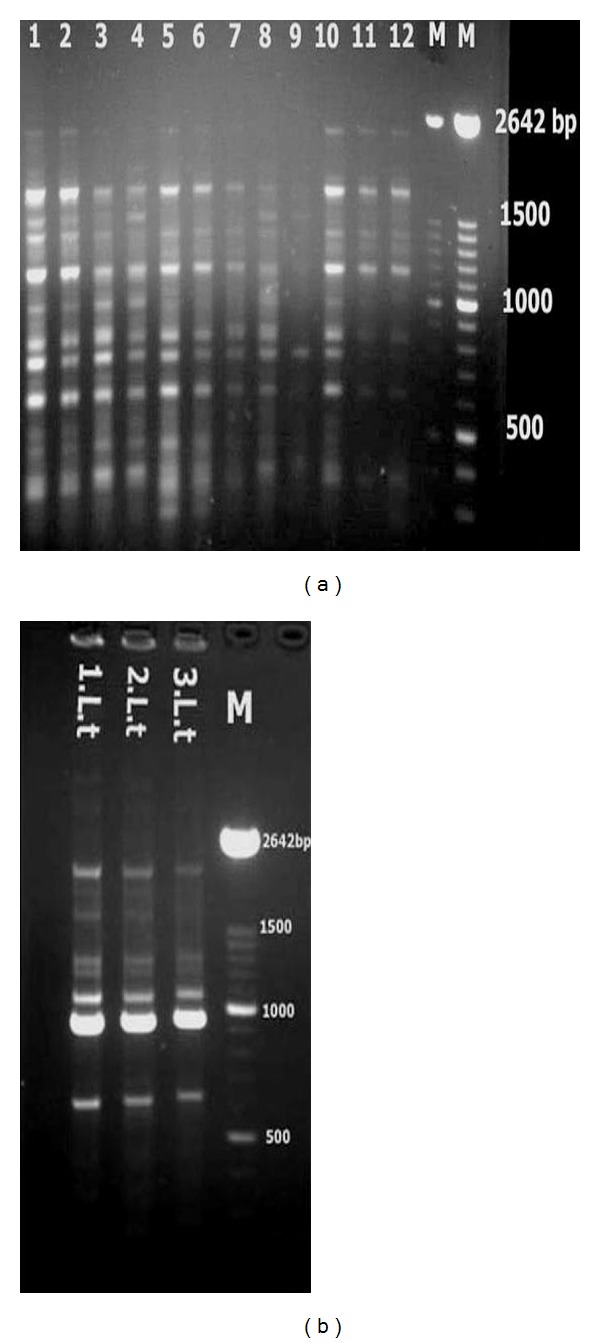
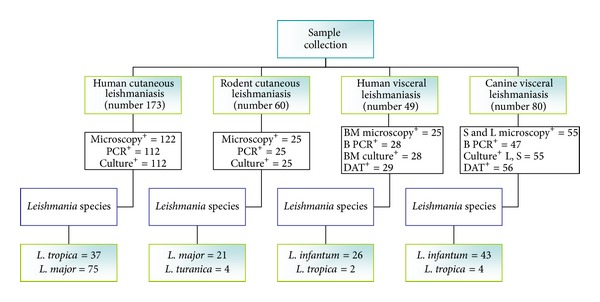
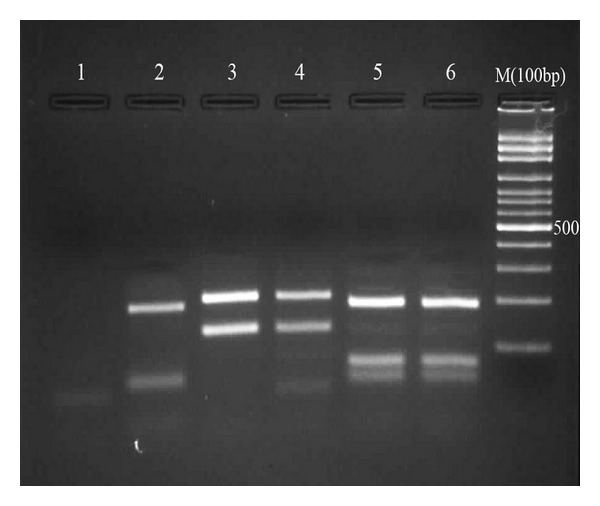
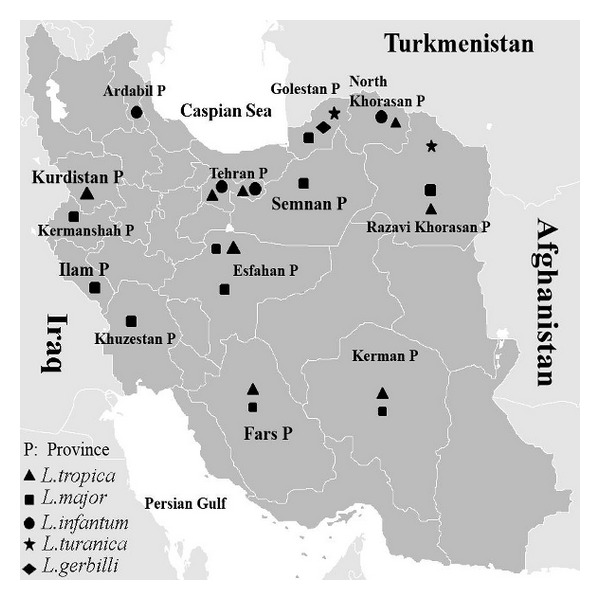
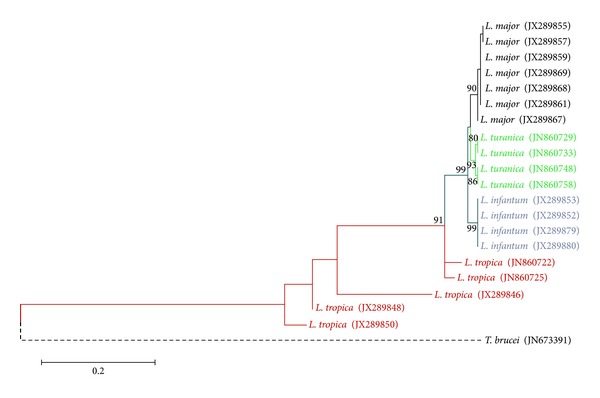
Amplification of internal transcript spacer 1 of ribosomal RNA (ITS1-RNA) gene followed by RFLP analysis and sequencing was used to identify the causing agents of cutaneous and visceral leishmaniasis (CL and VL) in humans and animal reservoir hosts from various geographical areas in Iran. We also used random amplified polymorphic DNA (RAPD-PCR) to obtain polymorphisms among isolates of Leishmania spp. Totally, 362 suspected human and animal cases including 173 CL, 49 VL, 60 rodents, and 80 domestic dogs were examined for Leishmania infection. From 112 culture-positive samples prepared from CL cases, 75 (67%) were infected with L. major and 37 (33%) with L. tropica. Of the 60 rodents examined, 25 (41.6%) harbored the Leishmania infection; 21 were infected with L. major and 4 with L. turanica. From 49 suspected VL, 29 were positive by direct agglutination test (DAT), whereas microscopy detected parasite in bone marrow of 25 and culture in 28 of the patients. Two VL patients were infected with L. tropica and 26 with L. infantum. Of the 80 domestic dogs, 56 showed anti-Leishmania antibodies with DAT. Of these, 55 were positive by both microscopy and culture. Molecular identity, obtained only for 47 samples, revealed L. infantum in 43 and L. tropica in 4 dogs. The polymorphisms among L. tropica and L. major isolates were 3.6% and 7.3%; the rate among human and canine VL isolates was 2.8% and 9.8%, respectively. Our results showed that at least four different Leishmania species with various polymorphisms circulate among humans and animal hosts in Iran.
Figures
References
-
- Report of a Meeting of the WHO Expert Committee on the Control of Leishmaniases. Geneva, switzerland: 2010. Control of the Leishmaniases.
-
- Magill AJ, Grogl M, Gasser RA, Jr., Sun W, Oster CN. Visceral infection caused by Leishmania tropica in veterans of operation desert storm. The New England Journal of Medicine. 1993;328(19):1383–1387. - PubMed
-
- Nadim A, Javadian E, Mohebali M, Zamen Momeni A. Epidemiology of Leishmaniasis in Iran. Tehran: Tehran University Press; Leishmania parasites and Leishmaniases. 2009 (Persian)
-
- Hajjaran H, Mohebali M, Razavi MR, et al. Identification of Leishmania species isolated from human cutaneous leishmaniasis, using random amplified polymorphic DNA, (RAPD-PCR) Iranian Journal of Public Health. 2004;33(4):8–15.
-
- Sharifi I, Poursmaelian S, Aflatoonian MR, et al. Emergence of a new focus of anthroponotic cutaneous leishmaniasis due to Leishmania tropica in rural communities of Bam district after the earthquake, Iran. Tropical Medicine and International Health. 2011;16(4):510–513. - PubMed
Publication types
MeSH terms
Substances
LinkOut - more resources
Full Text Sources
Other Literature Sources
Miscellaneous
