


Review
doi: 10.1186/ar4325.
Role of neutrophils in systemic autoimmune diseases
- PMID: 24286137
- PMCID: PMC3978765
- DOI: 10.1186/ar4325
Item in Clipboard
Review
Role of neutrophils in systemic autoimmune diseases
Arthritis Res Ther.
.
Abstract
Neutrophils have emerged as important regulators of innate and adaptive immune responses. Recent evidence indicates that neutrophils display marked abnormalities in phenotype and function in various systemic autoimmune diseases, and may play a central role in initiation and perpetuation of aberrant immune responses and organ damage in these conditions. This review discusses the putative roles that neutrophils and aberrant neutrophil cell death play in the pathogenesis of various systemic autoimmune diseases, including systemic lupus erythematosus, small vessel vasculitis and rheumatoid arthritis.
Figures
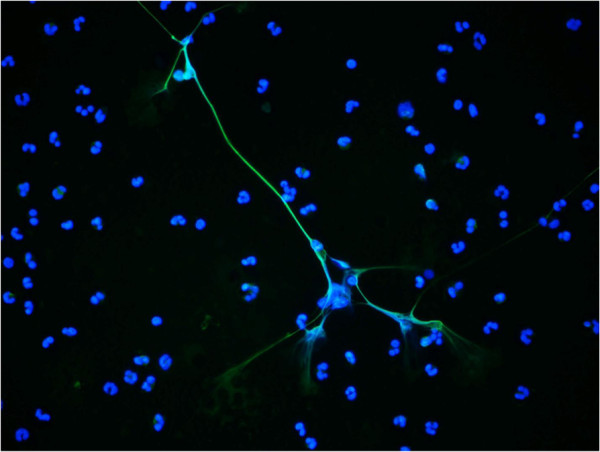
Representative images of neutrophil extracellular traps induced in vitro by lipopolysaccharide in human control neutrophils. Neutrophil extracellular traps are visualized by costaining of neutrophil elastase (green) and nuclear material (4′,6-diamidino-2-phenylindole, blue). Original magnification 40×. Microphotograph obtained by Dr Ritika Khandpur.
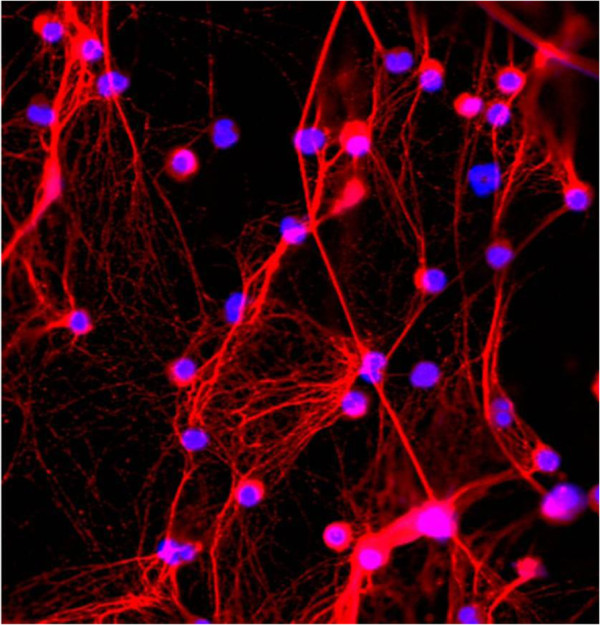
Neutrophil extracellular traps in neutrophils from a rheumatoid arthritis patient, following in vitro stimulation. Neutrophil extracellular traps (NETs) visualized in neutrophils isolated from a patient with rheumatoid arthritis, following stimulation with recombinant IL-17A in vitro. Prominent NET formation is displayed, with DNA visualized in blue (4′,6-diamidino-2-phenylindole) and neutrophil elastase in red. Original magnification 40×. Microphotograph obtained by Dr Carmelo Carmona-Rivera.
References
-
- Jaeger BN, Donadieu J, Cognet C, Bernat C, Ordonez-Rueda D, Barlogis V, Mahlaoui N, Fenis A, Narni-Mancinelli E, Beaupain B, Bellanné-Chantelot C, Bajénoff M, Malissen B, Malissen M, Vivier E, Uqolini S. Neutrophil depletion impairs natural killer cell maturation, function, and homeostasis. J Exp Med. 2012;15:565–580. doi: 10.1084/jem.20111908. - DOI - PMC - PubMed
Publication types
MeSH terms
Substances
Grants and funding
LinkOut - more resources
Full Text Sources
Other Literature Sources
Medical
