


Cordycepin activates AMP-activated protein kinase (AMPK) via interaction with the γ1 subunit
- PMID: 24286368
- PMCID: PMC3930416
- DOI: 10.1111/jcmm.12187
Cordycepin activates AMP-activated protein kinase (AMPK) via interaction with the γ1 subunit
Abstract
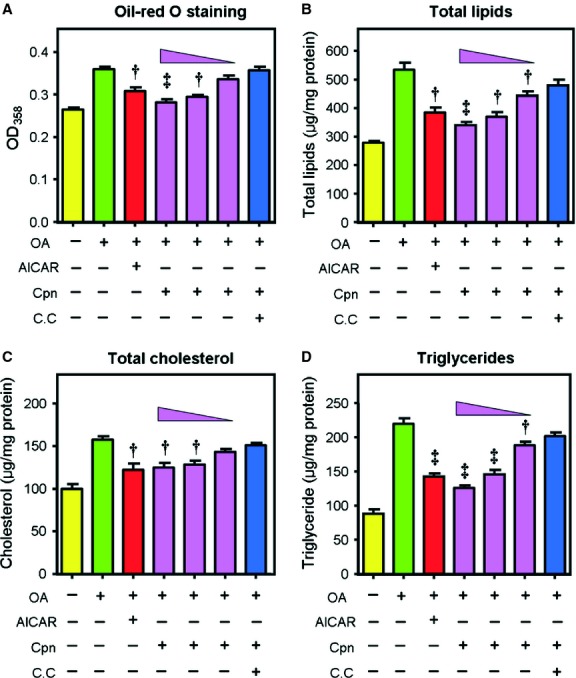
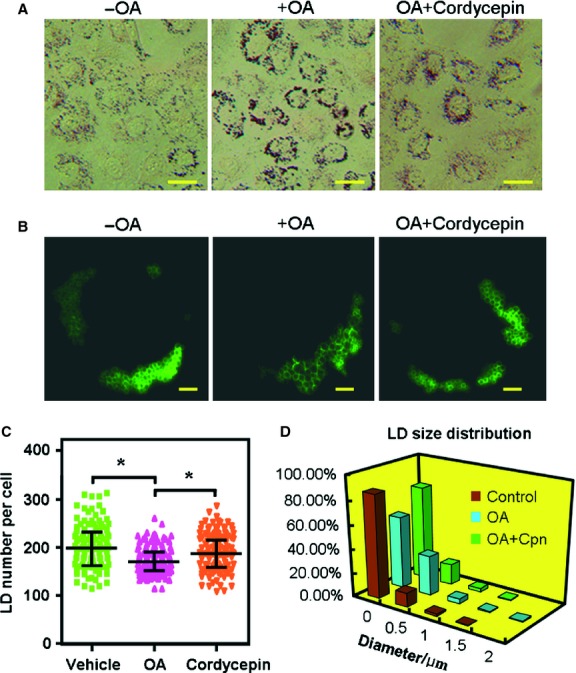
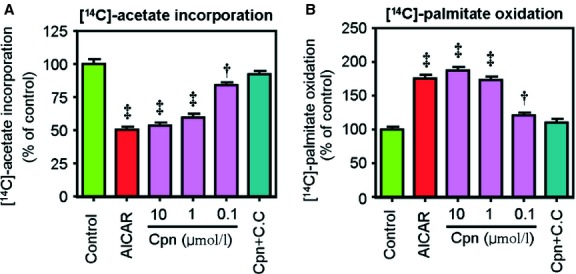
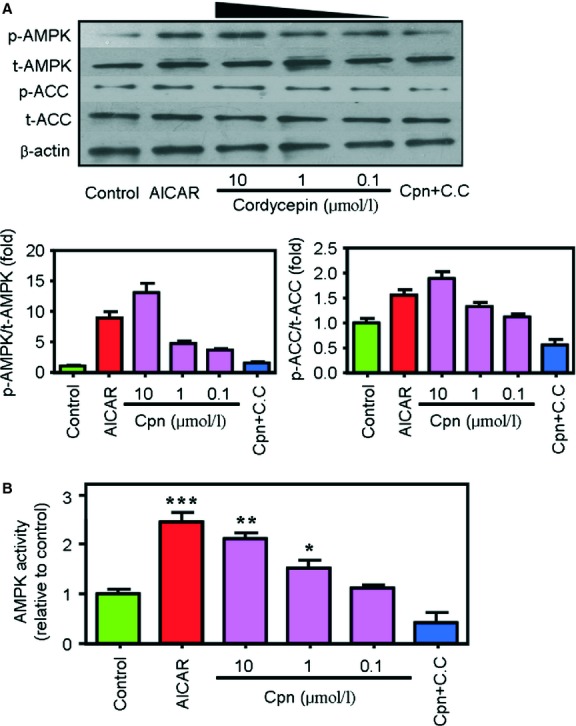
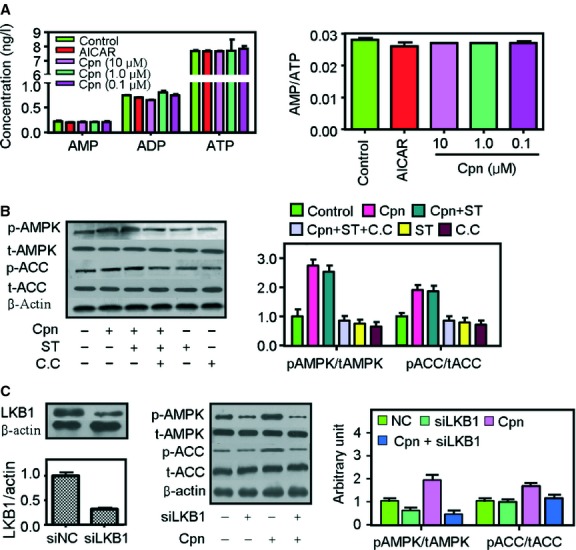
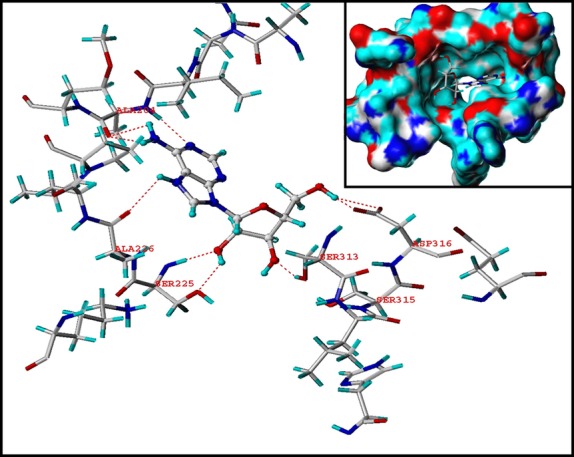
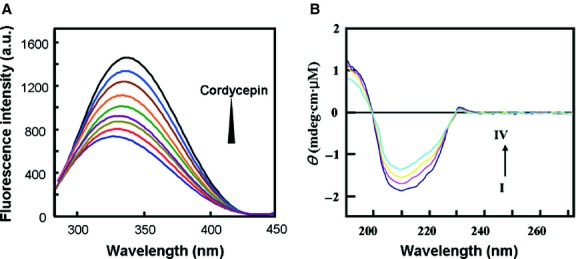
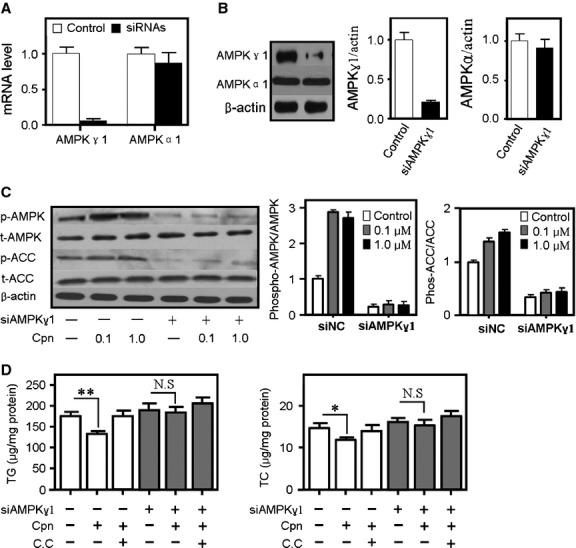
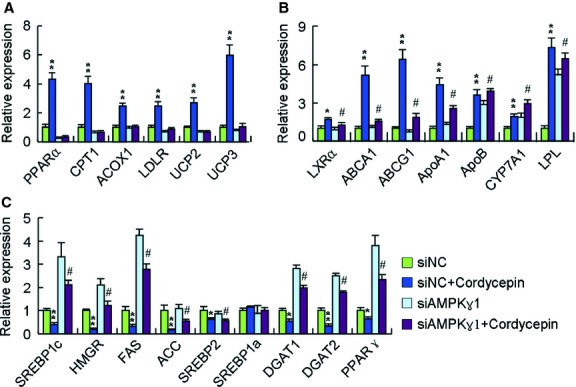
Cordycepin is a bioactive component of the fungus Cordyceps militaris. Previously, we showed that cordycepin can alleviate hyperlipidemia through enhancing the phosphorylation of AMP-activated protein kinase (AMPK), but the mechanism of this stimulation is unknown. Here, we investigated the potential mechanisms of cordycepin-induced AMPK activation in HepG2 cells. Treatment with cordycepin largely reduced oleic acid (OA)-elicited intracellular lipid accumulation and increased AMPK activity in a dose-dependent manner. Cordycepin-induced AMPK activation was not accompanied by changes in either the intracellular levels of AMP or the AMP/ATP ratio, nor was it influenced by calmodulin-dependent protein kinase kinase (CaMKK) inhibition; however, this activation was significantly suppressed by liver kinase B1 (LKB1) knockdown. Molecular docking, fluorescent and circular dichroism measurements showed that cordycepin interacted with the γ1 subunit of AMPK. Knockdown of AMPKγ1 by siRNA substantially abolished the effects of cordycepin on AMPK activation and lipid regulation. The modulating effects of cordycepin on the mRNA levels of key lipid regulatory genes were also largely reversed when AMPKγ1 expression was inhibited. Together, these data suggest that cordycepin may inhibit intracellular lipid accumulation through activation of AMPK via interaction with the γ1 subunit.
Keywords: AMPK; Cordycepin; LKB1; Molecular docking.
© 2013 The Authors. Journal of Cellular and Molecular Medicine published by John Wiley & Sons Ltd and Foundation for Cellular and Molecular Medicine.
Figures
References
-
- Chen WL, Chen YL, Chiang YM, et al. Fenofibrate lowers lipid accumulation in myotubes by modulating the PPARalpha/AMPK/FoxO1/ATGL pathway. Biochem Pharmacol. 2012;84:522–31. - PubMed
-
- Lee SK, Lee JO, Kim JH, et al. Coenzyme Q10 increases the fatty acid oxidation through AMPK-mediated PPARalpha induction in 3T3-L1 preadipocytes. Cell Signal. 2012;24:2329–36. - PubMed
Publication types
MeSH terms
Substances
LinkOut - more resources
Full Text Sources
Other Literature Sources
