


Socio-economic predictors of performance in the Undergraduate Medicine and Health Sciences Admission Test (UMAT)
- PMID: 24286571
- PMCID: PMC4220554
- DOI: 10.1186/1472-6920-13-155
Socio-economic predictors of performance in the Undergraduate Medicine and Health Sciences Admission Test (UMAT)
Abstract
Background: Entry from secondary school to Australian and New Zealand undergraduate medical schools has since the late 1990's increasingly relied on the Undergraduate Medicine and Health Sciences Admission Test (UMAT) as one of the selection factors. The UMAT consists of 3 sections - logical reasoning and problem solving (UMAT-1), understanding people (UMAT-2) and non-verbal reasoning (UMAT-3). One of the goals of using this test has been to enhance equity in the selection of students with the anticipation of an increase in the socioeconomic diversity in student cohorts. However there has been limited assessment as to whether UMAT performance itself might be influenced by socioeconomic background.
Methods: Between 2000 and 2012, 158,909 UMAT assessments were completed. From these, 118,085 cases have been identified where an Australian candidate was sitting for the first time during that period. Predictors of the total UMAT score, UMAT-1, UMAT-2 and UMAT-3 scores were entered into regression models and included gender, age, school type, language used at home, deciles for the Index of Relative Socioeconomic Advantage and Disadvantage score, the Accessibility/Remoteness Index of Australia (ARIA), self-identification as being of Aboriginal or Torres Strait Islander origin (ATSI) and current Australian state or territory of abode.
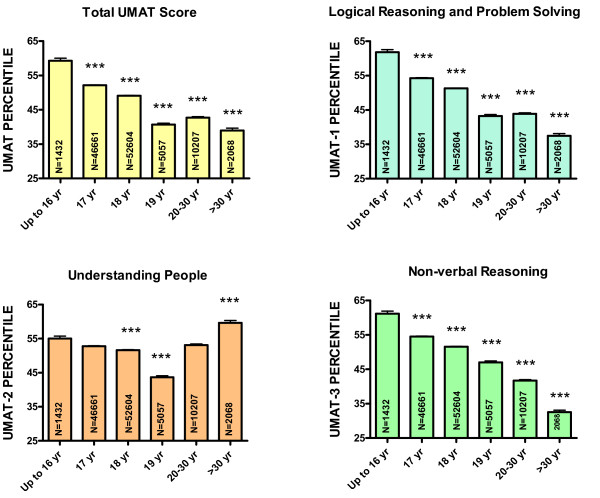
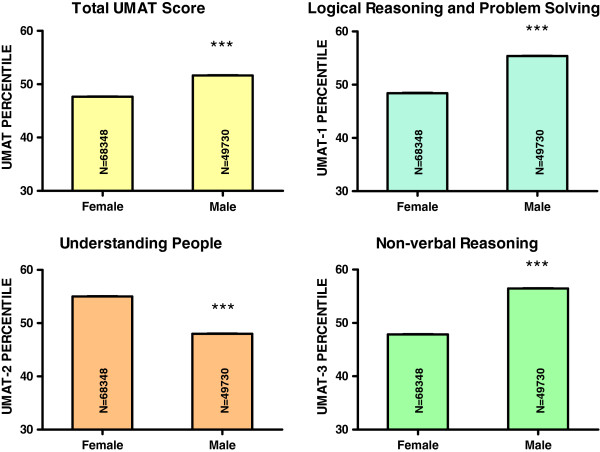
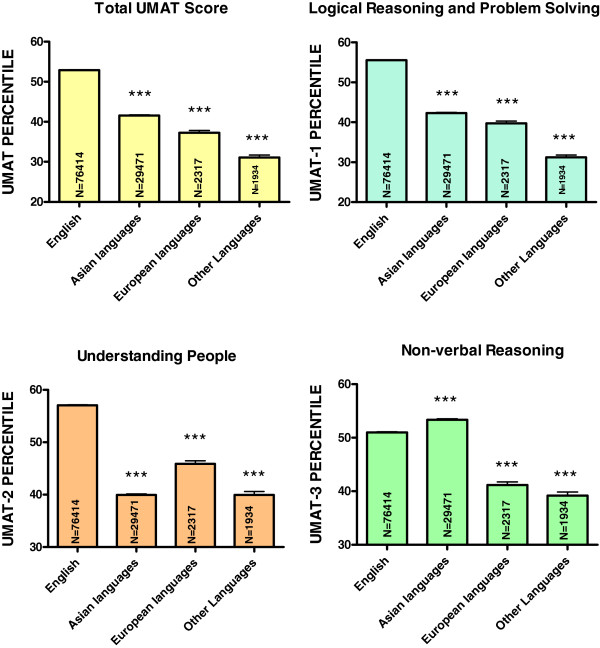
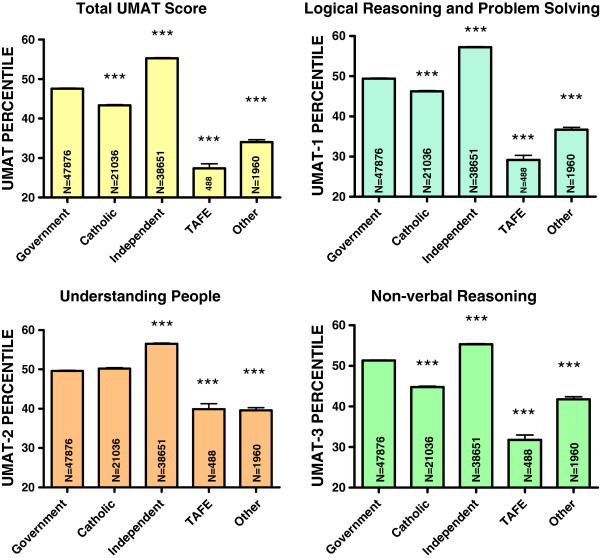
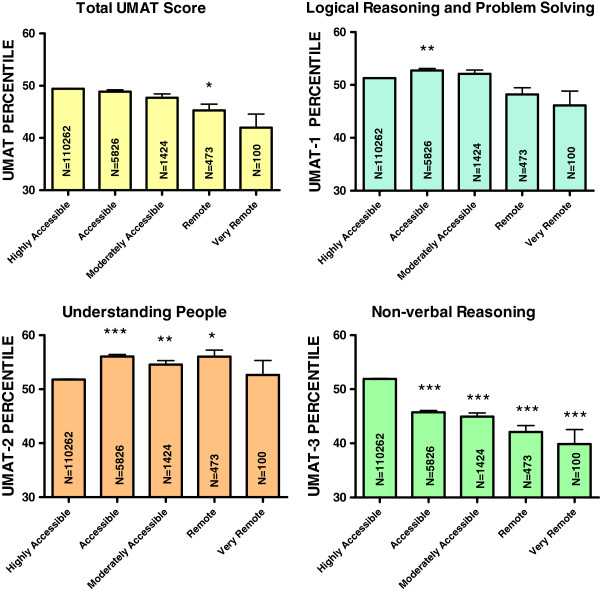
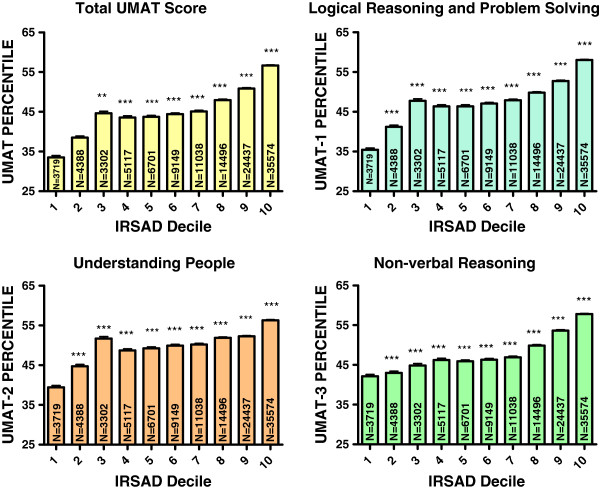
Results: A lower UMAT score was predicted by living in an area of relatively higher social disadvantage and lower social advantage. Other socioeconomic indicators were consistent with this observation with lower scores in those who self-identified as being of ATSI origin and higher scores evident in those from fee-paying independent school backgrounds compared to government schools. Lower scores were seen with increasing age, female gender and speaking any language other than English at home. Divergent effects of rurality were observed, with increased scores for UMAT-1 and UMAT-2, but decreasing UMAT-3 scores with increasing ARIA score. Significant state-based differences largely reflected substantial socio-demographic differences across Australian states and territories.
Conclusions: Better performance by Australian candidates in the UMAT is linked to an increase in socio-economic advantage and reduced disadvantage.This observation provides a firm foundation for selection processes at medical schools in Australia that have incorporated affirmative action pathways to quarantine places for students from areas of socio-economic disadvantage.
Figures
References
-
- Hunt M, Pywell S, Le L, Lay D. UMAT2012. Report on the 2012 Undergraduate Medicine and Health Sciences Admission Test. Australian: Australian Council for Education Research; 2012.
-
- Wilson IG, Flynn E, Roberts C, Crotty B, Griffin B. Only the best: medical student selection in Australia. MJA. 2012;196:357–357. - PubMed
MeSH terms
LinkOut - more resources
Full Text Sources
Other Literature Sources
