


O-GlcNAc and the cardiovascular system
- PMID: 24287310
- PMCID: PMC3943723
- DOI: 10.1016/j.pharmthera.2013.11.005
O-GlcNAc and the cardiovascular system
Abstract
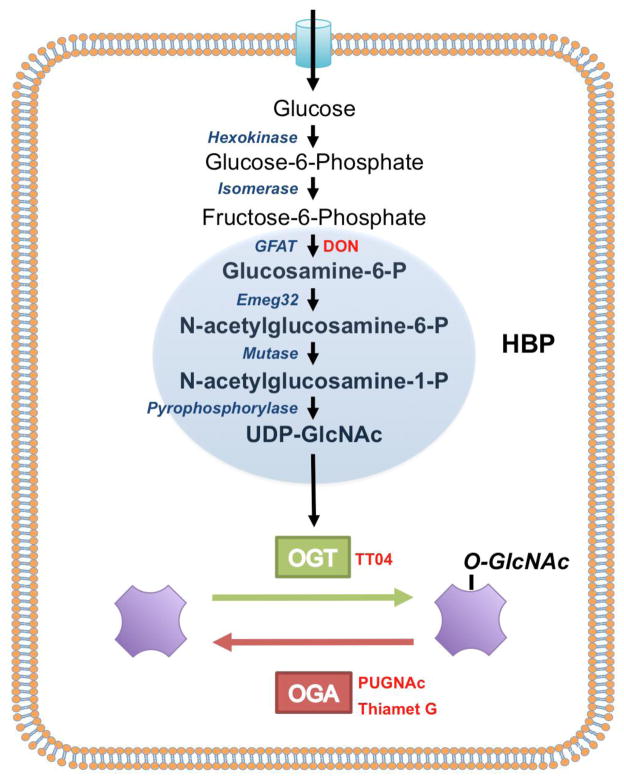
The cardiovascular system is capable of robust changes in response to physiologic and pathologic stimuli through intricate signaling mechanisms. The area of metabolism has witnessed a veritable renaissance in the cardiovascular system. In particular, the post-translational β-O-linkage of N-acetylglucosamine (O-GlcNAc) to cellular proteins represents one such signaling pathway that has been implicated in the pathophysiology of cardiovascular disease. This highly dynamic protein modification may induce functional changes in proteins and regulate key cellular processes including translation, transcription, and cell death. In addition, its potential interplay with phosphorylation provides an additional layer of complexity to post-translational regulation. The hexosamine biosynthetic pathway generally requires glucose to form the nucleotide sugar, UDP-GlcNAc. Accordingly, O-GlcNAcylation may be altered in response to nutrient availability and cellular stress. Recent literature supports O-GlcNAcylation as an autoprotective response in models of acute stress (hypoxia, ischemia, oxidative stress). Models of sustained stress, such as pressure overload hypertrophy, and infarct-induced heart failure, may also require protein O-GlcNAcylation as a partial compensatory mechanism. Yet, in models of Type II diabetes, O-GlcNAcylation has been implicated in the subsequent development of vascular, and even cardiac, dysfunction. This review will address this apparent paradox and discuss the potential mechanisms of O-GlcNAc-mediated cardioprotection and cardiovascular dysfunction. This discussion will also address potential targets for pharmacologic interventions and the unique considerations related to such targets.
Keywords: Heart failure; Hexosamine biosynthetic pathway; Hypertrophy; Ischemia–reperfusion injury; Mitochondria.
Copyright © 2013 Elsevier Inc. All rights reserved.
Conflict of interest statement
The authors have nothing to disclose.
Figures
References
-
- Broschat KO, Gorka C, Page JD, Martin-Berger CL, Davies MS, Huang HcHC, Gulve EA, Salsgiver WJ, Kasten TP. Kinetic characterization of human glutamine-fructose-6-phosphate amidotransferase i: Potent feedback inhibition by glucosamine 6-phosphate. The Journal of biological chemistry. 2002;277:14764–14770. - PubMed
-
- Marshall S, Bacote V, Traxinger RR. Discovery of a metabolic pathway mediating glucose-induced desensitization of the glucose transport system. Role of hexosamine biosynthesis in the induction of insulin resistance. The Journal of biological chemistry. 1991;266:4706–4712. - PubMed
-
- Greig KT, Antonchuk J, Metcalf D, Morgan PO, Krebs DL, Zhang JG, Hacking DF, Bode L, Robb L, Kranz C, de Graaf C, Bahlo M, Nicola NA, Nutt SL, Freeze HH, Alexander WS, Hilton DJ, Kile BT. Agm1/pgm3-mediated sugar nucleotide synthesis is essential for hematopoiesis and development. Molecular and cellular biology. 2007;27:5849–5859. - PMC - PubMed
Publication types
MeSH terms
Substances
Grants and funding
LinkOut - more resources
Full Text Sources
Other Literature Sources
