


Histone acetylation and arachidonic acid cytotoxicity in HepG2 cells overexpressing CYP2E1
- PMID: 24287576
- PMCID: PMC3927057
- DOI: 10.1007/s00210-013-0942-4
Histone acetylation and arachidonic acid cytotoxicity in HepG2 cells overexpressing CYP2E1
Abstract
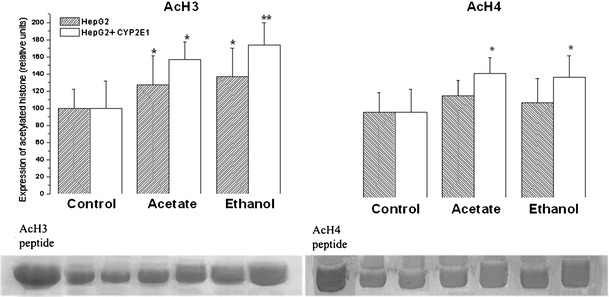
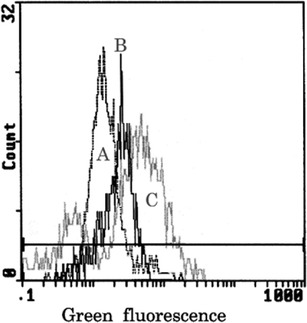
The aim of this work was to assess the role of ethanol-derived acetate and acetate-mediated histone acetylation in arachidonic acid-induced stress in HepG2 cells and cells overexpressing CYP2E1. Cells were grown for 7 days with 1 mM sodium acetate or 100 mM ethanol; their acetylated histone proteins and histone deacetylase 2 expression was quantified using Western blot. Ethanol- or acetate-pretreated cells were also treated for 24 h with 60 μM arachidonic acid to induce oxidative stress. Cytotoxicity was estimated by lactate dehydrogenase release, 3-[4,5-dimethylthiazolyl-2] 2,5-diphenyltetrazolium bromide test, and by DNA damage, while oxidative stress was quantified using dichlorofluorescein diacetate. Cells grown with ethanol or acetate had increased acetylated histone H3 levels in both cell types and elevated acetylated histone H4 levels in cells overexpressing CYP2E1 but not in naïve cells. In cells overexpressing CYP2E1 grown with ethanol, expression of histone deacetylase 2 was reduced by about 40 %. Arachidonic acid altered cell proliferation and was cytotoxic mostly to cells engineered to overexpress CYP2E1 but both effects were significantly lower in cells pretreated with ethanol or acetate. Cytotoxicity was also significantly decreased by 4-methylpyrazole--a CYP2E1 inhibitor and by trichostatin--an inhibitor of histone deacetylases. In cells pretreated with acetate or ethanol, the oxidative stress induced by arachidonic acid was also significantly lower. Our data indicate that histone hyperacetylation may in some extent protect the cells against oxidative stress. It is possible that acetate may act as an antioxidant at histone level. This mechanism may be relevant to alcohol-induced liver injury.
Figures


References
-
- Buurman R, Gürlevik E, Schäffer V, Eilers M, Sandbothe M, Kreipe H, Wilken L, Schlegelberger B, Kühnel F, Skawran B. Histone deacetylases activate hepatocyte growth factor signaling by repressing microRNA-449 in hepatocellular carcinoma cells. Gastroenterology. 2012;143:811–820. doi: 10.1053/j.gastro.2012.05.033. - DOI - PubMed
-
- Carlisi D, Vassallo B, Lauricella M, Emanuele S, D’Anneo A, Di Leonardo E, Di Fazio P, Vento R, Tesoriere G. Histone deacetylase inhibitors induce in human hepatoma HepG2 cells acetylation of p53 and histones in correlation with apoptotic effects. Int J Oncol. 2008;32:177–184. - PubMed
Publication types
MeSH terms
Substances
LinkOut - more resources
Full Text Sources
Other Literature Sources
Medical
