


Heart rates increase after hatching in two species of Natricine snakes
- PMID: 24287712
- PMCID: PMC3843164
- DOI: 10.1038/srep03384
Heart rates increase after hatching in two species of Natricine snakes
Abstract
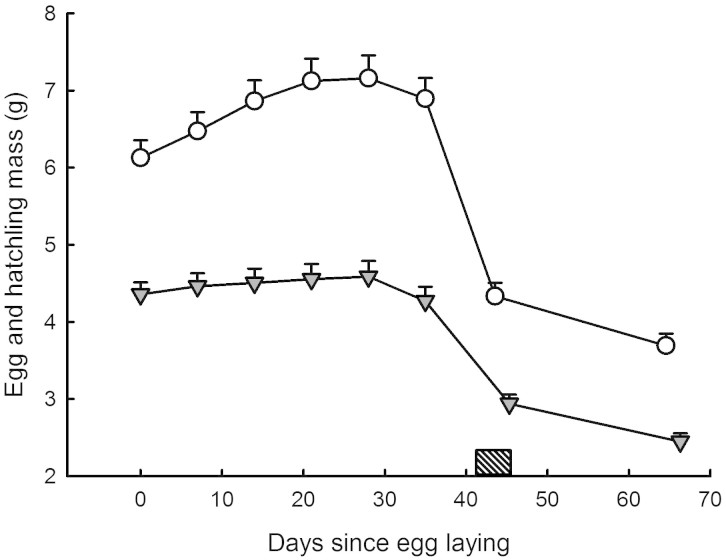
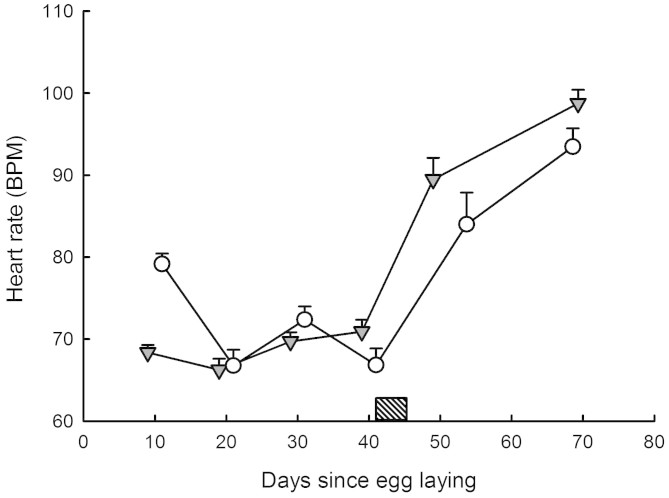
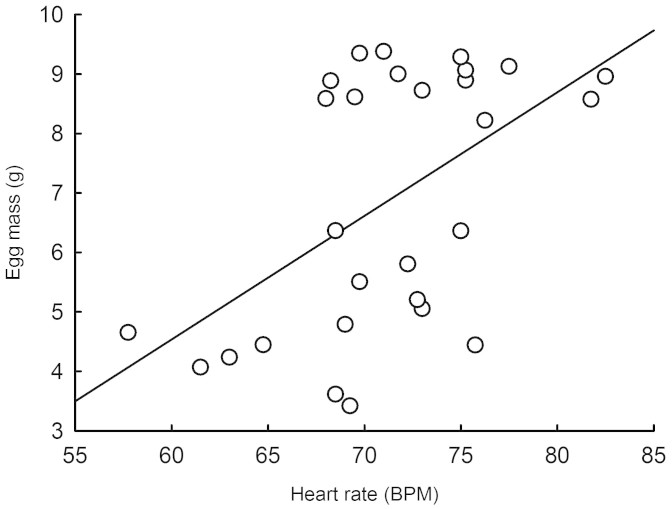
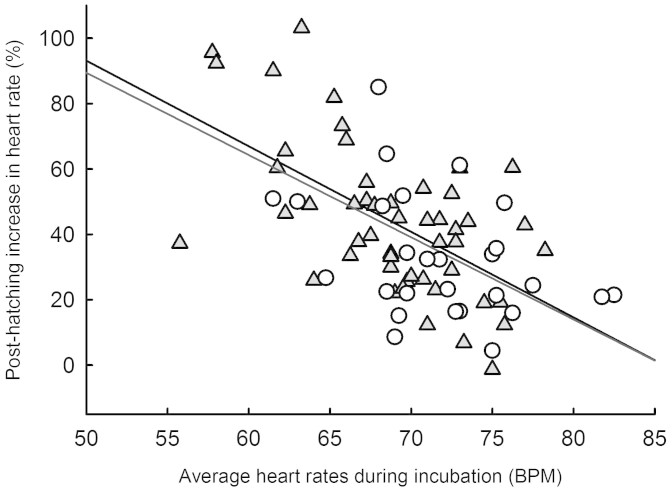
Experimental studies have shown heart rates to decrease from embryo to hatchling stage in turtles, remain steady in skinks, and increase in birds. However, no snake species has been studied in this regard. I recorded heart rate evolution trajectories from embryo to juvenile stage in 78 eggs from two species of European Natricine snakes. Unexpectedly, snakes behaved more like birds than turtles or lizards: heart rates increased after hatching in both N. maura and N. natrix, respectively by 43.92 ± 22.84% and 35.92 ± 24.52%. Heart rate shift was not related to an abrupt elevation of metabolism per se (snakes that increased their heart rates the most sharply grew the least after birth), but rather due to a number of smaller eggs that experienced lower than normal heart rates throughout the incubation and recovered a normal heart rate post-birth. This finding is discussed in the light of hatching synchrony benefits.
Figures
References
-
- Birchard G. F. & Reiber C. L. Heart rate during development in the turtle embryo: Effect of temperature. J. Comp. Physiol. B 166, 461–466 (1996). - PubMed
-
- Birchard G. F. An ontogenetic shift in the response of heart rates to temperature in the developing snapping turtle (Chelydra serpentina). J. Thermal Biol. 25, 287–291 (2000). - PubMed
-
- Nechaeva M. V., Vladimirova I. G. & Alekseeva T. A. Oxygen consumption as related to the development of the extraembryonic membranes and cardiovascular system in the European pond turtle (Emys orbicularis) embryogenesis. Comp. Biochem. Physiol. A 148, 599–610 (2007). - PubMed
-
- Angilletta M. J., Lee V. & Silva A. C. Energetics of lizard embryos are not canalized by thermal acclimation. Physiol. Biochem. Zool. 79, 573–580 (2006). - PubMed
MeSH terms
LinkOut - more resources
Full Text Sources
Other Literature Sources
