


Diagnosis and treatment of solid pseudopapillary tumor of the pancreas: experience of one single institution from Turkey
- PMID: 24289652
- PMCID: PMC4220779
- DOI: 10.1186/1477-7819-11-308
Diagnosis and treatment of solid pseudopapillary tumor of the pancreas: experience of one single institution from Turkey
Abstract
Background: Solid pseudopapillary neoplasia (SPN) of the pancreas is an extremely rare epithelial tumor of low malignant potential. SPN accounts for less than 1% to 2% of exocrine pancreatic tumors. The aim of this study is to report our experience with SPN of the pancreas. It includes a summary of the current literature to provide a reference for the management of this rare clinical entity.
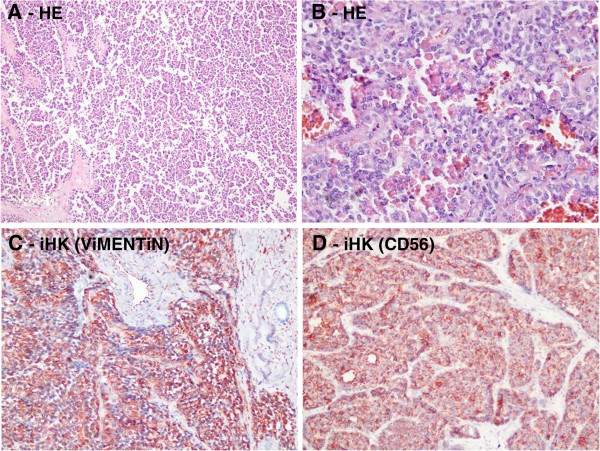
Methods: A retrospective analysis was performed of all patients diagnosed and treated for SPN in our hospital over the past 15 years (1998 to 2013). A database of the characteristics of these patients was developed, including age, gender, tumor location and size, treatment, and histopathological and immunohistochemical features.
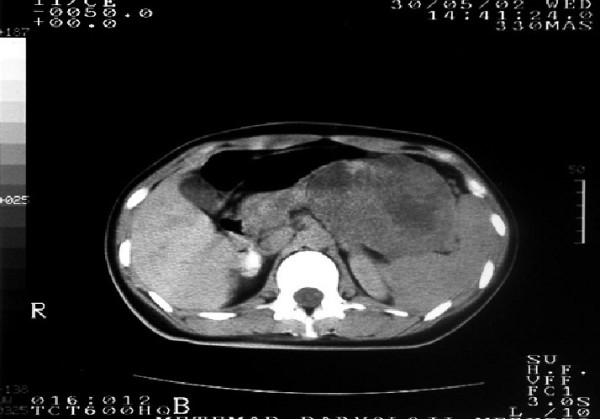
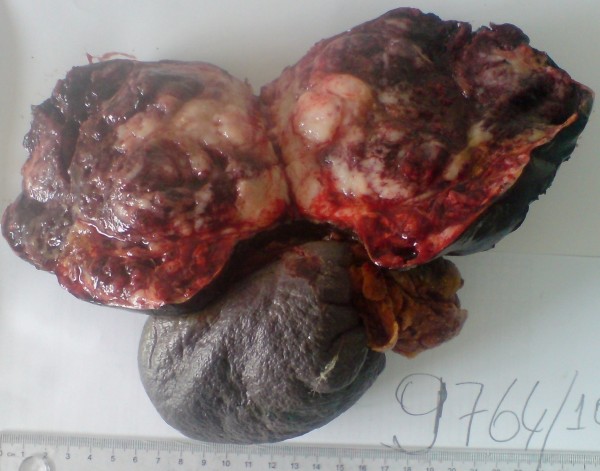
Results: During this time period, 255 patients with pancreatic malignancy (which does not include ampulla vateri, distal choledocal and duodenal tumor) were admitted to our department, only 10 of whom were diagnosed as having SPN (2.5%). Nine patients were women (90%) and one patient was a man (10%). Their median age was 38.8 years (range 18 to 71). The most common symptoms were abdominal pain and dullness. Seven patients (70%) presented with abdominal pain or abdominal dullness and three patient (30%) were asymptomatic with the diagnosis made by an incidental finding on routine examination. Abdominal computed tomography and/or magnetic resonance imaging showed the typical features of solid pseudopapillary neoplasm in six (60%) of the patients. Four patients underwent distal pancreatectomy with splenectomy, one patient underwent a total mass excision, and one patient underwent total pancreatic resection. Two required extended distal pancreatectomy with splenectomy. Two underwent spleen-preserving distal pancreatectomy.
Conclusions: SPN is a rare neoplasm that primarily affects young women. The prognosis is favorable even in the presence of distant metastasis. Although surgical resection is generally curative, a close follow-up is advised in order to diagnose a local recurrence or distant metastasis and choose the proper therapeutic option for the patient.
Figures
References
-
- Kloppel G, Solcia E, Longnecker DS, Capella C, Sobin LH. [World Health Organization International Histological Classification of Tumours] 2. Berlin, Heidelberg, New York: Springer; 1996. Histological typing of tumors of the exocrine pancreas; p. 8452/1. [ISBN 3-540-60280-1]
-
- Klimstra DS, Wenig BM, Heffess CS. Solid pseudopapillary tumor of the pancreas: a typically cystic carcinoma of low malignant potential. Semin Diagn Pathol. 2000;17:66–80. - PubMed
Publication types
MeSH terms
LinkOut - more resources
Full Text Sources
Other Literature Sources
Medical
Miscellaneous
