


Round window membrane intracochlear drug delivery enhanced by induced advection
- PMID: 24291333
- PMCID: PMC3925065
- DOI: 10.1016/j.jconrel.2013.11.021
Round window membrane intracochlear drug delivery enhanced by induced advection
Abstract
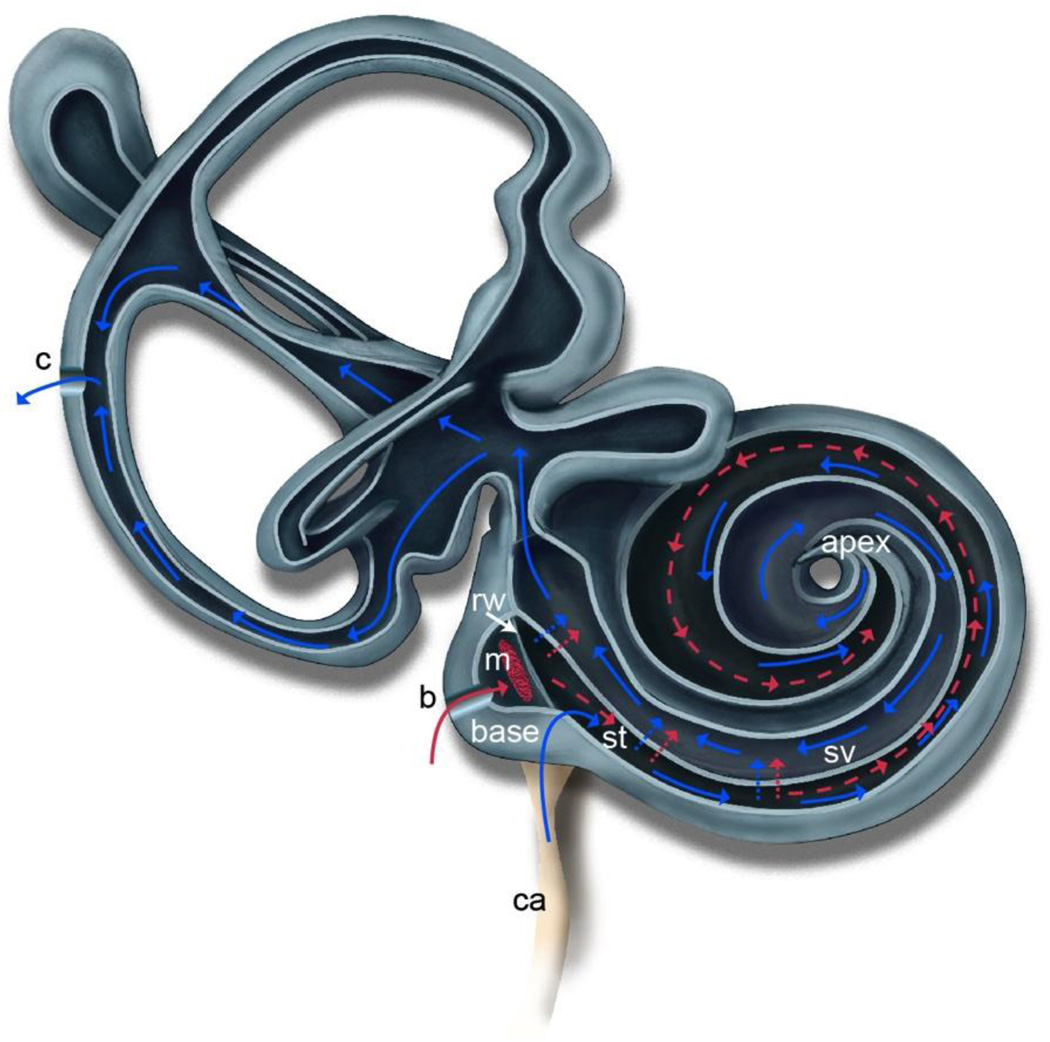
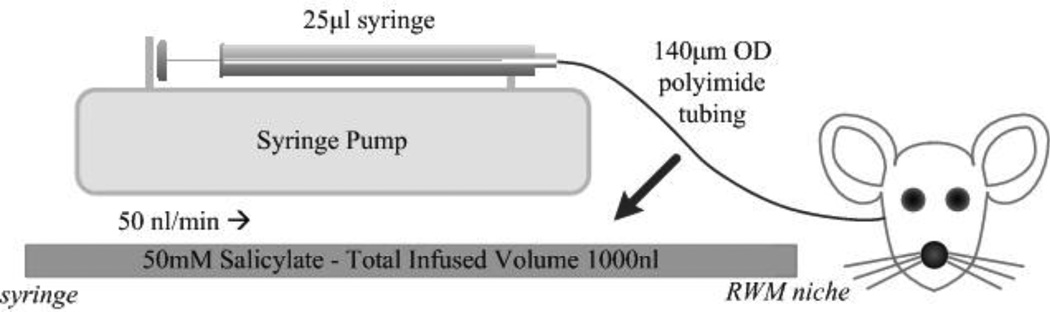
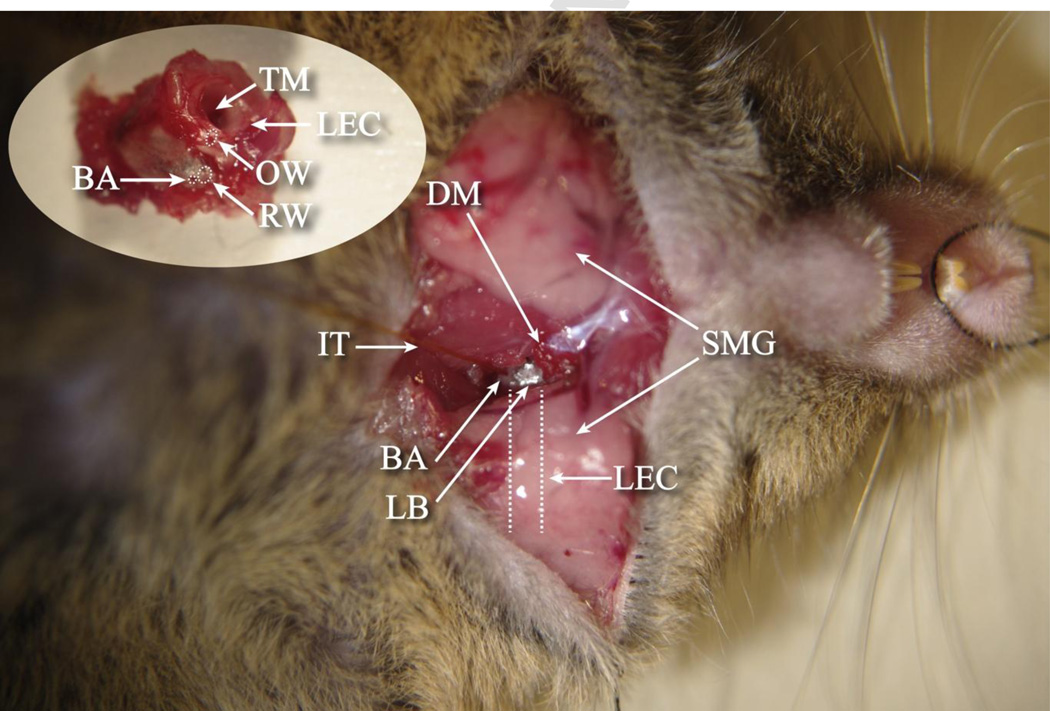
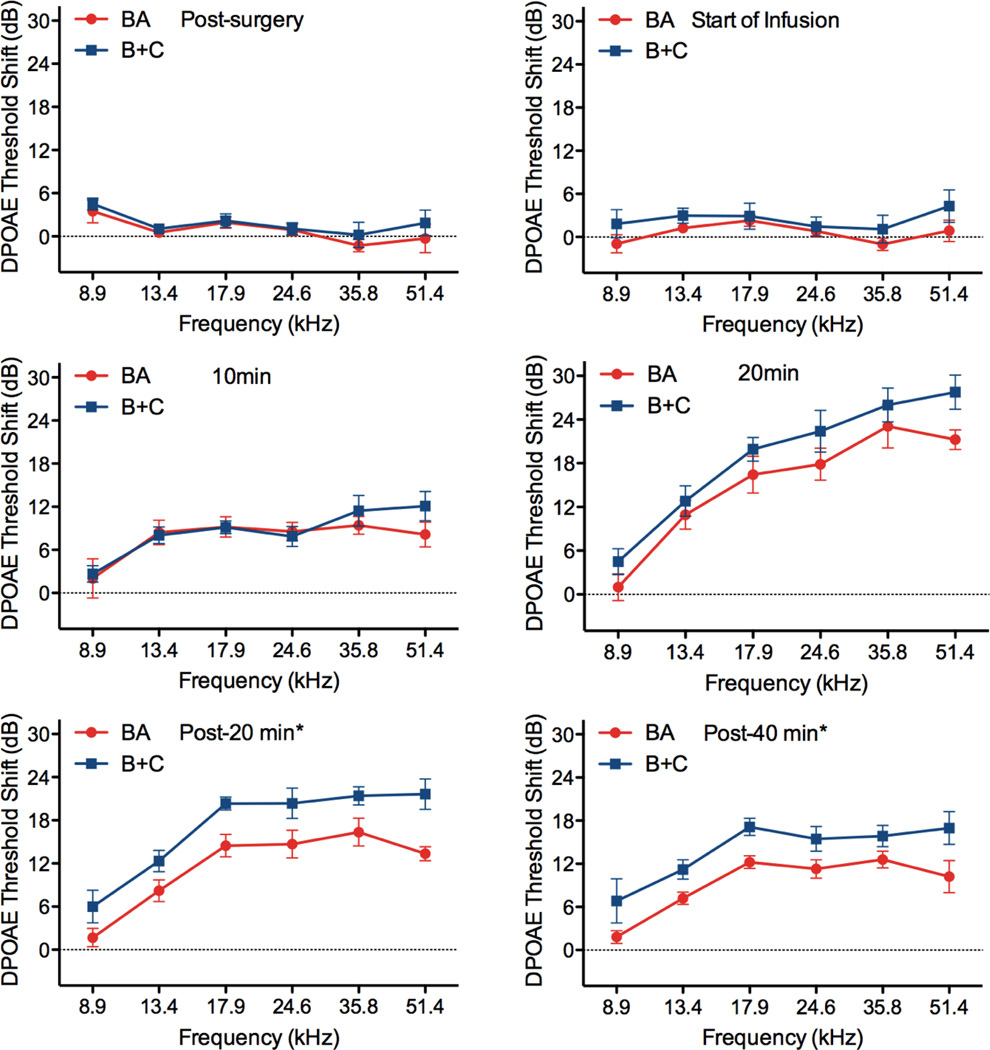
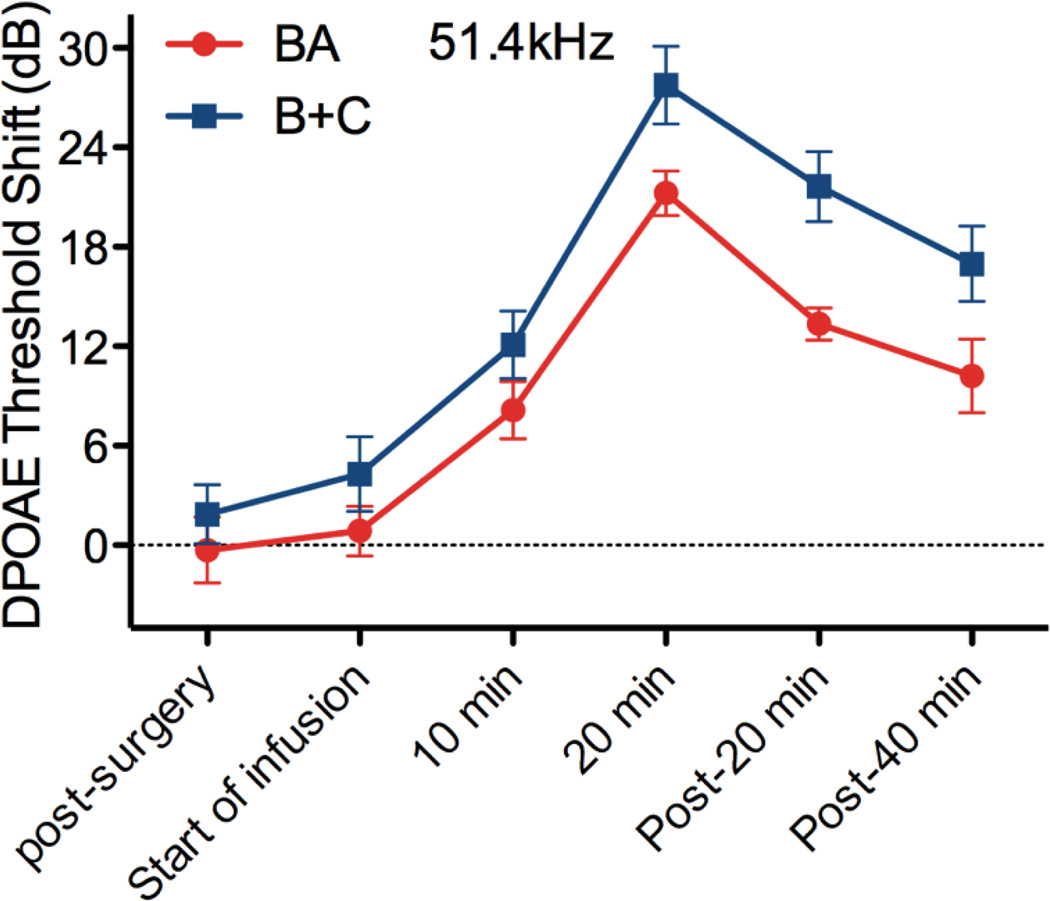
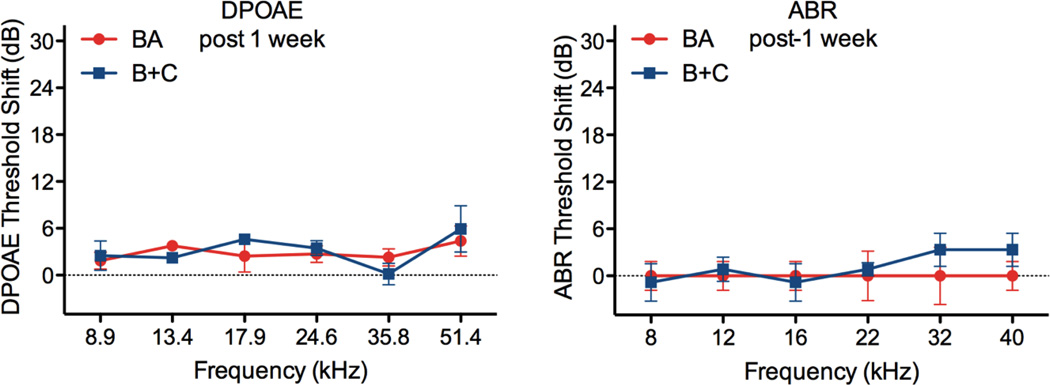
Delivery of therapeutic compounds to the inner ear via absorption through the round window membrane (RWM) has advantages over direct intracochlear infusions; specifically, minimizing impact upon functional hearing measures. However, previous reports show that significant basal-to-apical concentration gradients occur, with the potential to impact treatment efficacy. Here we present a new approach to inner ear drug delivery with induced advection aiding distribution of compounds throughout the inner ear in the murine cochlea. Polyimide microtubing was placed near the RWM niche through a bullaostomy into the middle ear cavity allowing directed delivery of compounds to the RWM. We hypothesized that a posterior semicircular canalostomy would induce apical flow from the patent cochlear aqueduct to the canalostomy due to influx of cerebral spinal fluid. To test this hypothesis, young adult CBA/CaJ mice were divided into two groups: bullaostomy approach only (BA) and bullaostomy+canalostomy (B+C). Cochlear function was evaluated by distortion product otoacoustic emission (DPOAE) and auditory brainstem response (ABR) thresholds during and after middle ear infusion of salicylate in artificial perilymph (AP), applied near the RWM. The mice recovered for 1week, and were re-tested. The results demonstrate there was no significant impact on auditory function utilizing the RWM surgical procedure with or without the canalostomy, and DPOAE thresholds were elevated reversibly during the salicylate infusion. Comparing the threshold shifts for both methods, the B+C approach had more of a physiological effect than the BA approach, including at lower frequencies representing more apical cochlear locations. Unlike mouse cochleostomies, there was no deleterious auditory functional impact after 1week recovery from surgery. The B+C approach had more drug efficacy at lower frequencies, underscoring potential benefits for more precise control of delivery of inner ear therapeutic compounds.
Keywords: Cochlea; Concentration gradient; Drug delivery; Infusion; Inner ear; Mouse.
Copyright © 2013 Elsevier B.V. All rights reserved.
Figures
References
-
- Staecker H, Li D, O'Malley BW, et al. Gene expression in the mammalian cochlea: a study of multiple vector systems. Acta Otolaryngol. 2001;121:157–163. - PubMed
-
- Ishimoto S-i, Kawamoto K, Kanzaki S, et al. Gene transfer into supporting cells of the organ of Corti. Hear Res. 2002;173:187–197. - PubMed
Publication types
MeSH terms
Substances
Grants and funding
LinkOut - more resources
Full Text Sources
Other Literature Sources
