


The persistence of symptom burden: symptom experience and quality of life of cancer patients across one year
- PMID: 24292095
- PMCID: PMC4929053
- DOI: 10.1007/s00520-013-2049-3
The persistence of symptom burden: symptom experience and quality of life of cancer patients across one year
Abstract
Purpose: The purpose of this longitudinal study was to track the symptom experience in a sample of cancer patients, determine the persistence of cancer symptoms and symptom burden, and examine the relationship between symptoms and QOL over time.
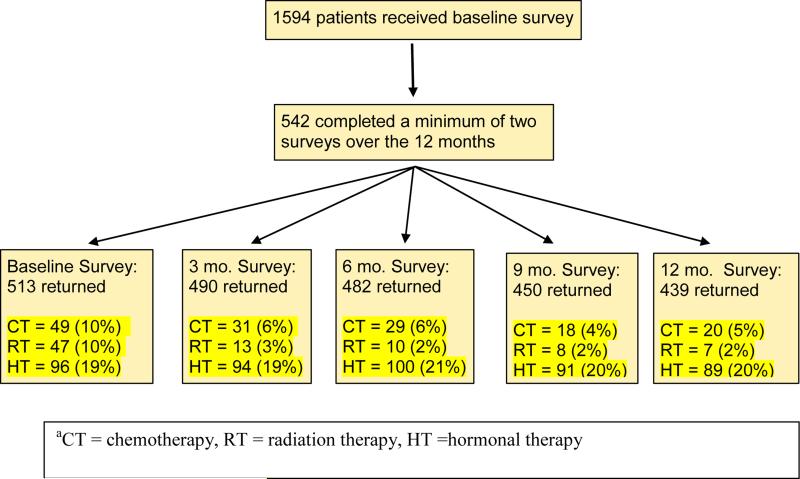
Methods: Five hundred forty-two patients provided longitudinal data, completing surveys over a 12-month period. Patients had breast, colorectal, gynecologic, lung, or prostate cancer with stage 1, 2, or 3 disease. Surveys included the Memorial Symptom Assessment Scale and the Functional Assessment of Cancer Therapy-General Scale and were administered every 3 months. Demographic and clinical information and comorbidities were collected from the tumor registry.
Results: The number and type of symptoms experienced by patients varied by cancer type, but about 90% of patients reported one or more symptoms--with prostate cancer patients reporting fewer symptoms and colorectal patients, more symptoms. Prostate patients also had the lowest symptom burden at every time point. Overall, symptom burden decreased over time, as did the Physical subscale for the MSAS. Quality of life was stable over time, except for physical well-being, which improved. Quality of life was negatively correlated with symptom burden at every time point.
Conclusions: The differences in symptom experience by cancer type suggest that assessment and management of symptoms must be individually tailored or at least adjusted by cancer type. While symptom burden decreased over time, residual symptom burden was still noteworthy. As quality of life was persistently negatively correlated with symptom burden, the results suggest the need for comprehensive symptom assessment and management.
Figures
References
-
- Siegel R, Naishadham D, Jemal A. Cancer statistics, 2012. CA: Ca J for Clin. 2012;62(1):10–29. - PubMed
-
- National Cancer Institute US cancer survivors grow to nearly 12 million. http://www.cancer.gov/newscenter/pressreleases/2011/survivorshipMMWR2011.
-
- Portenoy RK, Thaler HT, Kornblith AB, et al. Symptom prevalence, characteristics and distress in a cancer population. Qual Life Res. 1994;3:183–189. - PubMed
-
- Baggott C, Dodd M, Kennedy N, et al. Multiple symptoms in pediatric oncology patients: A systematic review. J Pediatr Oncol Nurs. 2009;26:325–339. - PubMed
-
- Chang VT, Hwang SS, Feuerman M, et al. Symptom and quality of life survey of medical oncology patients at a veterans affairs medical center: A role for symptom assessment. Cancer. 2000;88:1175–83. - PubMed
Publication types
MeSH terms
Grants and funding
LinkOut - more resources
Full Text Sources
Other Literature Sources
Medical
