


Inability to empathize: brain lesions that disrupt sharing and understanding another's emotions
- PMID: 24293265
- PMCID: PMC3959550
- DOI: 10.1093/brain/awt317
Inability to empathize: brain lesions that disrupt sharing and understanding another's emotions
Abstract
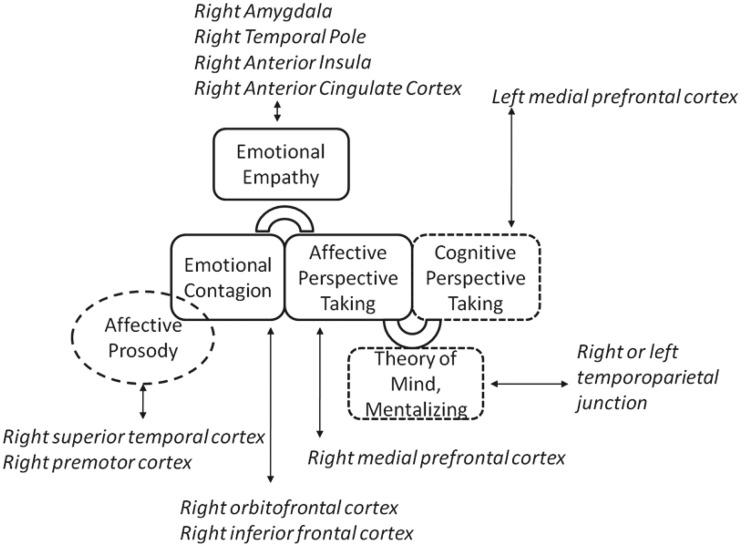
Emotional empathy--the ability to recognize, share in, and make inferences about another person's emotional state--is critical for all social interactions. The neural mechanisms underlying emotional empathy have been widely studied with functional imaging of healthy participants. However, functional imaging studies reveal correlations between areas of activation and performance of a task, so that they can only reveal areas engaged in a task, rather than areas of the brain that are critical for the task. Lesion studies complement functional imaging, to identify areas necessary for a task. Impairments in emotional empathy have been mostly studied in neurological diseases with fairly diffuse injury, such as traumatic brain injury, autism and dementia. The classic 'focal lesion' is stroke. There have been scattered studies of patients with impaired empathy after stroke and other focal injury, but these studies have included small numbers of patients. This review will bring together data from these studies, to complement evidence from functional imaging. Here I review how focal lesions affect emotional empathy. I will show how lesion studies contribute to the understanding of the cognitive and neural mechanisms underlying emotional empathy, and how they contribute to the management of patients with impaired emotional empathy.
Keywords: emotion; empathy; focal lesion studies; stroke.
Figures
References
-
- Adolphs R. Cognitive neuroscience of human social behaviour. Nat Rev Neurosci. 2003;4:165–78. - PubMed
-
- Amodio DM, Frith CD. Meeting of minds: the medial frontalcortex and social cognition. Nat Rev Neurosci. 2006;7:268–77. - PubMed
-
- Baron-Cohen S, Jolliffe T, Mortimore C, Robertson M. Another advanced test of theory of mind: Evidence from very high functioning adults with autism or asperger syndrome. J Child Psychol Psychiatry. 1997;38:813–22. - PubMed
-
- Bartsch K. The role of experience in children’s developing folk epistemology: review and analysis from the theory-theory perspective. New Ideas Psychol. 2002;20:145–61.
Publication types
MeSH terms
Grants and funding
LinkOut - more resources
Full Text Sources
Other Literature Sources
Medical
