


Hospital mortality associated with stroke in southern iran
- PMID: 24293785
- PMCID: PMC3838983
Hospital mortality associated with stroke in southern iran
Abstract
Background: Unlike the western hemisphere, information about stroke epidemiology in southern Iran is scarce. The aim of this study was to determine the main epidemiological characteristics of patients with stroke and its mortality rate in southern Iran.
Methods: A retrospective, single-center, hospital-based longitudinal study was performed at Nemazee Hospital in Shiraz, Southern Iran. Patients with a diagnosis of hemorrhagic and ischemic strokes were identified based on the International Classification of Diseases, 9th and 10th editions, for the period between 2001 and 2010. Demographics including age, sex, area of residence, socioeconomic status, length of hospital stay, and discharge destinations were analyzed in association with mortality.
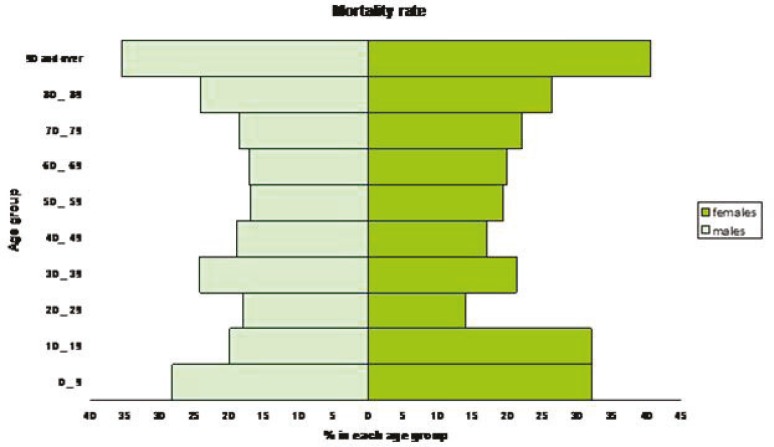
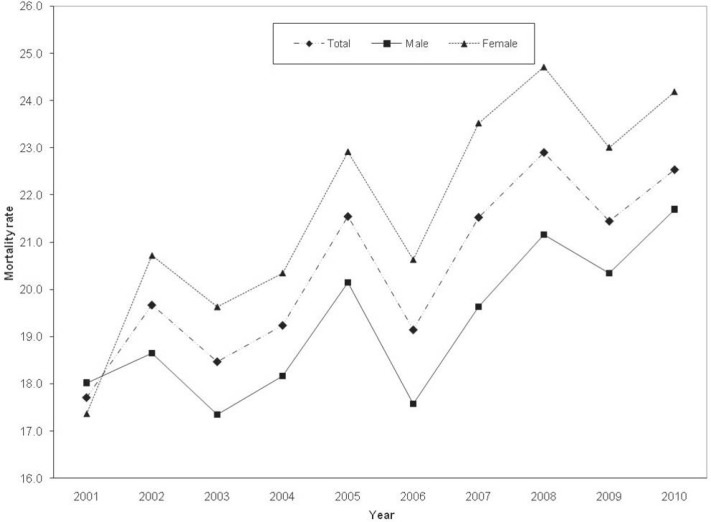
Results: 16351 patients with a mean age of 63.4 years (95% CI: 63.1, 63.6) were included in this analysis. Men were slightly predominant (53.6% vs. 46.4%). Forty-seven percent of the total sample was older than 65,17% were younger than 45, and 2.6% were children younger than 18. The mean hospital stay was 6.3 days (95% CI: 6.2, 6.4). Among all types of strokes, the overall hospital mortality was 20.5%. Multiple logistic regression revealed significantly higher in-hospital mortality in women and children (P<0.001) but not in patients with low socioeconomic status or from rural areas. During the study period, the mortality proportions increased from 17.8% to 22.2%.
Conclusion: In comparison to western countries, a larger proportion of our patients were young adults and the mortality rate was higher.
Keywords: Cerebrovascular accident; Cerebrovascular disease; Mortality; Sex; Stroke.
Figures
References
-
- Feigin VL, Lawes CM, Bennett DA, Anderson CS. Stroke epidemiology: a review of population-based studies of incidence, prevalence, and case-fatality in the late 20th century. Lancet Neurol. 2003;2:43–53. doi: 10.1016/S1474-4422(03)00266-7. PubMed PMID: 12849300. - PubMed
-
- Strong K, Mathers C, Bonita R. Preventing stroke: saving lives around the world. Lancet Neurol. 2007;6:182–7. doi: 10.1016/S1474-4422(07)70031-5. PubMed PMID: 17239805. - PubMed
-
- Kaul S, Bandaru VC, Suvarna A, Boddu DB. Stroke burden and risk factors in developing countries with special reference to India. J Indian Med Assoc. 2009;107(358):360–70. PubMed PMID: 19886374. - PubMed
-
- The World bank classification of countries[Internet] [cited: 2012 May 1]. Available from: http://data.worldbank.org/country/iran-islamic-republic.
-
- Azarpazhooh MR, Etemadi MM, Donnan GA, Mokhber N, Majdi MR, Ghayour-Mobarhan M, et al. Excessive incidence of stroke in Iran: evidence from the Mashhad Stroke Incidence Study (MSIS), a population-based study of stroke in the Middle East. Stroke. 2010;41:e3–e10. doi: 10.1161/STROKEAHA.109.559708. PubMed PMID: 19926844. - PubMed
LinkOut - more resources
Full Text Sources