


Depression increases the risk for uncontrolled hypertension
- PMID: 24294029
- PMCID: PMC3716493
Depression increases the risk for uncontrolled hypertension
Abstract
Background: Because hypertension and depression share common pathways, it is possible that each disease has an impact on the natural history of the other.
Objective: To determinate whether depression influences blood pressure control in hypertensive patients.
Methods: Forty hypertensive patients undergoing antihypertensive treatment, excluding beta-blockers and central-acting agents, self-measured their blood pressure several times a day for three days using a validated, commercially available device. All patients also completed the Zung Self-rating Depression Scale survey for depression. Associations between the results of the blood pressure and depression tests were determined using the Spearman correlation coefficient; RR was also measured.
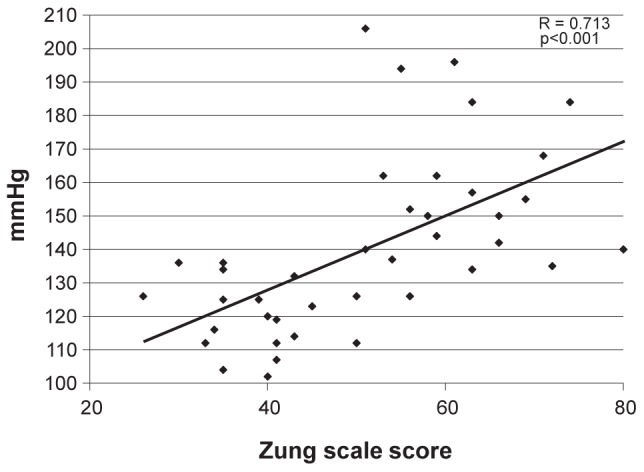
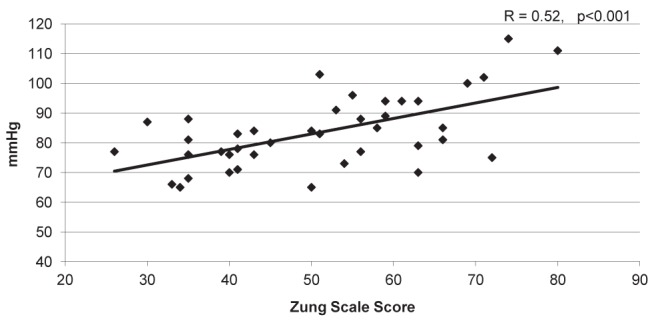
Results: Of the 40 patients, 23 were depressed, and 21 of these 23 had poor control of their blood pressure. The RR for uncontrolled hypertension in depressed patients was 15.5. A significant correlation between systolic (r=0.713) and diastolic (r=0.52) blood pressure values and depression was found.
Conclusion: Depression is common in patients with uncontrolled hypertension and may interfere with blood pressure control. Screening for depression in hypertensive patients is a simple and cost-effective tool that may improve outcomes.
Keywords: Blood pressure control; Depression; Hypertension.
Figures
References
-
- Juárez R, Lavalle F. Depresión. In: Ramiro M, Lifshitz A, Halabe J, Frati A, editors. El internista, un texto de medicina interna para internistas. Mexico: Nieto Editores; 2008. pp. 1065–77.
-
- Pignone MP, Gaynes BN, Rushton JL, et al. Screening for depression in adults: A summary of the evidence for the U.S. Preventive Services Task Force. Ann Intern Med. 2002;136:765–76. - PubMed
-
- Meng L, Chen D, Yang Y, Zheng Y, Hui R. Depression increases the risk of hypertension incidence: A meta-analysis of prospective cohort studies. J Hypertens. 2012;30:842–851. - PubMed
-
- O’Connor CM, Gurbel PA, Serebruany VL. Depression as a risk factor for cardiovascular and cerebrovascular disease: Emerging data and clinical perspectives. Am Heart J. 2000;140:S63–9.
LinkOut - more resources
Full Text Sources