


Therapeutic effects of tai chi in patients with Parkinson's disease
- PMID: 24294526
- PMCID: PMC3833322
- DOI: 10.1155/2013/548240
Therapeutic effects of tai chi in patients with Parkinson's disease
Abstract
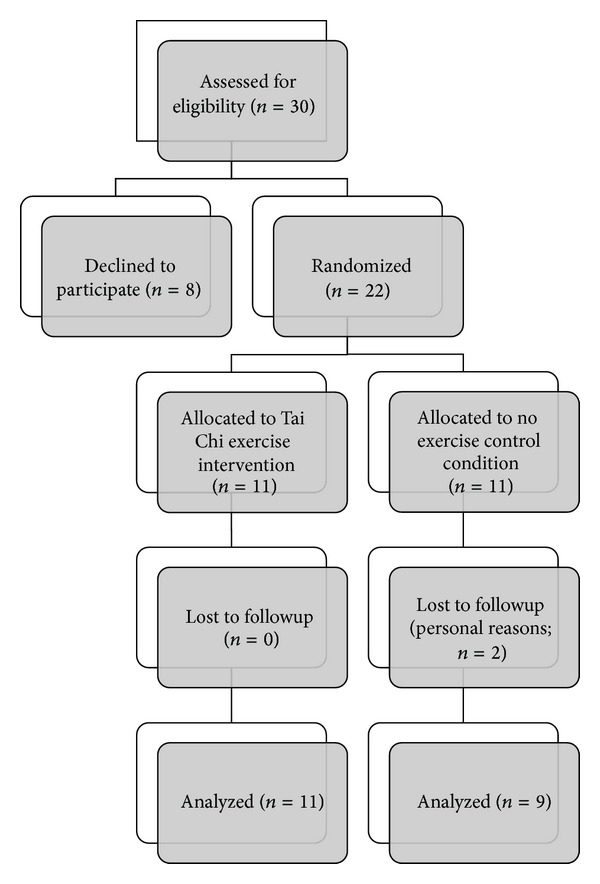
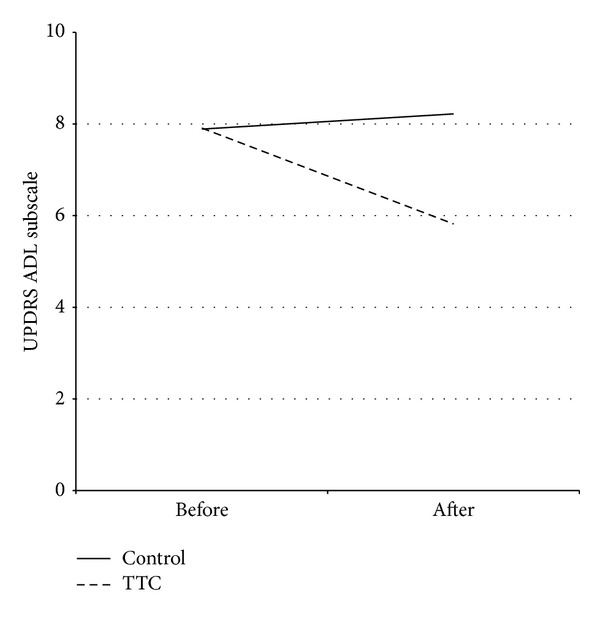
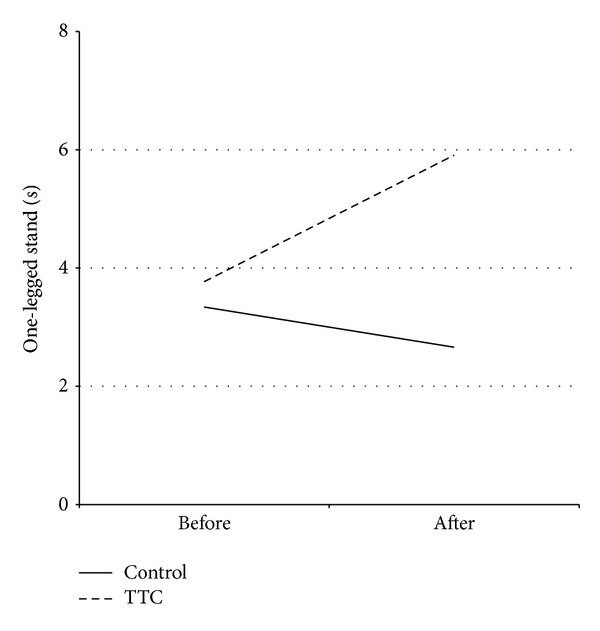
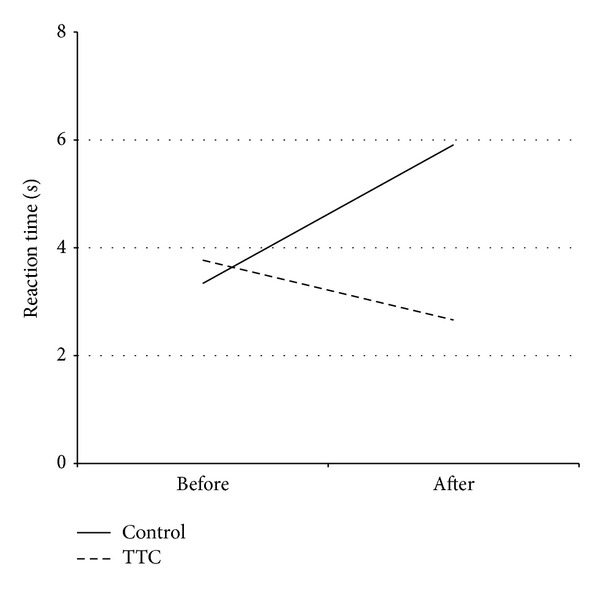
Objective. The purpose of the study was to investigate the effects of a 12-week program of therapeutic Tai Chi on the motor function and physical function of idiopathic Parkinson's disease patients (PDs). Methods. The participants were 22 clinically stable PDs in Hoehn-Yahr stages 1-2 randomly assigned to a therapeutic Tai Chi group (TTC, N = 11) or a control group (CON, N = 9). Two subjects in control group did not complete the study for personal reasons. TTC was performed three days a week (60 min/session). Motor symptoms by the UPDRS were assessed, and tests of physical function were administered before and after the 12-week trial. Results. The TTC group, as compared to the CON group, showed changes in the mentation, behavior, mood, and motor scales of the UPDRS (P < 0.05, P < 0.01, resp.), with no significant main effects on the activities of daily living scale (ADL). However, there was a significant interaction between the time and intervention group on ADL (P < 0.05). There were no significant main effects for any of the physical function variables. There were significant interaction effects in balance and agility (P < 0.05, resp.). Conclusions. This study showed that TTC training had modest positive effects on the functional status of Parkinson's disease patients.
Figures
References
-
- Dibble LE, Hale TF, Marcus RL, Droge J, Gerber JP, LaStayo PC. High-intensity resistance training amplifies muscle hypertrophy and functional gains in persons with parkinson’s disease. Movement Disorders. 2006;21(9):1444–1452. - PubMed
-
- Falvo MJ, Schilling BK, Earhart GM. Parkinson’s disease and resistive exercise: rationale, review, and recommendations. Movement Disorders. 2008;23(1):1–11. - PubMed
-
- Scandalis TA, Bosak A, Berliner JC, Helman LL, Wells MR. Resistance training and gait function in patients with Parkinson’s disease. American Journal of Physical Medicine and Rehabilitation. 2001;80(1):38–43. - PubMed
-
- Burini D, Farabollini B, Iacucci S, et al. A randomised controlled cross-over trial of aerobic training versus Qigong in advanced Parkinson’s disease. Europa Medicophysica. 2006;42(3):231–238. - PubMed
-
- Mehrholz J, Friis R, Kugler J, Twork S, Storch A, Pohl M. Treadmill training for patients with Parkinson’s disease. Cochrane Database of Systematic Reviews. 2010;(1)CD007830 - PubMed
LinkOut - more resources
Full Text Sources
Other Literature Sources
Miscellaneous
