


Facilitating HIV status disclosure for pregnant women and partners in rural Kenya: a qualitative study
- PMID: 24294994
- PMCID: PMC3907031
- DOI: 10.1186/1471-2458-13-1115
Facilitating HIV status disclosure for pregnant women and partners in rural Kenya: a qualitative study
Abstract
Background: Women's ability to safely disclose their HIV-positive status to male partners is essential for uptake and continued use of prevention of mother-to-child transmission (PMTCT) services. However, little is known about the acceptability of potential approaches for facilitating partner disclosure. To lay the groundwork for developing an intervention, we conducted formative qualitative research to elicit feedback on three approaches for safe HIV disclosure for pregnant women and male partners in rural Kenya.
Methods: This qualitative acceptability research included in-depth interviews with HIV-infected pregnant women (n = 20) and male partners of HIV-infected women (n = 20) as well as two focus groups with service providers (n = 16). The participants were recruited at health care facilities in two communities in rural Nyanza Province, Kenya, during the period June to November 2011. Data were managed in NVivo 9 and analyzed using a framework approach, drawing on grounded theory.
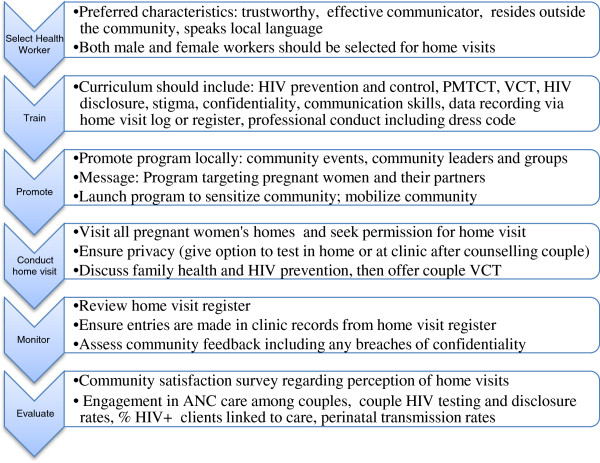
Results: We found that facilitating HIV disclosure is acceptable in this context, but that individual participants have varying expectations depending on their personal situation. Many participants displayed a strong preference for couples HIV counseling and testing (CHCT) with mutual disclosure facilitated by a trained health worker. Home-based approaches and programs in which pregnant women are asked to bring their partners to the healthcare facility were equally favored. Participants felt that home-based CHCT would be acceptable for this rural setting, but special attention must be paid to how this service is introduced in the community, training of the health workers who will conduct the home visits, and confidentiality.
Conclusion: Pregnant couples should be given different options for assistance with HIV disclosure. Home-based CHCT could serve as an acceptable method to assist women and men with safe disclosure of HIV status. These findings can inform the design and implementation of programs geared at promoting HIV disclosure among pregnant women and partners, especially in the home-setting.
Figures
References
-
- Kenya National Bureau of Statistics (KNBS) and ICF Macro. Kenya Demographic and Health Survey 2008–09. Calverton, Maryland: KNBS and ICF Macro; 2010.
-
- Kairania R, Gray RH, Kiwanuka N, Makumbi F, Sewankambo NK, Serwadda D, Nalugoda F, Kigozi G, Semanda J, Wawer MJ. Disclosure of HIV results among discordant couples in Rakai, Uganda: a facilitated couple counselling approach. AIDS Care. 2010;13(9):1041–1051. doi: 10.1080/09540121003602226. - DOI - PMC - PubMed
-
- Mugo NR, Heffron R, Donnell D, Wald A, Were EO, Rees H, Celum C, Kiarie JN, Cohen CR, Kayintekore K. et al. Increased risk of HIV-1 transmission in pregnancy: a prospective study among African HIV-1-serodiscordant couples. AIDS. 2011;13(15):1887–1895. doi: 10.1097/QAD.0b013e32834a9338. - DOI - PMC - PubMed
Publication types
MeSH terms
Grants and funding
LinkOut - more resources
Full Text Sources
Other Literature Sources
Medical
