


Immunosuppressive T-cell antibody induction for heart transplant recipients
- PMID: 24297433
- PMCID: PMC11559623
- DOI: 10.1002/14651858.CD008842.pub2
Immunosuppressive T-cell antibody induction for heart transplant recipients
Abstract
Background: Heart transplantation has become a valuable and well-accepted treatment option for end-stage heart failure. Rejection of the transplanted heart by the recipient's body is a risk to the success of the procedure, and life-long immunosuppression is necessary to avoid this. Clear evidence is required to identify the best, safest and most effective immunosuppressive treatment strategy for heart transplant recipients. To date, there is no consensus on the use of immunosuppressive antibodies against T-cells for induction after heart transplantation.
Objectives: To review the benefits, harms, feasibility and tolerability of immunosuppressive T-cell antibody induction versus placebo, or no antibody induction, or another kind of antibody induction for heart transplant recipients.
Search methods: We searched the Cochrane Central Register of Controlled Trials (CENTRAL) (Issue 11, 2012), MEDLINE (Ovid) (1946 to November Week 1 2012), EMBASE (Ovid) (1946 to 2012 Week 45), ISI Web of Science (14 November 2012); we also searched two clinical trial registers and checked reference lists in November 2012.
Selection criteria: We included all randomised clinical trials (RCTs) assessing immunosuppressive T-cell antibody induction for heart transplant recipients. Within individual trials, we required all participants to receive the same maintenance immunosuppressive therapy.
Data collection and analysis: Two authors extracted data independently. RevMan analysis was used for statistical analysis of dichotomous data with risk ratio (RR), and of continuous data with mean difference (MD), both with 95% confidence intervals (CI). Methodological components were used to assess risks of systematic errors (bias). Trial sequential analysis was used to assess the risks of random errors (play of chance). We assessed mortality, acute rejection, infection, Cytomegalovirus (CMV) infection, post-transplantation lymphoproliferative disorder, cancer, adverse events, chronic allograft vasculopathy, renal function, hypertension, diabetes mellitus, and hyperlipidaemia.
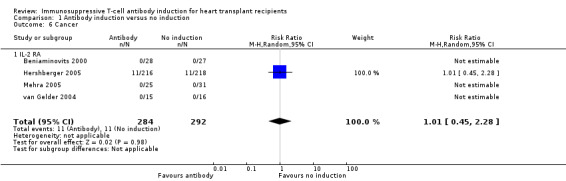
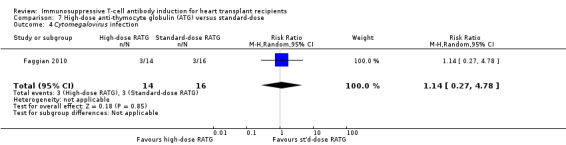
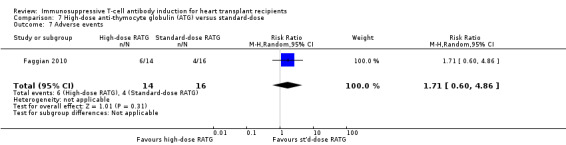
Main results: In this review, we included 22 RCTs that investigated the use of T-cell antibody induction, with a total of 1427 heart-transplant recipients. All trials were judged to be at a high risk of bias. Five trials, with a total of 606 participants, compared any kind of T-cell antibody induction versus no antibody induction; four trials, with a total of 576 participants, compared interleukin-2 receptor antagonist (IL-2 RA) versus no induction; one trial, with 30 participants, compared monoclonal antibody (other than IL-2 RA) versus no antibody induction; two trials, with a total of 159 participants, compared IL-2 RA versus monoclonal antibody (other than IL-2 RA) induction; four trials, with a total of 185 participants, compared IL-2 RA versus polyclonal antibody induction; seven trials, with a total of 315 participants, compared monoclonal antibody (other than IL-2 RA) versus polyclonal antibody induction; and four trials, with a total of 162 participants, compared polyclonal antibody induction versus another kind, or dose of polyclonal antibodies.No significant differences were found for any of the comparisons for the outcomes of mortality, infection, CMV infection, post-transplantation lymphoproliferative disorder, cancer, adverse events, chronic allograft vasculopathy, renal function, hypertension, diabetes mellitus, or hyperlipidaemia. Acute rejection occurred significantly less frequently when IL-2 RA induction was compared with no induction (93/284 (33%) versus 132/292 (45%); RR 0.73; 95% CI 0.59 to 0.90; I(2) 57%) applying the fixed-effect model. No significant difference was found when the random-effects model was applied (RR 0.73; 95% CI 0.46 to 1.17; I(2) 57%). In addition, acute rejection occurred more often statistically when IL-2 RA induction was compared with polyclonal antibody induction (24/90 (27%) versus 10/95 (11%); RR 2.43; 95% CI 1.01 to 5.86; I(2) 28%). For all of these differences in acute rejection, trial sequential alpha-spending boundaries were not crossed and the required information sizes were not reached when trial sequential analysis was performed, indicating that we cannot exclude random errors.We observed some occasional significant differences in adverse events in some of the comparisons, however definitions of adverse events varied between trials, and numbers of participants and events in these outcomes were too small to allow definitive conclusions to be drawn.
Authors' conclusions: This review shows that acute rejection might be reduced by IL-2 RA compared with no induction, and by polyclonal antibody induction compared with IL-2 RA, though trial sequential analyses cannot exclude random errors, and the significance of our observations depended on the statistical model used. Furthermore, this review does not show other clear benefits or harms associated with the use of any kind of T-cell antibody induction compared with no induction, or when one type of T-cell antibody is compared with another type of antibody. The number of trials investigating the use of antibodies against T-cells for induction after heart transplantation is small, and the number of participants and outcomes in these RCTs is limited. Furthermore, the included trials are at a high risk of bias. Hence, more RCTs are needed to assess the benefits and harms of T-cell antibody induction for heart-transplant recipients. Such trials ought to be conducted with low risks of systematic and random error.
Conflict of interest statement
Luit Penninga: none known Christian H Møller: none known Finn Gustafsson: none known Christian Gluud: none known Daniel A Steinbrüchel: none known
Figures








Update of
References
References to studies included in this review
Balk 1992 {published data only}
-
- Balk AH, Meeter K, Simoons ML, Brouwer RM, Zondervan PE, Mochtar B, et al. Polyclonal versus monoclonal rejection prophylaxis after heart transplantation: a randomised study. Transplantation International 1992;5 Suppl 1:S476‐9. - PubMed
Beniaminovits 2000 {published data only}
-
- Beniaminovitz A, Itescu S, Lietz K, Donovan M, Burke EM, Groff BD, et al. Prevention of rejection in cardiac transplantation by blockade of the interleukin‐2 receptor with a monoclonal antibody. New England Journal of Medicine 2000;342(9):613‐9. - PubMed
Bolling 1989 {published data only}
-
- Bolling SF, Stirling MC, Miska P, Deeb GM. Comparison of polyclonal antibody sera for early prophylaxis following cardiac transplantation. Journal of Surgical Research 1989;47(4):292‐6. - PubMed
Bonaros 2006 {published data only}
-
- Bonaros N, Dunkler D, Kocher A, Imhof M, Grimm M, Zuckermann A, et al. Ten‐year follow‐up of a prospective, randomized trial of BT563/bb10 versus anti‐thymocyte globulin as induction therapy after heart transplantation. Journal of Heart and Lung Transplantation 2006;25(9):1154‐63. - PubMed
Carrier 2007 {published data only}
-
- Carrier M, Leblanc MH, Perrault LP, White M, Doyle D, Beaudoin D, et al. Basiliximab and rabbit anti‐thymocyte globulin for prophylaxis of acute rejection after heart transplantation: a non‐inferiority trial. Journal of Heart and Lung Transplantation 2007;26(3):258‐63. - PubMed
Costanzo‐Nordin 1990 {published data only}
-
- Costanzo‐Nordin MR, O'Sullivan EJ, Johnson MR, Winters GL, Pifarre R, Radvany R, et al. Prospective randomized trial of OKT3‐ versus horse antithymocyte globulin‐based immunosuppressive prophylaxis in heart transplantation. Journal of Heart Transplantation 1990;9(3 Pt 2):306‐15. - PubMed
De Santo 2004 {published data only}
-
- Santo LS, Della Corte A, Romano G, Amarelli C, Onorati F, Torella M, et al. Midterm results of a prospective randomized comparison of two different rabbit‐antithymocyte globulin induction therapies after heart transplantation. Transplantation Proceedings 2004;36(3):631‐7. - PubMed
Faggian 2010 {published data only}
-
- Faggian G, Forni A, Milano AD, Chiominto B, Walpoth BH, Scarabelli T, et al. Antithymocyte globulin induction therapy in heart transplantation: prospective randomized study of high vs standard dosage. Transplantation Proceedings 2010;42(9):3679‐87. - PubMed
-
- Forni A, Faggian G, Chiominto B, Mazzucco A. Anti rejection prophylaxis using ATG‐Fresenius S after heart transplantation ‐ long‐term clinical results of a prospective, randomised trial. Transplant International 2007;20:116.
Hershberger 2005 {published data only}
-
- Hershberger RE, Starling RC, Eisen HJ, Bergh CH, Kormos RL, Love RB, et al. Daclizumab to prevent rejection after cardiac transplantation. New England Journal of Medicine 2005;352(26):2705‐13. - PubMed
Ippoliti 1991 {published data only}
-
- Ippoliti G, Negri M, Abelli P, Rovati B, Franco L, Grossi P, et al. Preoperative prophylactic OKT3 vs RATG. A randomized clinical study in heart transplant patients. Transplantation Proceedings 1991;23(4):2272‐4. - PubMed
-
- Origlia C, Ippoliti G, Martinelli L, Goggi C, Abelli P, Negri M, et al. A randomized clinical‐study of preoperative administration of Okt3 vs Ratg in heart transplanted patients treated with Sandimmun. Transplantation and Clinical Immunology. 1991; Vol. 16:250.
Kobashigawa 1993 {published data only}
-
- Kobashigawa JA, Stevenson LW, Brownfield E, Moriguchi JD, Kawata N, Hamilton M, et al. Does short‐course induction with OKT3 improve outcome after heart transplantation? A randomized trial. Journal of Heart and Lung Transplantation 1993;12(2):205‐8. - PubMed
Kormos 1990 {published data only}
-
- Griffith BP, Kormos RL, Armitage JM, Dummer JS, Hardesty RL. Comparative trial of immunoprophylaxis with RATG versus OKT3. Journal of Heart Transplantation 1990;9(3 Pt 2):301‐5. - PubMed
-
- Kormos RL, Armitage JM, Dummer JS, Miyamoto Y, Griffith BP, Hardesty RL. Optimal perioperative immunosuppression in cardiac transplantation using rabbit antithymocyte globulin. Transplantation 1990;49(2):306‐11. - PubMed
-
- Kormos RL, Herlan DB, Armitage JM, Stein K, Kaufman C, Zeevi A, et al. Monoclonal versus polyclonal antibody therapy for prophylaxis against rejection after heart transplantation. Journal of Heart Transplantation 1990;9(1):1‐9. - PubMed
Macdonald 1993 {published data only}
-
- Macdonald PS, Mundy J, Keogh AM, Chang VP, Spratt PM. A prospective randomized study of prophylactic OKT3 versus equine antithymocyte globulin after heart transplantation‐‐increased morbidity with OKT3. Transplantation 1993;55(1):110‐6. - PubMed
Mattei 2007 {published data only}
-
- Boissonnat P, Sebbag L, French Heart Nausicaa Study Grp. Less infectious deaths with basiliximab (Simulect (R)) over antihymocyte globulin (Thymoglobuline (R)) induction therapy in heart transplantation: Results of nausicaa, a national multicentre prospective randomized study. 2005; Vol. 5:386.
-
- Mattei MF, Boissonnat P, Redonnet M, Gandjbakhch I, Bandini AM, Dorent R, et al. Improved safety of basiliximab (Simulect (R)) over antithymocyte globulin (Thymoglobulin (R)) induction therapy in heart transplantation. Journal of Heart and Lung Transplantation 2005;24(2):63.
-
- Mattei MF, Redonnet M, Gandjbakhch I, Bandini AM, Billes A, Epailly E, et al. Lower risk of infectious deaths in cardiac transplant patients receiving basiliximab versus anti‐thymocyte globulin as induction therapy. Journal of Heart and Lung Transplantation 2007;26(7):693‐9. - PubMed
Mehra 2005 {published data only}
-
- Mehra MR, Zucker MJ, Wagoner L, Michler R, Boehmer J, Kovarik J, et al. A multicenter, prospective, randomized, double‐blind trial of basiliximab in heart transplantation. Journal of Heart and Lung Transplantation 2005;24(9):1297‐304. - PubMed
Menkis 1992 {published data only}
-
- Menkis AH, Powell AM, Novick RJ, McKenzie FN, Kostuk WJ, Pflugfelder PW, et al. A prospective randomized controlled trial of initial immunosuppression with ALG versus OKT3 in recipients of cardiac allografts. Journal of Heart and Lung Transplantation 1992;11(3 Pt 1):569‐76. - PubMed
Mullen 2005 {published data only}
-
- Mullen JC, Dueck A, Bentely MJ, Modry DL, Wang SH, Burton JR, et al. A randomized control trial of daclizumab versus anti‐thymocyte globulin induction for heart transplantation. Journal of Heart and Lung Transplantation 2005;24(2):143.
Schnetzler 2002 {published data only}
-
- Schnetzler B, Leger P, Volp A, Dorent R, Pavie A, Gandjbakhch I. A prospective randomized controlled study on the efficacy and tolerance of two antilymphocytic globulins in the prevention of rejection in first‐heart transplant recipients. Transplant International 2002;15(6):317‐25. - PubMed
Segovia 2006 {published data only}
-
- Segovia J, Rodriguez‐Lambert JL, Crespo‐Leiro MG, Almenar L, Roig E, Gomez‐Sanchez MA, et al. A randomized multicenter comparison of basiliximab and muromonab (OKT3) in heart transplantation: SIMCOR study. Transplantation 2006;81(11):1542‐8. - PubMed
van Gelder 1996 {published data only}
-
- Wabbijn M, Balk AH, Domburg RT, Vantrimpont PJ, Riemsdijk I, Baan CC, et al. Ten‐year follow‐up of recipients of a kidney or heart transplant who received induction therapy with a monoclonal antibody against the interleukin‐2 receptor. Experimental and Clinical Transplantation 2004;2(1):201‐7. - PubMed
-
- Gelder T, Baan CC, Balk AH, Knoop CJ, Holweg CT, Meer P, et al. Blockade of the interleukin (IL)‐2/IL‐2 receptor pathway with a monoclonal anti‐IL‐2 receptor antibody (BT563) does not prevent the development of acute heart allograft rejection in humans. Transplantation 1998;65(3):405‐10. - PubMed
-
- Gelder T, Balk AH, Jonkman FA, Zietse R, Zondervan P, Hesse CJ, et al. A randomized trial comparing safety and efficacy of OKT3 and a monoclonal anti‐interleukin‐2 receptor antibody (BT563) in the prevention of acute rejection after heart transplantation. Transplantation 1996;62(1):51‐5. - PubMed
-
- Gelder T, Mulder AH, Balk AH, Mochtar B, Hesse CJ, Baan CC, et al. Intragraft monitoring of rejection after prophylactic treatment with monoclonal anti‐interleukin‐2 receptor antibody (BT563) in heart transplant recipients. Journal of Heart and Lung Transplantation 1995;14(2):346‐50. - PubMed
van Gelder 2004 {published data only}
-
- Gelder T, Wabbijn M, Domburg R, Vantrimpont P, Maat L, Baan C, et al. A randomised, double‐blind, placebo controlled trial of anti interleukin‐2 receptor monoclonal antibody (daclizumab) induction therapy after heart transplantation. American Journal of Transplantation 2004;4:450.
Wollenek 1989 {published data only}
-
- Wollenek G, Laufer G, Laczkovics A, Buxbaum P, Kober I. Comparison of a monoclonal anti‐T cell antibody vs ATG as prophylaxis after heart transplantation. Transplantation Proceedings 1989;21(1 Pt 3):2499‐501. - PubMed
References to studies excluded from this review
Adamson 1998 {published data only}
-
- Adamson R, Obispo E, Dychter S, Dembitsky W, Moreno‐Cabral R, Jaski B, et al. Long‐term outcome with the use of OKT3 induction therapy in heart transplant patients: a single‐center experience. Transplantation Proceedings 1998;30(4):1107‐9. - PubMed
Almenar 2005 {published data only}
-
- Almenar L, Garcia‐Palomar C, Martinez‐Dolz L, Chamorro C, Moro J, Zorio E, et al. Influence of induction therapy on rejection and survival in heart transplantation. Transplantation Proceedings 2005;37(9):4024‐7. - PubMed
Carlsen 2005 {published data only}
-
- Carlsen J, Johansen M, Boesgaard S, Andersen CB, Arendrup H, Aldershvile J, et al. Induction therapy after cardiac transplantation: a comparison of anti‐thymocyte globulin and daclizumab in the prevention of acute rejection. Journal of Heart and Lung Transplantation 2005;24(3):296‐302. - PubMed
Chien 2000 {published data only}
-
- Chien NC, Lin FL, Chou NK, Hsu RB, Wang SS, Chu SH, et al. Rabbit antithymocyte globulin induction immunosuppression in heart transplantation. Transplantation Proceedings 2000;32(7):2380‐2. - PubMed
Chin 2005 {published data only}
-
- Chin C, Pittson S, Luikart H, Bernstein D, Robbins R, Reitz B, et al. Induction therapy for pediatric and adult heart transplantation: comparison between OKT3 and daclizumab. Transplantation 2005;80(4):477‐81. - PubMed
Chou 2008 {published data only}
-
- Chou NK, Wang SS, Chen YS, Yu HY, Chi NH, Wang CH, et al. Induction immunosuppression with basiliximab in heart transplantation. Transplantation Proceedings 2008;40(8):2623‐5. - PubMed
Costanzo‐Nordin 1989 {published data only}
-
- Costanzo‐Nordin MR, O'Sullivan EJ, Hubbell EA, Zucker MJ, Pifarre R, McManus BM, et al. Long‐term follow‐up of heart transplant recipients treated with murine antihuman mature T cell monoclonal antibody (OKT3): the Loyola experience. Journal of Heart Transplantation 1989;8(4):288‐95. - PubMed
Delgado 2005 {published data only}
-
- Delgado DH, Miriuka SG, Cusimano RJ, Feindel C, Rao V, Ross HJ. Use of basiliximab and cyclosporine in heart transplant patients with pre‐operative renal dysfunction. Journal of Heart and Lung Transplantation 2005;24(2):166‐9. - PubMed
Flaman 2006 {published data only}
-
- Flaman F, Zieroth S, Rao V, Ross H, Delgado DH. Basiliximab versus rabbit anti‐thymocyte globulin for induction therapy in patients after heart transplantation. Journal of Heart and Lung Transplantation 2006;25(11):1358‐62. - PubMed
Hegewald 1989 {published data only}
-
- Hegewald MG, O'Connell JB, Renlund DG, Lee HR, Burton NA, Karwande SV, et al. OKT3 monoclonal antibody given for ten versus fourteen days as immunosuppressive prophylaxis in heart transplantation. Journal of Heart Transplantation. UNITED STATES, 1989; Vol. 8, issue 4:303‐9. - PubMed
Kirklin 1990 {published data only}
-
- Kirklin JK, Bourge RC, White‐Williams C, Naftel DC, Thomas FT, Thomas JM, et al. Prophylactic therapy for rejection after cardiac transplantation. A comparison of rabbit antithymocyte globulin and OKT3. Journal of Thorac and Cardiovascular Surgery 1990;99(4):716‐24. - PubMed
Koch 2005 {published data only}
-
- Koch A, Daniel V, Dengler TJ, Schnabel PA, Hagl S, Sack FU. Effectivity of a T‐cell‐adapted induction therapy with anti‐thymocyte globulin (Sangstat). Journal of Heart and Lung Transplantation 2005;24(6):708‐13. - PubMed
Laufer 1989 {published data only}
-
- Laufer G, Laczkovics A, Wollenek G, Schreiner W, Sochor H, Holzinger C, et al. Impacts of low‐dose steroids and prophylactic monoclonal versus polyclonal antibodies on acute rejection in cyclosporine‐ and azathioprine‐immunosuppressed cardiac allografts. Journal of Heart Transplantation 1989;8(3):253‐61. - PubMed
Petrikovits 2005 {published data only}
-
- Petrikovits E, Bedanova H, Necas J, Studenik P, Cerny J. Daclizumab in the induction phase of immunosuppression in heart transplant recipients. Annals of Transplantation 2005;10(3):5‐10. - PubMed
Pham 2010 {published data only}
-
- Pham SM, Bednar BM, Panos A, Bauerlein EJ, Jimenez F, Rosenkrantz E, et al. A randomized study using humanized monoclonal antibody against Cd52 (Campath‐1h) and tacrolimus in heart transplant recipients. Journal of Heart and Lung Transplantation 2010;29(2):134.
Renlund 1989 {published data only}
-
- Renlund DG, O'Connell JB, Gilbert EM, Hammond ME, Burton NA, Jones KW, et al. A prospective comparison of murine monoclonal CD‐3 (OKT3) antibody‐based and equine antithymocyte globulin‐based rejection prophylaxis in cardiac transplantation. Decreased rejection and less corticosteroid use with OKT3. Transplantation 1989;47(4):599‐605. - PubMed
Rosenberg 2005 {published data only}
-
- Rosenberg PB, Vriesendorp AE, Drazner MH, Dries DL, Kaiser PA, Hynan LS, et al. Induction therapy with basiliximab allows delayed initiation of cyclosporine and preserves renal function after cardiac transplantation. Journal of Heart and Lung Transplantation 2005;24:1327‐31. - PubMed
Starnes 1989 {published data only}
-
- Starnes VA, Oyer PE, Stinson EB, Dein JR, Shumway NE. Prophylactic OKT3 used as induction therapy for heart transplantation. Circulation 1989;80(5 Pt 2):III79‐83. - PubMed
Teuteberg 2010 {published data only}
-
- Teuteberg JJ, Shullo MA, Zomak R, Toyoda Y, McNamara DM, Bermudez C, et al. Alemtuzumab induction prior to cardiac transplantation with lower intensity maintenance immunosuppression: one‐year outcomes. American Journal of Transplantation 2010;10(2):382‐8. - PubMed
Yamani 2008 {published data only}
-
- Yamani MH, Taylor DO, Czerr J, Haire C, Kring R, Zhou L, et al. Thymoglobulin induction and steroid avoidance in cardiac transplantation: results of a prospective, randomized, controlled study. Clinical Transplantation 2008;22(1):76‐81. - PubMed
Zakliczynski 2005 {published data only}
-
- Zakliczynski MW, Nozynski J, Maruszewski M, Zembala M. Thymoglobuline administered electively early after heart transplantation may protect myocardial hypertrophy (Abstract). American Journal of Transplantation. American Transplant Congress, Seattle [United States] 21‐25 May 2005. 2005; Vol. 5, issue Suppl 11:171.
Zuckermann 2000 {published data only}
-
- Zuckermann AO, Grimm M, Czerny M, Ofner P, Ullrich R, Ploner M, et al. Improved long‐term results with thymoglobuline induction therapy after cardiac transplantation: a comparison of two different rabbit‐antithymocyte globulines. Transplantation 2000;69(9):1890‐8. - PubMed
Zuckermann 2003 {published data only}
-
- Zuckermann A, Dunkler D, Deviatko E, Bodhjalian A, Czerny M, Ankersmit J, et al. Long‐term survival (>10 years) of patients >60 years with induction therapy after cardiac transplantation. European Journal of Cardiothoracic Surgery 2003;24(2):283‐91. - PubMed
Additional references
Cantarovich 2007
-
- Cantarovich M. Renal protective strategies in heart transplant patients. Current Opinion in Cardiology 2007;22(2):133‐8. - PubMed
Chatenoud 2008
-
- Chatenoud L. The long and winding road towards induction of allograft tolerance in the clinic. Transplant International 2008;21:725‐7. - PubMed
Chen 2006
-
- Chen W, Zhang L. Regulatory T‐cell subsets and their roles in transplantation tolerance. Current Opinion in Organ Transplantation 2006;11(4):373‐8.
Deeks 2003
-
- Deeks JJ, Dinnes J, D'Amico R, Sowden AJ, Sakarovitch C, Song F, et al. Evaluating non‐randomised intervention studies. Health Technology Assessment 2003;7(27):1‐173. - PubMed
Egger 1997
El‐Hamamsy 2005
-
- El‐Hamamsy I, Stevens LM, Carrier M, Pelletier G, White M, Tremblay F, et al. Incidence and prognosis of cancer following heart transplantation using RATG induction therapy. Transplant International 2005;18(11):1280‐5. - PubMed
Flechner 2008
-
- Flechner SM, Kobashigawa J, Klintmalm G. Calcineurin inhibitor‐sparing regimens in solid organ transplantation: focus on improving renal function and nephrotoxicity. Clinical Transplantation 2008;22(1):1‐15. - PubMed
Gluud 2006
-
- Gluud LL. Bias in clinical intervention research. American Journal of Epidemiology 2006;163:493‐501. - PubMed
Groetzner 2005
-
- Groetzner J, Wahlers T. Calcineurin inhibitor‐free immunosuppression after heart transplantation: can chronic side effects be avoided?. Current Opinion in Organ Transplantation 2005;10(4):360‐3.
Hauptman 2005
-
- Hauptman PJ, Mehra MR. It is time to stop ignoring malignancy in heart transplantation: a call to arms. Journal of Heart and Lung Transplantation 2005;24:1111‐3. - PubMed
Higgins 2002
-
- Higgins JP, Thompson SG. Quantifying heterogeneity in a meta‐analysis. Statistics in Medicine 2002;21:1539‐58. - PubMed
Higgins 2005
-
- Higgins R, Kirklin JK, Brown RN, Rayburn BK, Wagoner L, Oren R, et al. To induce or not to induce: do patients at greatest risk for fatal rejection benefit from cytolytic induction therapy?. Journal of Heart and Lung Transplantation 2005;24(4):392‐400. - PubMed
Higgins 2011
-
- Higgins JPT, Green S (editors). Cochrane Handbook for Systematic Reviews of Interventions Version 5.1.0 [updated March 2011]. The Cochrane Collaboration, 2011. Available from www.cochrane‐handbook.org.
ICH‐GCP 1996
-
- ICH‐GCP 1996 International conference on harmonisation of technical requirements for registration of pharmaceuticals for human use. Guideline for Good Clinical Practice. E6 (R1). ICH Harmonised Tripartite Guideline 1996. http://ichgcp.net (accessed 2 September 2010).
Keus 2009
-
- Keus F, Wetterslev J, Gluud C, Gooszen HG, Laarhoven CJ. Robustness assessments are needed to reduce bias in meta‐analyses that include zero‐event randomized trials. American Journal of Gastroenterology 2009;104(3):546‐51. - PubMed
Kjaergard 2001
-
- Kjaergard LL, Villumsen J, Gluud C. Reported methodologic quality and discrepancies between large and small randomized trials in meta‐analyses. Annals of Internal Medicine 2001;135:982‐9. - PubMed
Kobashigawa 2005
-
- Kobashigawa J, David K, Morris J, Chu AH, Steffen BJ, Gotz VP, et al. Daclizumab is associated with decreased rejection and no increased mortality in cardiac transplant patients receiving MMF, cyclosporine, and corticosteroids. Transplantation Proceedings 2005;37(2):1333‐9. - PubMed
Kobashigawa 2006
-
- Kobashigawa JA, Patel JK. Immunosuppression for heart transplantation: where are we now?. Nature Clinical Practice Cardiovascular Medicine 2006;3(4):203‐12. - PubMed
Lechler 2005
-
- Lechler RI, Sykes M, Thomson AW, Turka LA. Organ transplantation‐‐how much of the promise has been realized?. Nature Medicine 2005;11:605‐13. - PubMed
Lefebvre 2011
-
- Lefebvre C, Manheimer E, Glanville J. Chapter 6: Searching for studies. In: Higgins JPT, Green S (editors). Cochrane Handbook for Systematic Reviews of Interventions Version 5.1.0 (updated March 2011). The Cochrane Collaboration, 2011. The Cochrane Collaboration, Available from www.cochrane‐handbook.org.
Macaskill 2001
-
- Macaskill P, Walter SD, Irwig L. A comparison of methods to detect publication bias in meta‐analysis. Statistics in Medicine 2001;20:641‐54. - PubMed
Mallinger 1999
-
- Mallinger R, Chevtchik O, Zuckermann A, Jucewicz M, Moidl R, Kocher A, et al. Development and spectrum of PTLD in 691 cardiac transplant recipients (Htx) receiving induction therapy. Journal of Heart and Lung Transplantation 1999;19(1):77 (abstract 174).
Master List 2009
-
- United States Cochrane Center. Master list of journals being searched. http://apps1.jhsph.edu/cochrane/masterlist.asp (accessed May 2009).
Moher 1998
-
- Moher D, Pham B, Jones A, Cook DJ, Jadad AR, Moher M, et al. Does quality of reports of randomised trials affect estimates of intervention efficacy reported in meta‐analyses?. Lancet 1998;352:609‐13. - PubMed
Moher 2009
-
- Moher D, Liberati A, Tetzlaff J, Altman DG. Preferred reporting items for systematic reviews and meta‐analyses: the PRISMA statement. Journal of Clinical Epidemiology 2009;62:1006‐12. - PubMed
Mueller 2004
-
- Mueller XM. Drug immunosuppression therapy for adult heart transplantation. Part 2: clinical applications and results. Annals of Thoracic Surgery 2004;77:363‐71. - PubMed
O'Neill 2004
-
- O'Neill JOT. Immunosuppression for cardiac transplantation ‐ the past, present and future. Transplantation Proceedings 2004;36(2 SUPPL):309S‐13S. - PubMed
Oaks 2001
-
- Oaks TE, Wannenberg T, Close SA, Tuttle LE, Kon ND. Steroid‐free maintenance immunosuppression after heart transplantation. Annals of Thoracic Surgery 2001;72:102‐6. - PubMed
Penninga 2010
-
- Penninga L, Moller CH, Gustafsson F, Steinbruchel DA, Gluud C. Tacrolimus versus cyclosporine as primary immunosuppression after heart transplantation: systematic review with meta‐analyses and trial sequential analyses of randomised trials. European Journal of Clinical Pharmacology 2010;66(12):1177‐87. - PubMed
Penninga 2011
Penninga 2012
Peraira 2003
-
- Peraira JR, Segovia J, Fuertes B, Fernandez JA, Escudier JM, Salas C, et al. Current induction immunosuppression and post‐heart transplant lymphoproliferative disorders. Transplantation Proceedings 2003;35(5):2009‐10. - PubMed
Potter 2005
-
- Potter B, Giannetti N, Cecere R, Cantarovich M. Long‐term calcineurin inhibitor "holiday" using daclizumab in a heart transplant patient with acute renal dysfunction. Journal of Heart and Lung Transplantation 2005;24:1126‐8. - PubMed
RevMan 2012 [Computer program]
-
- The Nordic Cochrane Centre, The Cochrane Collaboration. Review Manager (RevMan). Version 5.2. Copenhagen: The Nordic Cochrane Centre, The Cochrane Collaboration, 2012.
Rinaldi 2001
-
- Rinaldi M, Pellegrini C, D'Armini AM, Aiello M, Negri M, Arbustini E, et al. Neoplastic disease after heart transplantation: single center experience. European.Journal of Cardiothoracic Surgery 2001;19(5):696‐701. - PubMed
Royle 2003
-
- Royle P, Waugh N. Literature searching for clinical and cost‐effectiveness studies used in health technology assessment reports carried out for the National Institute for Clinical Excellence appraisal system. Health Technology Assessment 2003;7:1‐51. - PubMed
Savovic 2012
-
- Savovic J, Jones HE, Altman DG, Harris RJ, Juni P, Pildal J, et al. Influence of reported study design characteristics on Intervention effect estimates from randomized, controlled trials. Annals of Internal Medicine 2012;157(6):429‐38. - PubMed
Schulz 1995
-
- Schulz KF, Chalmers I, Hayes RJ, Altman DG. Empirical evidence of bias. Dimensions of methodological quality associated with estimates of treatment effects in controlled trials. JAMA 1995;273:408‐12. - PubMed
Stehlik 2012
-
- Stehlik J, Edwards LB, Kucheryavaya AY, Benden C, Christie JD, Dipchand AI, et al. The Registry of the International Society for Heart and Lung Transplantation: 29th official adult heart transplant report‐2012. Journal of Heart and Lung Transplantation. 2012;31(10):1052‐64. - PubMed
Stevens 2004
-
- Stevens LM, El‐Hamamsy I, Leblanc M, Perrault LP, Pellerin M, Bouchard D, et al. Continuous renal replacement therapy after heart transplantation. Canadian Journal of Cardiology 2004;20(6):619‐23. - PubMed
Stewart 2005
-
- Stewart S, Winters GL, Fishbein MC, Tazelaar HD, Kobashigawa J, Abrams J, et al. Revision of the 1990 working formulation for the standardization of nomenclature in the diagnosis of heart rejection. Journal of Heart and Lung Transplantation 2005;24:1710‐20. - PubMed
Sweeting 2004
-
- Sweeting MJ, Sutton AJ, Lambert PC. What to add to nothing? Use and avoidance of continuity corrections in meta‐analysis of sparse data. Statistics in Medicine 2004;23:1351‐75. - PubMed
Swinnen 1990
-
- Swinnen LJ, Costanzo‐Nordin MR, Fisher SG, O'Sullivan EJ, Johnson MR, Heroux AL, et al. Increased incidence of lymphoproliferative disorder after immunosuppression with the monoclonal antibody OKT3 in cardiac‐transplant recipients. New England Journal of Medicine 1990;323(25):1723‐8. - PubMed
Taylor 2009
-
- Taylor DO, Stehlik J, Edwards LB, Aurora P, Christie JD, Dobbels F, et al. Registry of the International Society for Heart and Lung Transplantation: twenty‐sixth official adult heart transplant report‐2009. Journal of Heart and Lung Transplantation 2009;28:1007‐22. - PubMed
Thompson 2002
-
- Thompson SG, Higgins JP. How should meta‐regression analyses be undertaken and interpreted?. Statistics in Medicine 2002;21:1559‐73. - PubMed
Thorlund 2011
TSA manual 2011
-
- Thorlund K, Engstrøm J, Wetterslev J, Brok J, Imberger G, Gluud C. User manual for trial sequential analysis (TSA). Copenhagen Trial Unit, Centre for Clinical Intervention Research, Copenhagen, Denmark 2011:1‐115.
TSA programme 2012 [Computer program]
-
- Engstrøm J, Wetterslev J, Brok J, Imberger G, Gluud C, Thorlund K. Trial Sequential Analysis Programme. Version 0.9 beta 2012.
Uber 2007
-
- Uber PA, Mehra MR. Induction therapy in heart transplantation: is there a role?. Journal of Heart and Lung Transplantation 2007;26:205‐9. - PubMed
Webster 2010
Wetterslev 2008
-
- Wetterslev J, Thorlund K, Brok J, Gluud C. Trial sequential analysis may establish when firm evidence is reached in cumulative meta‐analysis. Journal of Clinical Epidemiology 2008;61:64‐75. - PubMed
Wetterslev 2009
Wood 2008
Zuppan 2009
-
- Zuppan CW, Wells LM, Kerstetter JC, Johnston JK, Bailey LL, Chinnock RE. Cause of death in pediatric and infant heart transplant recipients: review of a 20‐year, single‐institution cohort. Journal of Heart and Lung Transplantation 2009;28:579‐84. - PubMed
Publication types
MeSH terms
Substances
LinkOut - more resources
Full Text Sources
Other Literature Sources
Medical
