Review
. 2013 Dec 1;19(23):6389-97.
doi: 10.1158/1078-0432.CCR-13-0838.

Metastasis dormancy in estrogen receptor-positive breast cancer

Affiliations
Review

Metastasis dormancy in estrogen receptor-positive breast cancer

Xiang H-F Zhang et al. Clin Cancer Res. .

Abstract

About 20% to 40% of patients with breast cancer eventually develop recurrences in distant organs, which are often not detected until years to decades after the primary tumor diagnosis. This phenomenon is especially pronounced in estrogen receptor-positive (ER(+)) breast cancer, suggesting that ER(+) cancer cells may stay dormant for a protracted period of time, despite adjuvant therapies. Multiple mechanisms have been proposed to explain how cancer cells survive and remain in dormancy, and how they become reactivated and exit dormancy. These mechanisms include angiogenic switch, immunosurveillance, and interaction with extracellular matrix and stromal cells. How to eradicate or suppress these dormant cancer cells remains a major clinical issue because of the lack of knowledge about the biologic and clinical nature of these cells. Herein, we review the clinical manifestation of metastasis dormancy in ER(+) tumors, the current biologic insights regarding tumor dormancy obtained from various experimental models, and the clinical challenges to predict, detect, and treat dormant metastases. We also discuss future research directions toward a better understanding of the biologic mechanisms and clinical management of ER(+) dormant metastasis.


Figures

Figure 1
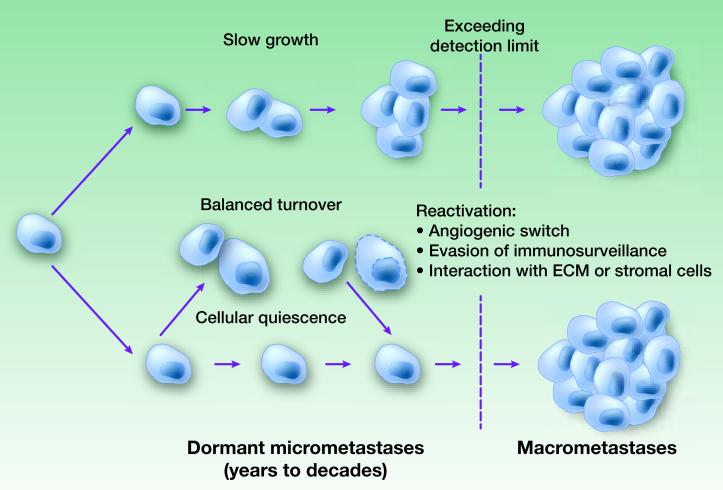
Figure 1. Hypothetic mechanisms underlying metastasis dormancy
During dormancy, metastatic cancer cells may undergo very slow proliferation (“Slow growth”), a balanced turnover due to equal rates of cell deaths and proliferation (“Balanced turnover”), or G0/G1 arrest (“Cellular quiescence”). The termination of dormancy, or the detection of metastases, may result from the accumulation of tumor mass that eventually exceeds detection limit, the onset of successful angiogenesis (“angiogenic switch”), evasion of immunosurveillance, and/or the initiation of interaction with certain ECM or stromal cells (e.g., Tenascin C and VCAM-1).
Figure 2
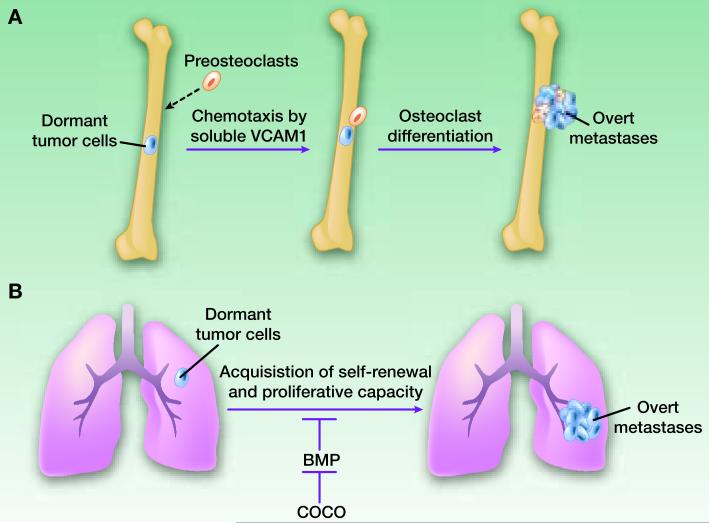
Figure 2. The roles of Coco and VCAM-1 in metastasis dormancy
A. Dormant cancer cells in the bone marrow may acquire the ability to secrete soluble VCAM-1, which will form concentration gradient and chemotract pre-osteoclasts. The interaction between cancer cells and pre-osteoblasts will accelerate the differentiation of latter into activated osteoclasts (multinucleated cells depicted in light yellow) and drive the progression toward overt bone metastases. B. Coco antagonizes BMP signaling in the lung microenvironment and foster the self-renewal and proliferation of dormant cancer cells.
Figure 3
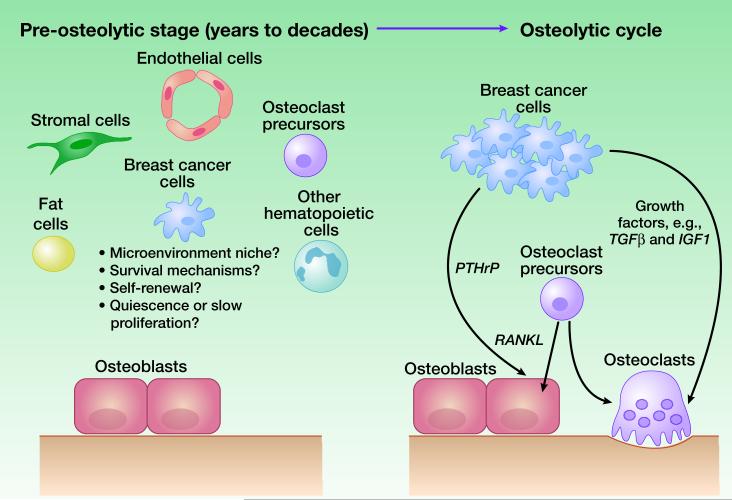
Figure 3. Bone metastasis progression from a pre-osteolytic stage to the osteolytic vicious cycle
Left, A diagram showing cancer cells and various types of cells in bones before the initiation of the vicious cycle. Conceptual questions that remain to be answered are listed. Right, A simplified diagram showing major cell types and a few molecular players that have been known involved in the osteolytic cycle.
Figure 4
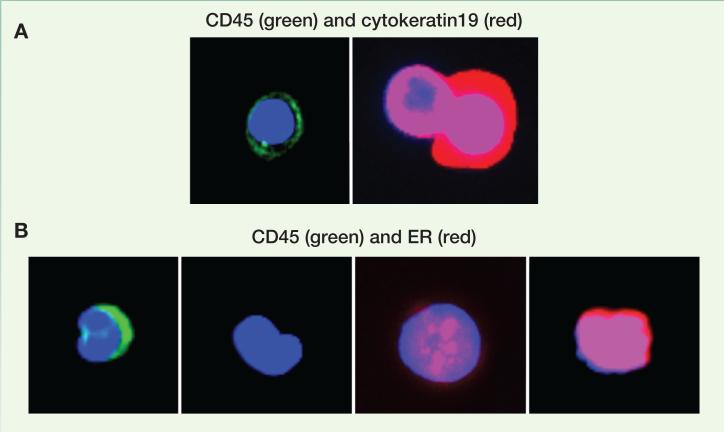
Figure 4. Identification of CTCs and ER expression in peripheral blood samples of patients with metastatic breast cancer
A. CTC enrichment post depletion of red and white blood cells (using RosetteSep®, StemCell Technologies): Immunofluorescence analysis defines residual leukocytes as CD45-positive/cytokeratin19-negative cells (left) and CTCs as CD45-negative/cytokeratin19-positive cells (right). B. Evaluation of ER expression in CTCs isolated from a single draw of another patient with ER-positive metastatic breast cancer reveals the coexistence of ER-negative, ER-weakly positive and ER-highly positive CTCs.

References

    1. Gao D. Endothelial progenitor cells control the angiogenic switch in mouse lung metastasis. Science. 2008;319:195–8. - PubMed
    1. Favaro E, Amadori A, Indraccolo S. Cellular interactions in the vascular niche: implications in the regulation of tumor dormancy. APMIS : acta pathologica, microbiologica, et immunologica Scandinavica. 2008;116:648–59. - PubMed
    1. Koebel CM, Vermi W, Swann JB, Zerafa N, Rodig SJ, Old LJ, et al. Adaptive immunity maintains occult cancer in an equilibrium state. Nature. 2007;450:903–7. - PubMed
    1. Quesnel B. Tumor dormancy and immunoescape. APMIS : acta pathologica, microbiologica, et immunologica Scandinavica. 2008;116:685–94. - PubMed
    1. Disis ML, Stanton SE. Can immunity to breast cancer eliminate residual micrometastases? Clin Cancer Res. 2013;19:xx–xx. - PMC - PubMed

Publication types

Substances