


Risk practices for animal and human anthrax in Bangladesh: an exploratory study
- PMID: 24298326
- PMCID: PMC3843109
- DOI: 10.3402/iee.v3i0.21356
Risk practices for animal and human anthrax in Bangladesh: an exploratory study
Abstract
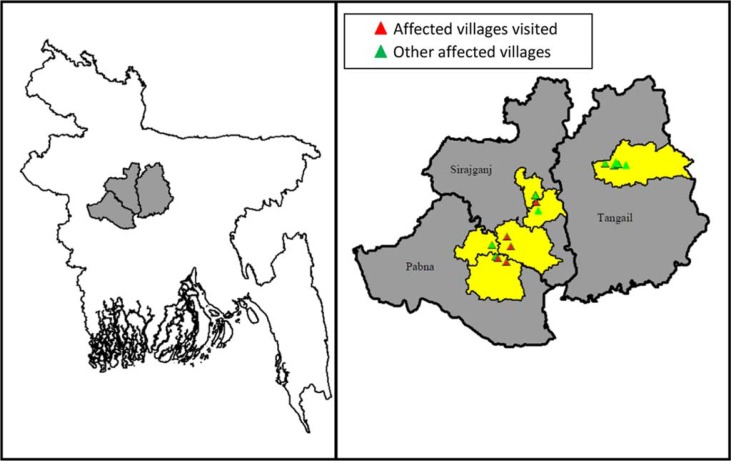
Introduction: From August 2009 to October 2010, International Centre for Diarrheal Disease Research, Bangladesh and the Institute of Epidemiology, Disease Control and Research together investigated 14 outbreaks of anthrax which included 140 animal and 273 human cases in 14 anthrax-affected villages. Our investigation objectives were to explore the context in which these outbreaks occurred, including livestock rearing practices, human handling of sick and dead animals, and the anthrax vaccination program.
Methods: Field anthropologists used qualitative data-collection tools, including 15 hours of unstructured observations, 11 key informant interviews, 32 open-ended interviews, and 6 group discussions in 5 anthrax-affected villages.
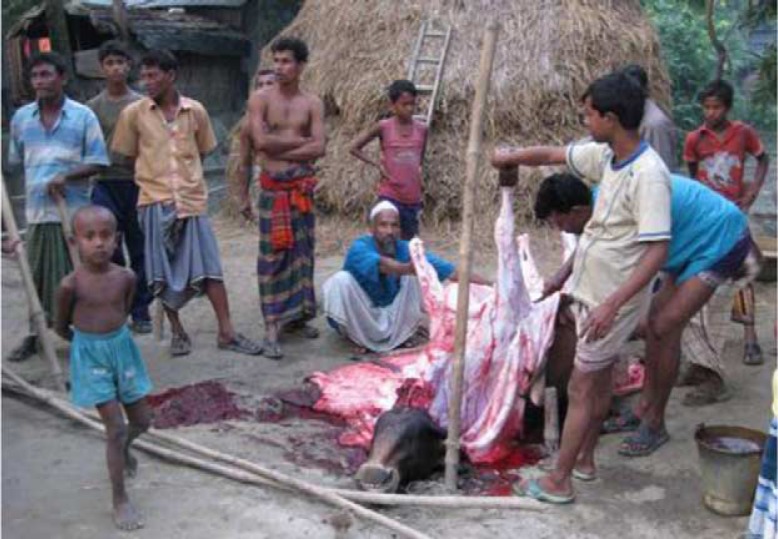
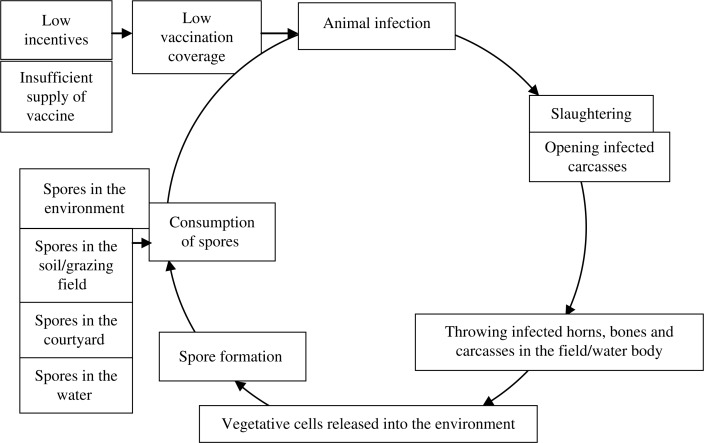
Results: Each cattle owner in the affected communities raised a median of six ruminants on their household premises. The ruminants were often grazed in pastures and fed supplementary rice straw, green grass, water hyacinth, rice husk, wheat bran, and oil cake; lactating cows were given dicalcium phosphate. Cattle represented a major financial investment. Since Islamic law forbids eating animals that die from natural causes, when anthrax-infected cattle were moribund, farmers often slaughtered them on the household premises while they were still alive so that the meat could be eaten. Farmers ate the meat and sold it to neighbors. Skinners removed and sold the hides from discarded carcasses. Farmers discarded the carcasses and slaughtering waste into ditches, bodies of water, or open fields. Cattle in the affected communities did not receive routine anthrax vaccine due to low production, poor distribution, and limited staffing for vaccination.
Conclusion: Slaughtering anthrax-infected animals and disposing of butchering waste and carcasses in environments where ruminants live and graze, combined with limited vaccination, provided a context that permitted repeated anthrax outbreaks in animals and humans. Because of strong financial incentives, slaughtering moribund animals and discarding carcasses and waste products will likely continue. Long-term vaccination coverage for at-risk animal populations may reduce anthrax infection.
Keywords: Bangladesh; anthrax; qualitative; ruminants; vulture.
Figures
References
-
- Demirdag K, Ozden M, Saral Y, Kalkan A, Kilic SS, Ozdarendeli A. Cutaneous anthrax in adults: a review of 25 cases in the eastern Anatolian region of Turkey. Infection. 2003;31:327–30. - PubMed
-
- Woods CW, Ospanov K, Myrzabekov A, Favorov M, Plikaytis B, Ashford DA. Risk factors for human anthrax among contacts of anthrax-infected livestock in Kazakhstan. Am J Trop Med Hyg. 2004;71:48–52. - PubMed
-
- Mongoh MN, Dyer NW, Stoltenow CL, Hearne R, Khaitsa ML. A review of management practices for the control of anthrax in animals: the 2005 anthrax epizootic in North Dakota – case study. Zoonoses Public Health. 2008;55:279–90. - PubMed
LinkOut - more resources
Full Text Sources
Other Literature Sources
Research Materials