


The measurement of tissue interface pressures and changes in jugular venous parameters associated with cervical immobilisation devices: a systematic review
- PMID: 24299024
- PMCID: PMC4222127
- DOI: 10.1186/1757-7241-21-81
The measurement of tissue interface pressures and changes in jugular venous parameters associated with cervical immobilisation devices: a systematic review
Abstract
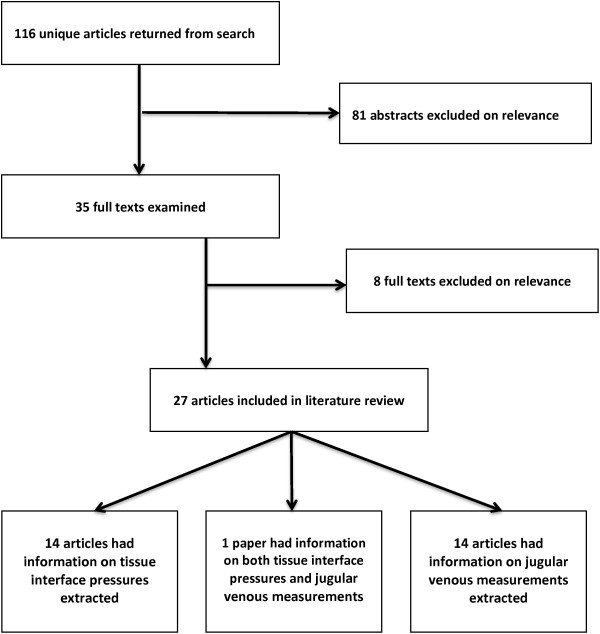
Cervical immobilisation is commonly applied following trauma, particularly blunt head injury, but current methods of immobilisation are associated with significant complications. Semi-rigid disposable cervical collars are known to cause pressure ulcers, and impede effective airway management. These collars may also exacerbate a head injury by increasing intracranial pressure as a result of external compression of the jugular veins. There is a clear imperative to find ways of effectively immobilising the cervical spine whilst minimising complications, and any assessment of existing or new devices should include a standardized approach to the measurement of tissue interface pressures and their effect on jugular venous drainage from the brain. This systematic review summarises the research methods and technologies that have been used to measure tissue interface pressure and assess the jugular vein in the context of cervical immobilisation devices. 27 papers were included and assessed for quality. Laboratory investigations and biomechanical studies have gradually given way to methods that more accurately reflect clinical care. There are numerous accounts of skin ulceration associated with cervical collars, but no standardised approach to measuring tissue interface pressure. It is therefore difficult to compare studies and devices, but a pressure of less than 30 mmHg appears desirable. Cervical collars have been shown to have a compressive effect on the jugular veins, but it is not yet certain that this is the cause of the increased intracranial pressure observed in association with cervical collar use. This is the first review of its type. It will help guide further research in this area of trauma care, and the development and testing of new cervical immobilisation devices.
Figures
References
-
- World Health Organisation. Saving Millions of lives: decade of action for road safety 2011-2020. Geneva: WHO; 2011. http://www.who.int/violence_injury_prevention/publications/road_traffic/....
-
- American College of Surgeons Committee on Trauma. Advanced Trauma Life Support. 9. Chicago: American College of Surgeons; 2012.
-
- el Masri WS. Management of Traumatic Spinal Cord injuries: current standards of care revisited. Adv Clin Neurosci Rehabil. 2010;10:37–40.
-
- Walker J. Pressure ulcers in cervical spine immobilisation: a retrospective analysis. J Wound Care. 2012;21:323–326. - PubMed
Publication types
MeSH terms
LinkOut - more resources
Full Text Sources
Other Literature Sources
Medical
