


Gender differentiation in indirect self-destructiveness and suicide attempt methods (gender, indirect self-destructiveness, and suicide attempts)
- PMID: 24302076
- PMCID: PMC3991825
- DOI: 10.1007/s11126-013-9283-1
Gender differentiation in indirect self-destructiveness and suicide attempt methods (gender, indirect self-destructiveness, and suicide attempts)
Abstract
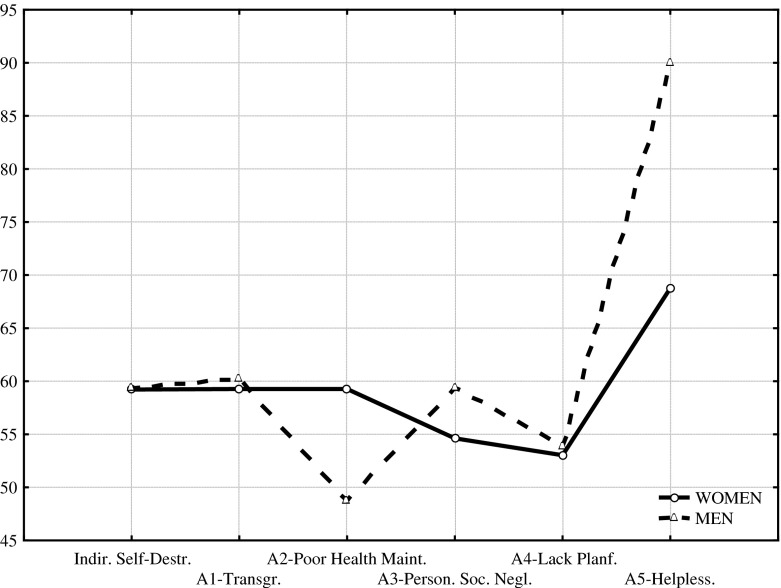
The objective of this study is to examine the gender (sex) differentiation of indirect self-destructiveness and its manifestations as well as its relationships with suicide attempt methods in females and males. The study was conducted among 147 persons (114 females, 33 males) who attempted suicide. The research instrument was the polish version of the Chronic Self-Destructiveness Scale including Transgression and Risk, Poor Health Maintenance, Personal and Social Neglects, Lack of Planfulness, and Helplessness and Passiveness in the face of problems. Differences testing and correlation analyses were applied. Females scored higher on poor health maintenance and males scored significantly higher on personal and social neglects, lack of planfulness, and helplessness. Noteworthy is that the intensity of indirect self-destructiveness in females reached the same magnitude as in males. A number of statistically significant correlations were found between indirect self-destructiveness, or its manifestations, and the methods of suicide attempt in the two groups. Among these categories, the highest contribution was of helplessness and passiveness (both of groups), poor health maintenance (males), and personal and social neglects (females). Results of this study can be useful in the therapeutic efforts and prevention of not only indirectly self-destructive behaviours but also possible suicide attempts. Both preventive and therapeutic activities can take into account the specificity of those phenomena resulting from one's sex/gender. It is important to adapt preventive and therapeutic measures to psychological (personal) features that arise from an individual's sex/gender.
Figures
References
-
- WHO. Figures and facts about suicide. Geneve: World Health Organisation; 1999.
-
- WHO. Mental health and development. Targeting people with mental health condition as a vulnerable group. Geneve: World Health Organisation; 2010.
-
- Tsirigotis K, Gruszczyński W, Kruszyna M. Autodestruktywność pośrednia u osób po próbach samobójczych [Indirect self-destructiveness in persons after suicide attempts. Suicydologia. 2008;IV:57–62.
MeSH terms
LinkOut - more resources
Full Text Sources
Other Literature Sources
Medical
