


Conduct symptoms and emotion recognition in adolescent boys with externalization problems
- PMID: 24302873
- PMCID: PMC3835356
- DOI: 10.1155/2013/826108
Conduct symptoms and emotion recognition in adolescent boys with externalization problems
Abstract
Background: In adults with antisocial personality disorder, marked alterations in the recognition of facial affect were described. Less consistent data are available on the emotion recognition in adolescents with externalization problems. The aim of the present study was to assess the relation between the recognition of emotions and conduct symptoms in adolescent boys with externalization problems.
Methods: Adolescent boys with externalization problems referred to Vadaskert Child Psychiatry Hospital participated in the study after informed consent (N = 114, 11-17 years, mean = 13.4). The conduct problems scale of the strengths and difficulties questionnaire (parent and self-report) was used. The performance in a facial emotion recognition test was assessed.
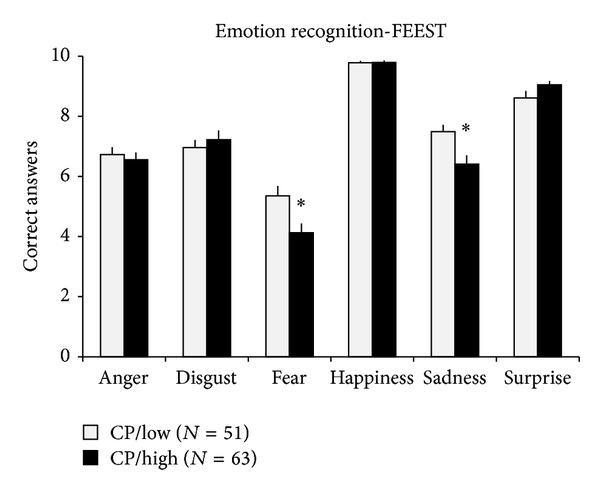
Results: Conduct problems score (parent and self-report) was inversely correlated with the overall emotion recognition. In the self-report, conduct problems score was inversely correlated with the recognition of anger, fear, and sadness. Adolescents with high conduct problems scores were significantly worse in the recognition of fear, sadness, and overall recognition than adolescents with low conduct scores, irrespective of age and IQ.
Conclusions: Our results suggest that impaired emotion recognition is dimensionally related to conduct problems and might have importance in the development of antisocial behavior.
Figures
References
-
- American Psychiatric Association. Diagnostic and Statistical Manual of Mental Disorders (DSM-IV-TR) 4th edition. Text Revision. New York, NY, USA: American Psychiatric Publishing; 2000.
-
- Murray J, Irving B, Farrington DP, Colman I, Bloxsom CAJ. Very early predictors of conduct problems and crime: results from a national cohort study. Journal of Child Psychology and Psychiatry. 2010;51(11):1198–1207. - PubMed
-
- van Goozen SHM, Fairchild G, Snoek H, Harold GT. The evidence for a neurobiological model of childhood antisocial behavior. Psychological Bulletin. 2007;133(1):149–182. - PubMed
-
- Krueger RF, Caspi A, Moffitt TE, Silva PA. The structure and stability of common mental disorders (DSM-III-R): a longitudinal-epidemiological study. Journal of Abnormal Psychology. 1998;107(2):216–227. - PubMed
-
- Costello EJ, Mustillo S, Erkanli A, Keeler G, Angold A. Prevalence and development of psychiatric disorders in childhood and adolescence. Archives of General Psychiatry. 2003;60(8):837–844. - PubMed
MeSH terms
LinkOut - more resources
Full Text Sources
Other Literature Sources
Medical
