. 2013 Oct 24;8(10):e78633.
doi: 10.1371/journal.pone.0078633. eCollection 2013.

More than meets the eye: associations of vaginal bacteria with gram stain morphotypes using molecular phylogenetic analysis

Affiliations

More than meets the eye: associations of vaginal bacteria with gram stain morphotypes using molecular phylogenetic analysis

Sujatha Srinivasan et al. PLoS One. .

Abstract

Bacterial vaginosis (BV) is a highly prevalent condition associated with adverse health outcomes. Gram stain analysis of vaginal fluid is the standard for confirming the diagnosis of BV, wherein abundances of key bacterial morphotypes are assessed. These Lactobacillus, Gardnerella, Bacteroides, and Mobiluncus morphotypes were originally linked to particular bacterial species through cultivation studies, but no studies have systematically investigated associations between uncultivated bacteria detected by molecular methods and Gram stain findings. In this study, 16S-rRNA PCR/pyrosequencing was used to examine associations between vaginal bacteria and bacterial morphotypes in 220 women with and without BV. Species-specific quantitative PCR (qPCR) and fluorescence in Situ hybridization (FISH) methods were used to document concentrations of two bacteria with curved rod morphologies: Mobiluncus and the fastidious BV-associated bacterium-1 (BVAB1). Rank abundance of vaginal bacteria in samples with evidence of curved gram-negative rods showed that BVAB1 was dominant (26.1%), while Mobiluncus was rare (0.2% of sequence reads). BVAB1 sequence reads were associated with Mobiluncus morphotypes (p<0.001). Among women with curved rods, mean concentration of BVAB1 DNA was 2 log units greater than Mobiluncus (p<0.001) using species-specific quantitative PCR. FISH analyses revealed that mean number of BVAB1 cells was 2 log units greater than Mobiluncus cells in women with highest Nugent score (p<0.001). Prevotella and Porphyromonas spp. were significantly associated with the "Bacteroides morphotype," whereas Bacteroides species were rare. Gram-negative rods designated Mobiluncus morphotypes on Gram stain are more likely BVAB1. These findings provide a clearer picture of the bacteria associated with morphotypes on vaginal Gram stain.


Conflict of interest statement

Competing Interests: The authors have declared that no competing interests exist.

Figures

Figure 1
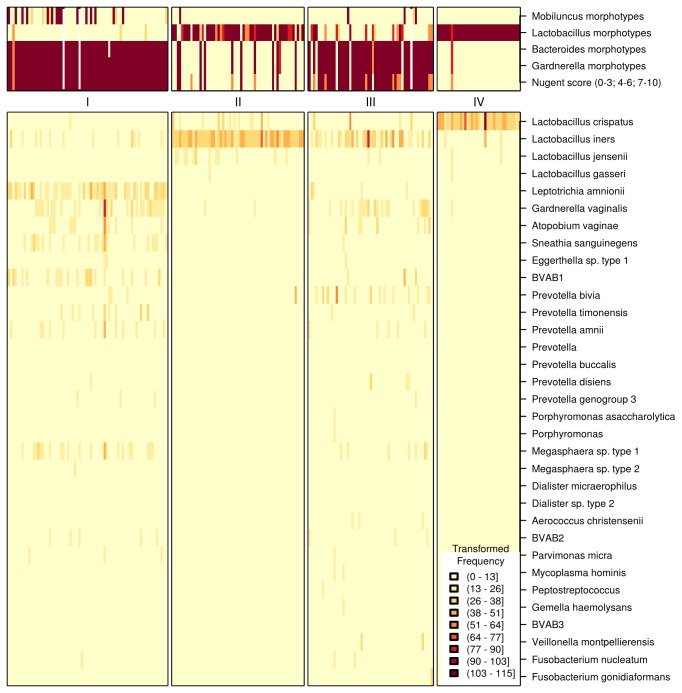
Figure 1. Heat map of bacterial sequence reads clustered using Dirichlet Multinomial Mixtures model.
Classification and clustering of bacterial sequence reads from 220 women resulted in four clusters. Transformed frequencies of sequence reads are shown in the legend with darker colors representing more abundant sequence reads. The abundance of bacterial morphotypes, assessed by Gram stain, are reflected as numbers ranging from 0 to 4 with higher numbers indicating increased abundance. Nugent scores used for diagnosis of BV are presented as follows: BV negative (0-3), Intermediate score (4-6) and BV positive (7-10). White bars denote that data are not available. The model was not informed of bacterial morphotype data. Taxa are ordered based on contribution to variance between clusters, and then are grouped by genus-level classifications. The heat map includes taxa whose total abundance across samples exceeds the 80th quantile. Note absence of Mobiluncus species in the list of taxa presented due to low abundance of sequence reads.
Figure 2
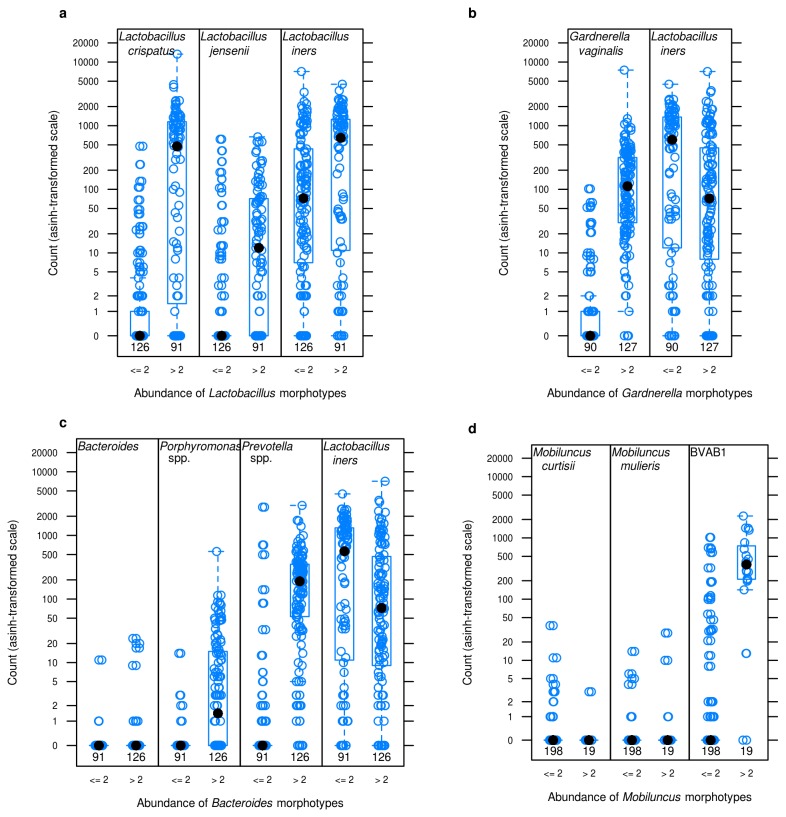
Figure 2. Association of bacterial sequence reads with Gram stain bacterial morphotypes.
Based on a priori hypothesis and abundance of taxa represented in DMM clustering, bacterial sequence reads (asinh-transformed) obtained using broad-range PCR and pyrosequencing (Y-axis) were correlated with abundance of Gram stain morphotypes (X-axis). The inverse hyperbolic sin (asinh) is a log-like transformation with better (linear) behavior near zero. This makes it applicable to count data with many zeros, as is found in our data. Data are grouped as <=2 (0, 1+, 2+) and >2 (3+, 4+) (X-axis) which indicate average number of bacterial morphotypes observed under oil-immersion per high-powered field. 0, no morphotypes present; 1+, <1 morphotype present; 2+, 1 to 4 morphotypes present; 3+, 5 to 30 morphotypes present; 4+, 30 or more morphotypes present. Open blue circles denote abundance of sequence reads from a single woman; closed black circles indicate median values. Numbers below box plots denote numbers of samples in each group.
Figure 3
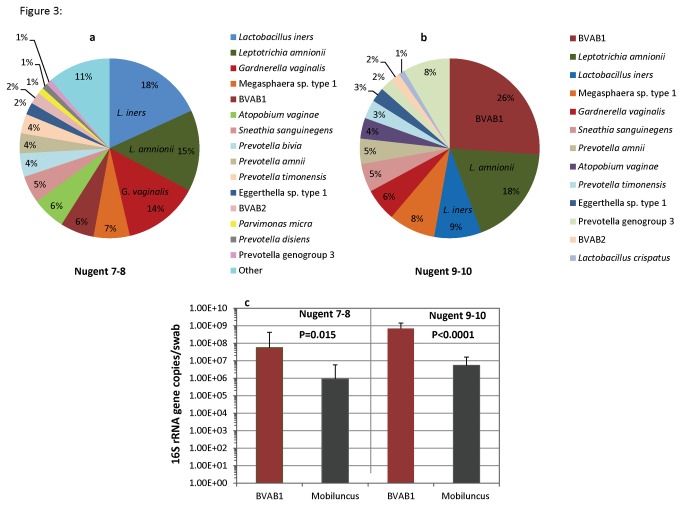
Figure 3. Curved Gram negative rods are more likely to be BVAB1 rather than Mobiluncus species.
Comparison of rank abundance plots in women with Nugent scores of 7-8 (A) and 9-10 (B) show percentage of sequence reads in each group. Women with Nugent scores 9-10 are dominated with BVAB1. Quantitative PCR targeting BVAB1 and Mobiluncus (C) was performed for vaginal samples obtained from women with BV demonstrating higher concentrations of BVAB1 compared to Mobiluncus in each group.
Figure 4
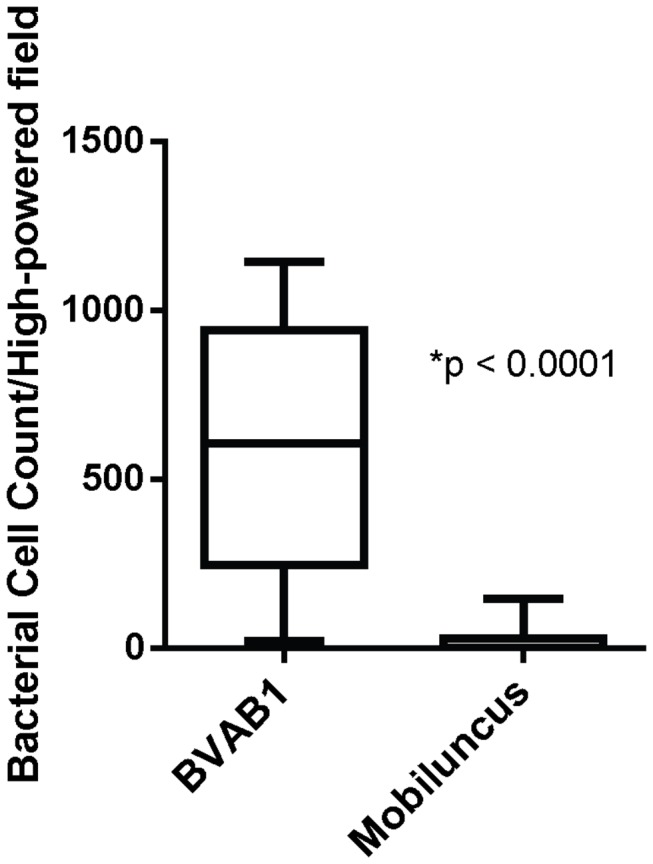
Figure 4. FISH reveals higher quantities of BVAB1 cells than Mobiluncus cells in vaginal fluid.
Vaginal fluid smears from all women with Nugent 10 were assessed for relative quantities of BVAB1 and Mobiluncus cells. The lines in the box plot represent the mean and whiskers denote 95% confidence intervals.
Figure 5
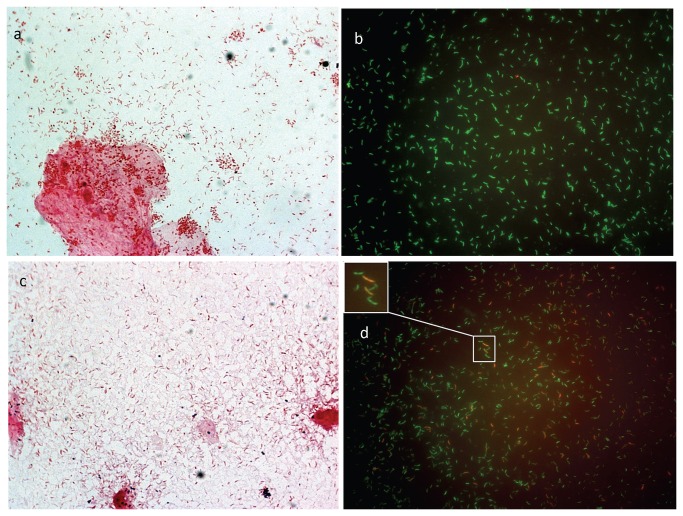
Figure 5. Fluorescence micrographs and Gram stain images of vaginal fluid smears.
Vaginal fluid smears from two representative study participants are shown. 4+ curved rods were documented by Gram stain (A & C) for both participants who had BV (Nugent score 10). Panels A (Gram stain) and B (FISH) are vaginal fluid smears from a representative participant with low concentrations of Mobiluncus DNA (2·5×105 copies 16S-rRNA gene/swab) and high concentrations of BVAB1 DNA (2·4×109 16S rRNA gene copies/swab). Panel B shows a field of bacteria hybridizing with probes for BVAB1 (green) while no hybridization was observed with Mobiluncus probe (red). Mean quantity of BVAB1 cells was 661 versus <1 Mobiluncus cell. Panels C (Gram stain) and D (FISH) are vaginal fluid smears from a representative participant with high concentrations of Mobiluncus DNA (1·3×107 16S-rRNA gene copies/swab) and BVAB1 DNA (5·1×108 16S-rRNA gene copies/swab). Panel D shows a field of bacteria hybridizing with both Mobiluncus (red) and BVAB1 (green) DNA. Mean quantity of BVAB1 cells was 908 versus 145 Mobiluncus cells.

References

    1. Koumans EH, Sternberg M, Bruce C, McQuillan G, Kendrick J et al. (2007) The prevalence of bacterial vaginosis in the United States, 2001-2004; associations with symptoms, sexual behaviors, and reproductive health. Sex Transm Dis 34: 864-869. doi: 10.1097/OLQ.0b013e318074e565. PubMed: 17621244. - DOI - PubMed
    1. Hillier SL, Nugent RP, Eschenbach DA, Krohn MA, Gibbs RS et al. (1995) Association between bacterial vaginosis and preterm delivery of a low-birth-weight infant. N Engl J Med 333: 1737-1742. doi: 10.1056/NEJM199512283332604. PubMed: 7491137. - DOI - PubMed
    1. Taha TE, Hoover DR, Dallabetta GA, Kumwenda NI, Mtimavalye LA et al. (1998) Bacterial vaginosis and disturbances of vaginal flora: association with increased acquisition of HIV. AIDS 12: 1699-1706. doi: 10.1097/00002030-199813000-00019. PubMed: 9764791. - DOI - PubMed
    1. Cohen CR, Lingappa JR, Baeten JM, Ngayo MO, Spiegel CA et al. (2012) Bacterial vaginosis associated with increased risk of female-to-male HIV-1 transmission: a prospective cohort analysis among African couples. PLOS Med 9: e1001251: Article No.: e1001251. PubMed: 22745608. - PMC - PubMed
    1. Bradshaw CS, Morton AN, Hocking J, Garland SM, Morris MB et al. (2006) High recurrence rates of bacterial vaginosis over the course of 12 months after oral metronidazole therapy and factors associated with recurrence. J Infect Dis 193: 1478-1486. doi: 10.1086/503780. PubMed: 16652274. - DOI - PubMed

Publication types