


Comparative proteomic analysis of genetically modified maize grown under different agroecosystems conditions in Brazil
- PMID: 24304660
- PMCID: PMC4176129
- DOI: 10.1186/1477-5956-11-46
Comparative proteomic analysis of genetically modified maize grown under different agroecosystems conditions in Brazil
Abstract
Background: Profiling technologies allow the simultaneous measurement and comparison of thousands of cell components without prior knowledge of their identity. In the present study, we used two-dimensional gel electrophoresis combined with mass spectrometry to evaluate protein expression of Brazilian genetically modified maize hybrid grown under different agroecosystems conditions. To this effect, leaf samples were subjected to comparative analysis using the near-isogenic non-GM hybrid as the comparator.
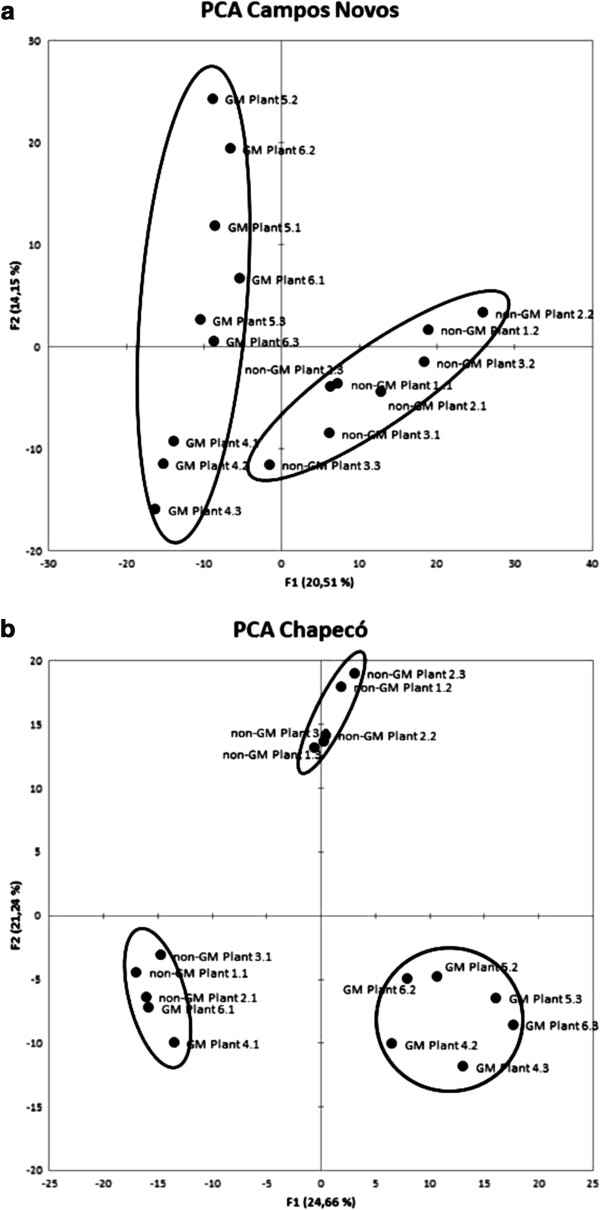
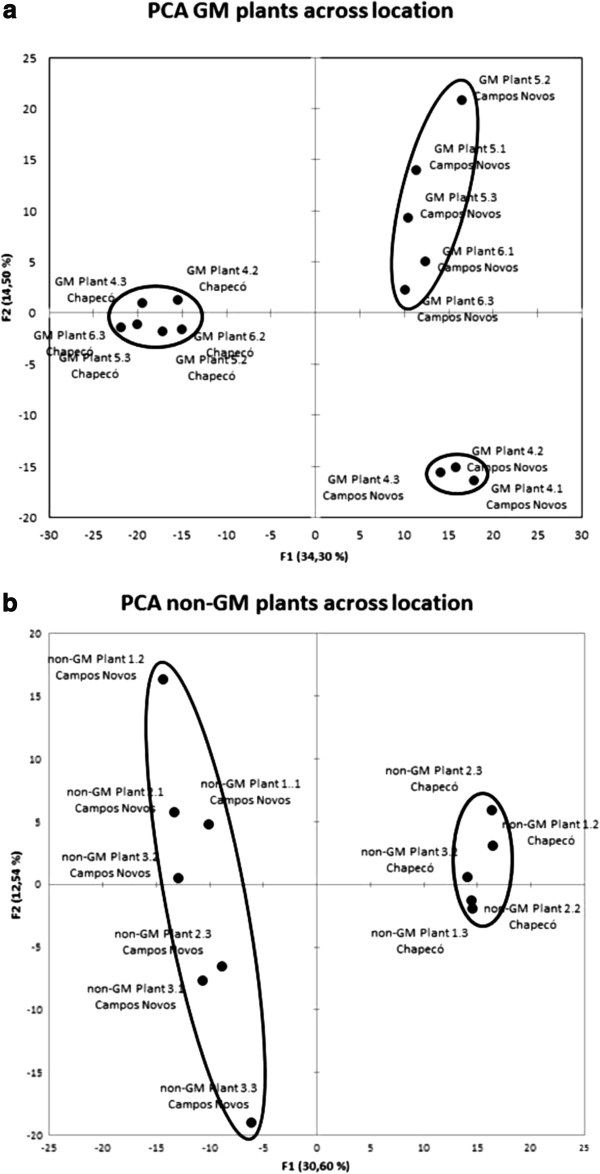
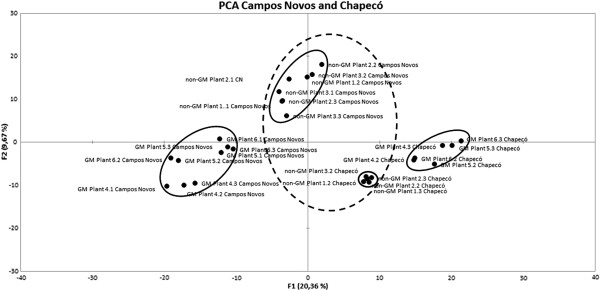
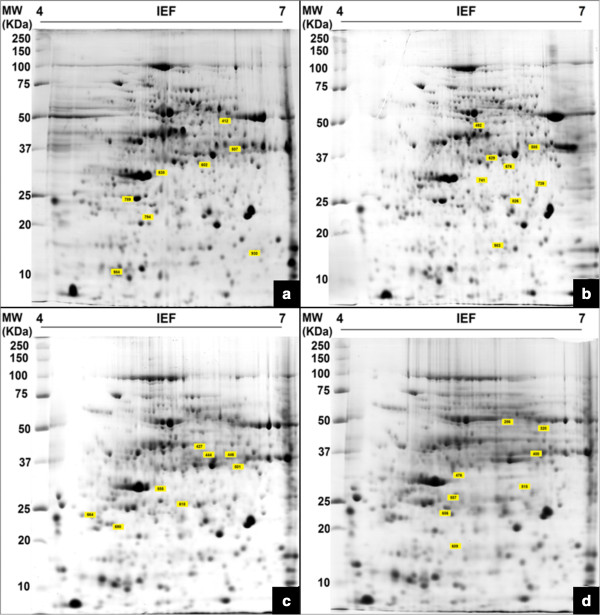
Results: In the first stage of the analysis, the main sources of variation in the dataset were identified by using Principal Components Analysis which correlated most of the variation to the different agroecosystems conditions. Comparative analysis within each field revealed a total of thirty two differentially expressed proteins between GM and non-GM samples that were identified and their molecular functions were mainly assigned to carbohydrate and energy metabolism, genetic information processing and stress response.
Conclusions: To the best of our knowledge this study represents the first evidence of protein identities with differentially expressed isoforms in Brazilian MON810 genetic background hybrid grown under field conditions. As global databases on outputs from "omics" analysis become available, these could provide a highly desirable benchmark for safety assessments.
Figures
References
-
- James C. Global Status of Commercialized Biotech/GM Crops: 2012. ISAAA Brief No. 44. Ithaca: ISAAA Press; 2012.
-
- Traavik T, Chin LL, editor. Biosafety First - Holistic Approaches to Risk and Uncertainty in Genetic Engineering and Genetically Modified Organisms. Trondheim: Tapir Academic Press; 2007.
-
- Davies H. A role for “omics” technologies in food safety assessment. Food Control. 2012;21:1601–1610.
LinkOut - more resources
Full Text Sources
Other Literature Sources
